Tai Chi Glossary > Chen Xin (陈鑫)
Chen Xin (陈鑫)
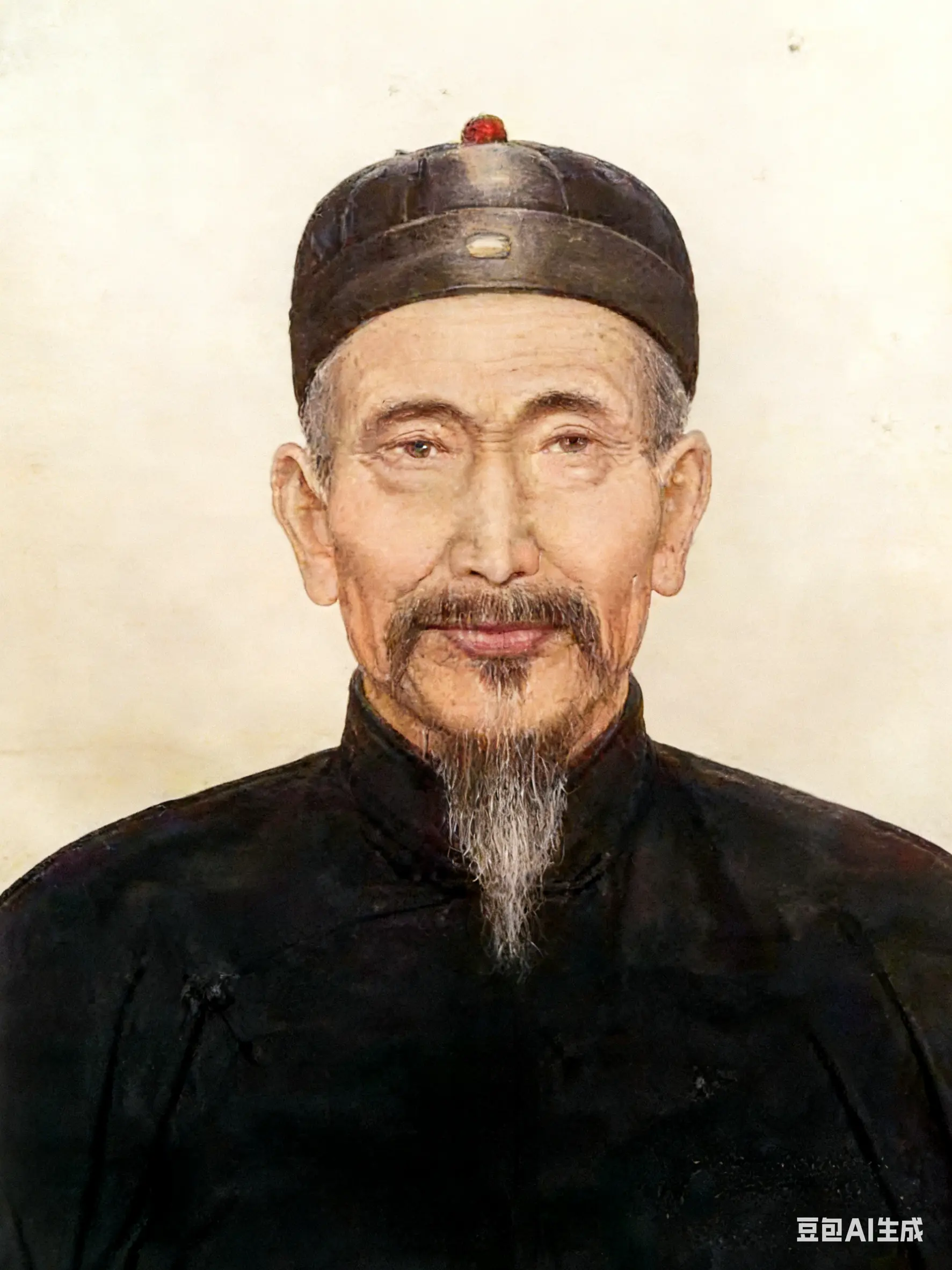
Definition: Chen Xin (陈鑫, 1849–1929) was the 16th-generation Chen family master who spent 12 years writing the first comprehensive theoretical text on Chen-style tai chi—the landmark Chen Family Taijiquan Illustrated and Explained, published posthumously in 1933.
He was not the most celebrated fighter of his generation. That distinction belonged to others in the Chen lineage. What Chen Xin did was more lasting: he wrote everything down. In an art transmitted almost entirely through oral instruction and physical demonstration, he spent the final decades of his life producing a document that would outlast every practitioner of his era—a systematic, illustrated, philosophically rigorous account of Chen-style tai chi that remains a foundational reference nearly a century after its publication.
Life and Lineage
Chen Xin, courtesy name Pinsan (品三), was born in 1849 in Chenjiagou village, Wenxian County, Henan Province—the same village that gave birth to Chen-style tai chi . He was the third son of Chen Zhongshen (陈仲甡), a renowned 7th-generation practitioner known for his exceptional martial ability. His grand-uncle was Chen Youben (陈有本), the master credited with developing the Chen family New Frame (新架)—the lineage from which Small Frame (小架) would later descend.
The family context shaped Chen Xin fundamentally. Martial training was not optional in Chenjiagou—it was inheritance. His father could wield a thirty-pound iron spear in combat. His brother Chen Yao (陈垚) practiced the forms ten thousand times a year for twenty consecutive years. Chen Xin trained in this environment from childhood, developing a practitioner’s understanding of the art from the inside.
What set him apart from the other talented martial artists in his family was his scholarly formation. His father eventually directed him toward civil study, and Chen Xin became a Gongsheng (岁贡生)—a Senior Licentiate of the late Qing dynasty, a genuine academic credential in the classical examination system. He was, in the truest sense, both scholar and martial artist. When he eventually turned to writing about tai chi, he brought both dimensions to the task.
The Book and Its Creation
Chen Xin began writing Chen Family Taijiquan Illustrated and Explained (陳氏太極拳圖說) in 1908, at the age of approximately 59. He completed the manuscript in 1919—twelve years of sustained work, through which he produced four complete handwritten copies, each running to two or three hundred thousand characters.
The scope of the work was unprecedented. Previous transmission of Chen-style tai chi had been almost entirely oral and physical—master to student, body to body, without systematic written documentation. Chen Xin changed this. The four-volume work covered the 64-movement form in exhaustive detail, with diagrams showing not just overall posture but separate illustrations of upper limb movement, lower limb movement, footwork patterns, qi circulation pathways, and silk reeling force diagrams. Each movement was accompanied by textual analysis drawing on I Ching cosmology, TCM meridian theory, and classical poetry.
The theoretical framework was equally ambitious. Chen Xin was the first to systematically articulate the role of chan si jing ( silk reeling , 缠丝劲) as the central generative principle of Chen-style movement—not merely a stylistic characteristic but the fundamental mechanism through which force is created, stored, and expressed. He explained this through the lens of the I Ching’s yin-yang transformations and the body’s jingluo meridian network, creating a theoretical architecture that connected physical practice to classical Chinese philosophy and medicine simultaneously.
A Manuscript Nearly Lost
The history of the book’s publication is as remarkable as its content.
In 1927, with the manuscript complete and Chen Xin in his late seventies, a family member offered to take the manuscript to a publisher and guarantee its publication—along with financial support for Chen Xin’s final years. The elderly master, in poverty and declining health, agreed. Months later, a letter arrived from Nanjing: the manuscript had been lost in a river crossing during a storm.
Chen Xin’s grief was total. He wept without consolation. The loss of twelve years of accumulated work broke him. He fell ill from the shock and died approximately a year later, around 1929. At his death, there was insufficient money even for his burial.
He had, however, kept one thing back. Sensing his age and the uncertainty of the times, he had quietly instructed his adopted son Chen Chunyuan (陈椿元) to copy the manuscript before handing it over. When he entrusted this copy to Chen Chunyuan before his death, his instruction was characteristically precise: “If it can be transmitted, transmit it. If not, burn it. Do not give it to unworthy hands.”
After Chen Xin’s death, Chen Chunyuan gathered family members—Chen Xueyuan, Chen Shuzhen, Chen Shaodong—to revise and prepare the surviving draft. Chen Xin’s grand-nephew Chen Honglie (陈鸿烈) then traveled to Kaifeng in harsh winter conditions, crossing the frozen Yellow River on foot, to find a publisher. With support from the National Martial Arts Academy and several benefactors, the book was finally published in 1933 by the Kaiming Bookstore in Kaifeng. The proceeds from its sale funded Chen Xin’s long-delayed burial—completing, four years after his death, the final obligation his family owed him.
Historical Significance
The publication of Chen Family Taijiquan Illustrated and Explained marked a turning point in the transmission of tai chi. For the first time, the theoretical foundations of Chen-style tai chi existed in documented form—accessible to practitioners who had not trained in Chenjiagou, available for study independent of direct lineage transmission.
The 64-movement form documented in the book closely resembles the Small Frame (小架, Xiǎo jià) style of Chen-style tai chi. This has made Chen Xin’s work a primary historical reference for Small Frame lineages, which regard his text as the closest surviving written record of the original form transmitted from Chen Wangting. Chen Xin’s student Chen Ziming (陳子明, d. 1951), in his 1932 publication Inherited Chen Family Taiji Boxing Art, included photographs of forms consistent with the descriptions in Chen Xin’s text—providing visual corroboration of the style’s continuity.
The book’s influence extended beyond the Chen family. Chen Xiaowang and subsequent lineage holders have cited it as a foundational reference. It has been translated and published in multiple languages, with English translations including The Illustrated Canon of Chen Family Taijiquan making its contents accessible to international practitioners. Nearly a century after its posthumous publication, it remains the most comprehensive theoretical document of Chen-style tai chi’s classical period.
Key Facts for Reference
| Category | Details |
|---|---|
| Full name | Chen Xin (陈鑫), courtesy name Pinsan (品三) |
| Born | 1849, Chenjiagou, Wenxian County, Henan |
| Died | c. 1929, Chenjiagou |
| Generation | 16th Chen family generation; 8th generation Taijiquan lineage |
| Academic status | Gongsheng (岁贡生), late Qing dynasty Senior Licentiate |
| Major work | Chen Family Taijiquan Illustrated and Explained (陳氏太極拳圖說) |
| Written | 1908–1919 (12 years) |
| Published | 1933, Kaiming Bookstore, Kaifeng (posthumous) |
| Core contribution | First systematic written theory of Chen-style tai chi; established silk reeling (缠丝劲) as the art’s central principle |
- Chen Style — the tai chi lineage Chen Xin documented and theorized
- Silk Reeling — the core principle Chen Xin was first to systematically articulate in writing
- Chen-style Lao Jia — the Old Frame curriculum whose theoretical foundations Chen Xin documented
- Chen Xiaowang — 19th-generation grandmaster who has cited Chen Xin’s work extensively
- Jingluo — the meridian framework Chen Xin integrated into his theoretical analysis
- Fa Jin — explosive force whose mechanical basis Chen Xin analyzed in detail
- Chan Si Jing — silk reeling energy, the central concept Chen Xin established in writing
- I Ching — the classical text whose cosmological framework Chen Xin applied to tai chi theory
- Internal Martial Arts — the broader tradition within which Chen Xin situated his theoretical work
- Chang San-feng — the legendary figure whose philosophical legacy Chen Xin’s work engaged
Have questions about Chen Xin or the history of Chen-style tai chi? Our forum thread — Tai Chi Books: The Lost Library of Tai Chi Unlocking Practice Through Ancient Books — covers this and many more topics answered by experienced practitioners.
Related Glossary Terms
Explore connected concepts in the Tai Chi knowledge graph.
Community & Questions
Discussions from practitioners about chenxin.
Further Reading & Practical Guides
In-depth articles featuring chenxin.
Chen Style Silk Reeling Explained: The Spiral Power of Tai Chi (Chan Si Jin)
Silk reeling (缠丝劲, Chan Si Jing) is the continuous spiral that threads the whole body into one connected screw — kua initiates, waist transmits, joints thread in sequence. This guide explains the mechanics, the 10-minute single-arm drill protocol, common mistakes, push hands application, and the lineage that carries the method.
The Last Gatekeeper: Chen Boxiang and the Hidden Lineage of Small Frame Taijiquan
Chen Boxiang (1944–2026), 18th-generation Chen clan descendant and 10th-generation inheritor of Chen Style Taijiquan, was the defining figure of Small Frame (Xiao Jia). This article traces his life from the Cultural Revolution's quiet defiance to his overseas teaching in 1995 — exploring why Small Frame is the most hidden, most demanding, and most authentic branch of Taijiquan, and what happens after its last gatekeeper departs.
Chen Style Yi Lu vs Er Lu: Why 2 Years of First Form Matters
Chen Style Yi Lu vs Er Lu (Cannon Fist). Learn why rushing destroys knees, Day 1 vs Month 3 sensations, and a 4‑step readiness test from a 25‑year master.
Large Frame vs Small Frame Tai Chi: 25 Yrs Expert’s Guide
Large Frame vs Small Frame Tai Chi: A 12th-generation Chen style inheritor reveals what each feels like on Day 1 vs Day 30. Avoid knee pain. Choose the right frame for your body.