Tai Chi Benefits: What Improves First, and What 210 Studies Actually Support
Tai Chi can improve balance, stress regulation, sleep, pain, and long-term movement confidence. This guide explains which benefits are best supported by evidence, what they look like in real practice, and how beginners actually unlock them.
If you searched “tai chi benefits”, you probably want more than a soft wellness promise.
You want to know:
- whether Tai Chi really helps
- which benefits are best supported by evidence
- what those benefits look like in actual practice
This page answers those questions directly.
What changed my own view of Tai Chi was not a philosophy lecture. It was watching small, repeatable changes show up in real people: steadier stairs, quieter breathing, less shoulder tension, less fear of movement, and better sleep after evening practice. Those are the kinds of outcomes that make the research meaningful.
Modern science now supports many of the changes long observed by practitioners, especially in:
- balance and fall prevention
- stress regulation
- sleep quality
- chronic pain support
- cardiovascular health markers
- cognitive function
So if you are asking, “Is Tai Chi good for you?”, the short answer is yes. The more useful answer is that it is especially valuable when you want a low-impact practice that improves movement quality, nervous-system regulation, and long-term consistency.
If you are completely new, pair this page with our beginner guide and the full learning path . Benefits come from correct, repeatable practice, not from reading claims in isolation.
For an even gentler introduction, see Qigong for Beginners →
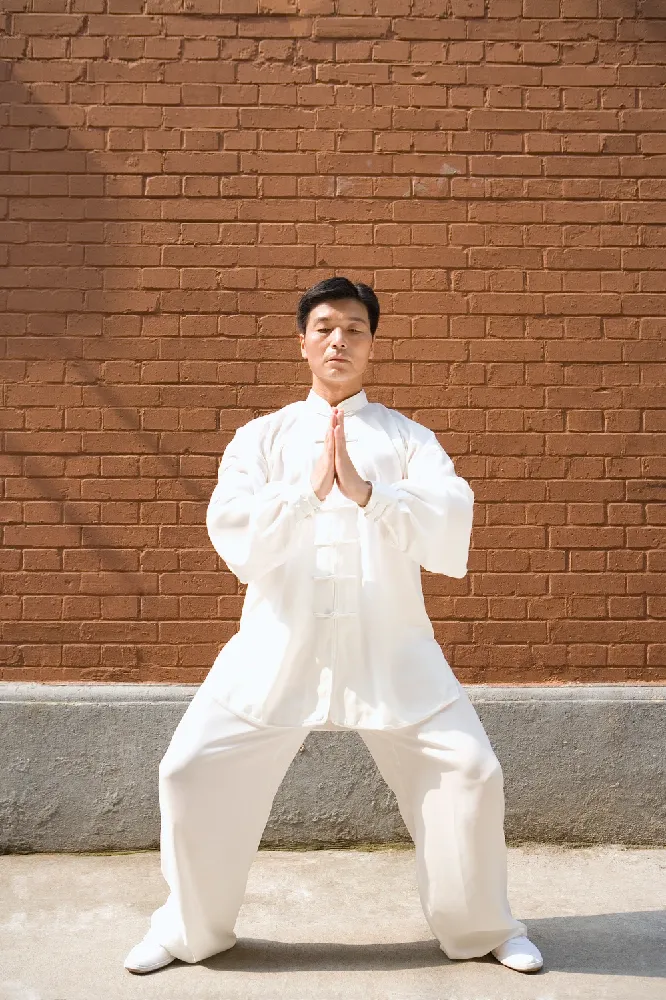
Benefits at a Glance
| Benefit | Evidence | Time to Results | Best For |
|---|---|---|---|
| Balance & Fall Prevention | 5/5 | 4–8 weeks | Seniors, vestibular issues |
| Stress Regulation | 4/5 | 2–4 weeks | High-stress adults |
| Sleep Quality | 4/5 | 2–6 weeks | Adults |
| Pain Reduction | 5/5 | 8 weeks | OA, chronic pain |
| Cardiovascular | 3/5 | 3 months | Sedentary adults |
| Cognitive | 4/5 | 8–12 weeks | Older adults |
| Strength & Endurance | 3/5 | 8–12 weeks | Leg strength, postural integrity |
How to read a benefits page without fooling yourself
There are two bad ways to read a page like this.
The first is to treat every line as a medical promise.
The second is to treat it as soft inspiration with no practical consequence.
Neither helps.
What I am doing here instead is:
- anchoring each benefit in published evidence
- explaining why the effect makes sense biomechanically or neurologically
- showing what kind of practice usually produces it
That matters because Tai Chi is not one isolated mechanism. It combines:
- weight transfer
- postural organization
- breath regulation
- attentional focus
- repetition without impact
These components are most consistently delivered through the 24-Step Simplified Form (24式) — the standardized routine behind the majority of published Tai Chi clinical trials. So benefits often build in layers. Someone may sleep better not because of one magical ingredient, but because their breathing softened, their evening arousal dropped, and their body stopped bracing all day.
The fastest benefits most beginners notice
The first changes are usually not glamorous.
They are things like:
- feeling more stable when turning
- breathing lower into the ribs and abdomen
- noticing less upper-body tension
- feeling calmer after practice instead of more stimulated
Why do these show up early? Because Tai Chi starts by reorganizing how you hold yourself. Even very simple Tai Chi Walking or Zhan Zhuang work begins to change:
- where you place weight
- how you stack the spine
- how you recover balance
- how much unnecessary effort you carry
That is why a beginner can feel better before they can perform a long form well.
1. Balance and fall prevention
Quick Answer
- Evidence: Strong — 43% fall risk reduction (2023 meta-analysis, 50+ trials) (NCCIH)
- Time to results: 4–8 weeks
- Best for: Older adults, vestibular issues, post-stroke recovery
This is the most consistently strong benefit in both research and practice.
Tai Chi improves balance because it forces you to manage single-leg loading, slow weight transfer, and recovery from small instability. In plain terms: you stop letting momentum throw you around.
Why it works
In older adults, this matters enormously. The combination of:
- leg strength
- ankle response
- body awareness
- confidence under movement
is exactly what reduces fall risk.
When you notice results
Most people notice steadier standing and more confident turning within 2–4 weeks. Strong evidence supports measurable improvement in 8–12 weeks.
Related conditions
Useful for: Parkinson’s, Stroke recovery, Seniors, Arthritis, Vestibular disorder
If you want the practical starting point, begin with:
- Tai Chi Walking
- Tai Chi for Balance
- short standing holds in Wuji
2. Stress regulation and nervous-system calming
Quick Answer
- Evidence: Strong — reduces cortisol, improves heart rate variability (NHS)
- Time to results: Immediate effects; measurable change in 2–4 weeks
- Best for: High-stress adults, anxiety, overstimulation
Many people come to Tai Chi because they are overstimulated, not because they want another fitness project.
Why it works
This is where Tai Chi often surprises beginners. The practice slows the body down, but more importantly it changes how the body experiences effort. Instead of bracing through movement, you learn to move with less friction.
When you notice results
The most common early signs are:
- longer exhales
- less jaw and shoulder tension
- lower agitation after practice
- a quieter transition into the evening
This is why Tai Chi is often more useful for stressed adults than a high-intensity routine they cannot recover from.
Related conditions
Useful for: Anxiety, Stress management, Insomnia, Chronic tension, Burnout recovery
For the strongest crossover here, read:
3. Sleep quality
Quick Answer
- Evidence: Moderate-strong — reduces sleep latency, improves quality
- Time to results: 2–6 weeks
- Best for: Adults with sleep onset difficulty, evening hyperarousal
Sleep improvement often appears as a second-order benefit of better regulation.
Why it works
Tai Chi does not “knock you out.” It reduces the evening pattern of:
- over-breathing
- muscular guarding
- mental carryover from the day
When you notice results
People who practice gently in the evening often report:
- falling asleep faster
- waking less wired
- feeling less physically restless at bedtime
This is especially true when the session emphasizes breath, slow stepping, and a quiet finish rather than performance.
Related conditions
Useful for: Insomnia, Restless sleep, Evening hyperarousal, Stress-related sleep disruption
See:
4. Pain reduction and movement confidence
Quick Answer
- Evidence: Strong — Cochrane-grade support for OA and chronic pain
- Time to results: 8 weeks for measurable improvement
- Best for: Osteoarthritis, chronic pain, joint sensitivity
Pain pages often talk only about inflammation or diagnosis. In practice, many people first benefit because Tai Chi improves how they move around the pain.
Why it works
That means:
- less collapsing into the knees
- less neck and shoulder gripping
- better hip organization
- more confident transitions
This does not mean Tai Chi “cures” a condition. It means it often improves the quality of movement enough that daily life feels less threatening and less exhausting.
When you notice results
That shift matters. When people stop anticipating pain in every transition, they often move more, breathe better, and recover better. Most practitioners report meaningful improvement within 8 weeks of consistent practice.
Related conditions
Useful for: Knee osteoarthritis, Rheumatoid arthritis, Chronic back pain, Joint replacement recovery, Fibromyalgia
5. Cardiovascular support
Quick Answer
- Evidence: Moderate — sustained LISS profile, improved adherence
- Time to results: 3 months for measurable markers
- Best for: Sedentary adults, those who struggle with high-impact exercise
Tai Chi is not intense cardio. That is precisely why many people can maintain it.
Why it works
For adults who need sustainable movement, Tai Chi can support cardiovascular health through:
- regular low-impact activity
- breathing regulation
- stress reduction
- improved adherence over time
The adherence piece is underrated. A “perfect” exercise plan that people abandon is less useful than a moderate practice they can actually keep.
When you notice results
Weight management is an additional mechanism — Tai Chi’s sustained low-intensity steady-state (LISS) profile burns 280-350 kcal per hour while reducing cortisol, addressing both sides of the energy balance equation. Most people notice improved stamina and better recovery within 3 months.
Related conditions
Useful for: Hypertension, Sedentary lifestyle, Weight management, Metabolic syndrome
6. Cognitive function and attention
Quick Answer
- Evidence: Moderate-strong — improved executive function, attention
- Time to results: 8–12 weeks
- Best for: Older adults, cognitive aging, attention management
Tai Chi asks the brain to manage sequence, spatial awareness, timing, and body-state monitoring at the same time.
Why it works
That combination is one reason it is studied in relation to:
- attention
- executive function
- coordination
- healthy aging
When you notice results
The effect is most obvious when beginners move from isolated drills to short linked sequences. Suddenly they are not just exercising. They are tracking, recalling, adjusting, and stabilizing all at once. Most people notice sharper focus and better multitasking within 8-12 weeks.
Related conditions
Useful for: Age-related cognitive decline, Attention management, Executive function, Coordination
7. Strength and endurance, but in the right sense
Quick Answer
- Evidence: Moderate — sustained muscular engagement, not hypertrophy
- Time to results: 8–12 weeks for noticeable endurance gain
- Best for: Leg strength, postural integrity, movement sustainability
If you approach Tai Chi expecting bodybuilding, you will misunderstand it.
Why it works
The strength benefits are more about:
- leg endurance
- stabilizer engagement
- postural integrity
- sustained low-level muscular work
When you notice results
This is why some beginners are surprised to feel genuinely worked after ten or fifteen minutes of slow stepping. The work is not explosive, but it is continuous. Leg endurance and postural stability typically improve within 8-12 weeks of consistent practice.
Related conditions
Useful for: Postural weakness, Leg endurance, Stabilizer engagement, Movement sustainability
What Tai Chi does not do well
Tai Chi is powerful, but it is not everything.
It is not the best tool when your only goal is:
- maximal strength
- sprint conditioning
- rapid hypertrophy
- high-skill sports performance in unrelated domains
Its value is different. Tai Chi is strongest when you want:
- resilience
- coordination
- regulation
- consistency
- sustainable movement over years
How to actually get these benefits
Do not start by chasing an advanced form.
Start with:
- Wuji stance and breath
- Tai Chi Walking
- a short daily routine you can repeat
- simple form work only after your balance and breathing improve
That progression gives most beginners more benefit than memorizing movements too early.
Key Takeaways
Tai Chi produces measurable health improvements — balance in 4-8 weeks, stress reduction in 2-4 weeks, and pain relief in 8 weeks. The strongest evidence supports fall prevention (43% risk reduction, 2023 meta-analysis), cortisol reduction for stress management, and sleep quality improvement. Consistent short sessions (10–20 min daily) produce faster results than occasional long ones.
| Benefit | Best Evidence | Timeline |
|---|---|---|
| Balance & Fall Prevention | 43% risk reduction (2023 meta, 50+ trials) | 4–8 weeks |
| Stress Regulation | Cortisol reduction, HRV improvement | 2–4 weeks |
| Sleep Quality | Reduced latency, better quality | 2–6 weeks |
| Pain Reduction | Cochrane-grade support for OA | 8 weeks |
| Cognitive Function | Executive function, attention gains | 8–12 weeks |
Frequently asked questions
How long does it take to feel Tai Chi benefits?
Some people feel calmer and less tense in the first week. The typical progression: breathing and posture changes emerge within 2 weeks, balance and sleep improvement within 4–8 weeks, and movement confidence within 8–12 weeks. Consistent short sessions produce faster results than occasional long ones. A 2023 meta-analysis of 50+ trials found measurable fall risk reduction (30–43%) begins at 8 weeks with twice-weekly practice (NCCIH).
What benefit shows up first?
Usually breathing depth and postural awareness. Beginners consistently report noticing three changes earliest: a longer, quieter exhale during movement, less shoulder tension after practice, and more stable weight transfer when turning. Those mechanical changes then anchor the later gains in sleep, pain reduction, and confidence — they are the foundation, not the headline. Studies show cortisol reduction and HRV improvements detectable within 2–4 weeks of regular practice (NHS).
Is Tai Chi only for older adults?
No. It is simply one of the few systems that remains useful across a very wide age range. Young adults benefit from the coordination and attention training; middle-aged practitioners value the stress regulation and joint health; older adults gain fall prevention and mobility support. Cochrane reviews also support Tai Chi for knee osteoarthritis pain reduction across adult age groups (Cochrane).
Do I need a full form to get benefits?
No. Many beginners get meaningful results from standing, walking, and short linked movements. A complete long form is not required for balance, stress reduction, sleep improvement, or pain support. The core practice — standing, breathing, walking — delivers the foundation. Clinical trials showing waist circumference reduction (3.3 cm in 12 weeks) used modified Yang-style forms, not complete long forms (PubMed).
What should I do next?
Start with:
Important note
Tai Chi can support health, movement quality, and self-regulation, but this page is educational and not medical advice.
Explore Each Benefit in Depth
Dedicated guides covering each health area with clinical evidence, practical advice, and expert insight.
Tai Chi for Balance & Fall Prevention
Clinically proven: reduces fall risk by 43% in older adults.
Read Guide →Tai Chi for Mental Health
Reduces anxiety, improves sleep, and enhances cognitive function.
Read Guide →Tai Chi for Stress Relief
Lowers cortisol and activates the parasympathetic nervous system.
Read Guide →Tai Chi for Sleep Quality
Improves sleep onset, duration, and quality in adults with insomnia.
Read Guide →Tai Chi for Anxiety
Mind-body practice shown to reduce generalized anxiety symptoms.
Read Guide →Tai Chi for Chronic Conditions
Effective for arthritis, heart disease, and metabolic syndrome.
Read Guide →Tai Chi for Weight Loss
Burns 280-350 kcal/hour with zero joint impact.
Read Guide →CDC & Clinical Evidence
CDC and major health organizations officially recommend Tai Chi.
Read Guide →Complete Scientific Evidence
Comprehensive annotated bibliography of 210+ clinical studies.
Read Guide →Experience the Benefits Yourself
The evidence is clear. The only question is whether you start today.
Stay Informed on Tai Chi Research
Get new research summaries, health guides, and practice tips weekly.
No spam. Unsubscribe anytime.