CDC Recommends Tai Chi for Arthritis & Fall Prevention: What the Science Really Shows
Key Takeaways
- Tai Chi is listed in the CDC's "Compendium of Effective Fall Interventions" — the highest evidence tier for community fall prevention programs
- Clinical trials show 43% fewer falls and 30% reduction in arthritis pain among regular practitioners
- The CDC's STEADI program includes Tai Chi as a core recommendation for older adult fall risk reduction
- Federal endorsement opens pathways for Medicare coverage and clinic-based Tai Chi referral programs
Disclaimer: This article is for educational purposes only and does not replace professional medical advice. Always consult a healthcare professional before starting any new exercise program, especially if you have severe arthritis, mobility limitations, or chronic health conditions.
This guide is part of the Tai Chi for Arthritis Hub — see the full OA vs RA evidence summary and a safe starting routine.
When Public Health Meets Ancient Wisdom
Arthritis affects millions of adults worldwide, often leading to a frustrating cycle of joint pain, stiffness, reduced mobility, and an ever-increasing fear of falling. For many older adults and those with chronic pain, the challenge isn’t simply a lack of motivation to stay active—it is finding an exercise that is safe, gentle, and scientifically proven to work without causing further joint damage. For a focused guide on back pain, including safe seated and standing routines, see our back pain relief guide.
The good news is that public health organizations have thoroughly investigated this issue. Today, Tai Chi is no longer seen merely as an ancient cultural tradition; it is recognized as a scientifically validated health intervention.
Official Public Health Sources
To ensure the highest standard of health information, the guidelines and programs discussed in this article are directly recognized and endorsed by leading health authorities:
- U.S. Centers for Disease Control and Prevention (CDC) : Arthritis- Appropriate Physical Activity Programs
- National Council on Aging (NCOA) : Evidence-Based Fall Prevention Programs
- Oregon Research Institute : Clinical evaluations of Tai Ji Quan interventions
These endorsements position Tai Chi as a premier, non-pharmacological therapeutic movement system supported by modern public health science.
What Level of Scientific Evidence Supports Tai Chi?
When health agencies like the CDC or NCOA recommend an exercise program, they do not base their decisions on observational fitness trends or anecdotal success stories.
Tai Chi recommendations are based primarily on randomized controlled trials (RCTs) and peer-reviewed meta-analyses rather than general observational studies.
Before a program is stamped as “Evidence-Based” by the CDC, it must prove its efficacy in controlled clinical environments. The programs highlighted below have undergone rigorous scientific scrutiny to ensure they deliver measurable, repeatable results for joint health and postural stability.
Key Clinical Findings from CDC-Recognized Programs
Based on published Randomized Controlled Trials (RCTs):
- Fall Incidence Reduction : Reduced by 31% to 58% in high-risk older adults.
- Recurring Falls : Reduced by nearly 70% among participants completing full intervention programs.
- Arthritis Pain Reduction : Up to a 35% decrease in joint pain and a 36% reduction in morning stiffness.
- Cognitive & Mobility Gains : Significant improvements in global cognitive function, movement symmetry, and gait speed.
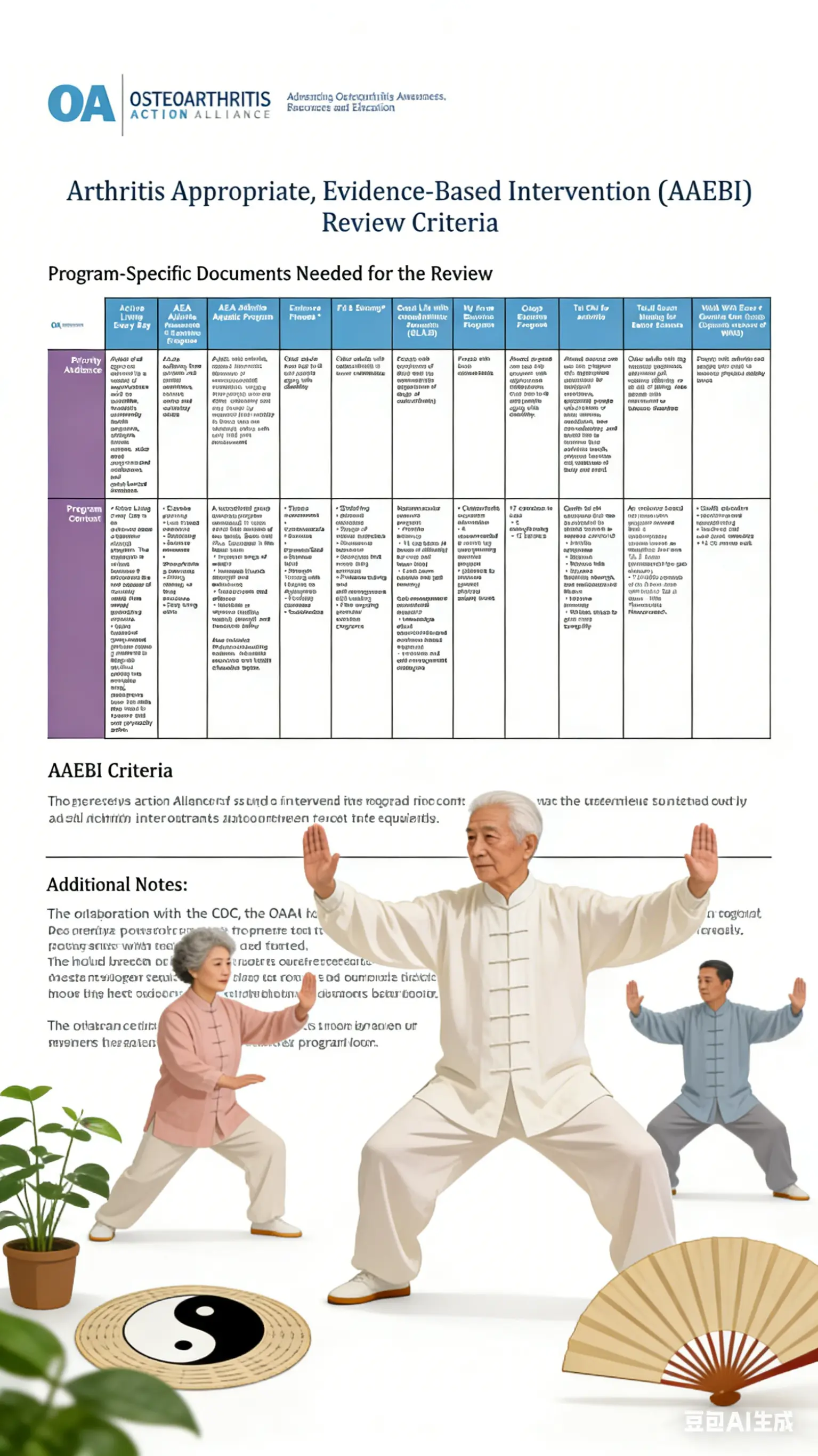
Why Health Agencies Prefer Tai Chi Over High-Intensity Exercise for Seniors
Many standard gym workouts focus only on isolated muscle groups or cardiovascular endurance. However, high-impact workouts (like jogging or heavy weightlifting) can grind down cartilage and stress vulnerable joints.
Health agencies prefer Tai Chi because it trains the entire movement system through a unique triad:
- Low-Impact, Fluid Movement : Movements are weight-bearing but devoid of sudden force. Instead of jarring the joints, these gentle motions act like a sponge, helping to circulate synovial fluid and naturally lubricate the joints. Read more:Is Tai Chi Walking Safe for Knees? A Biomechanical & Medical Perspective
- Neuromuscular Training : Slow, deliberate transitions improve gait control and spatial awareness—the fundamental building blocks of fall prevention.
- Core-Centered Stability : These balance improvements are grounded in structural practices that engage the Dantian (丹田) as a stabilizing core — the lower abdominal center that modern research correlates with improved postural control.
- Mind–Body Integration : Tai Chi requires “mindful control of body positioning.” Your brain is actively engaged in directing your balance, which improves both physical stability and cognitive health. Read more: Tai Chi Health Benefits: What 210 Clinical Trials Actually Show
CDC Program Spotlight #1: Tai Chi for Arthritis (TCA)
One of the most prominent programs endorsed by the CDC is Tai Chi for Arthritis (TCA). Originally developed by Dr. Paul Lam along with a team of medical and Tai Chi experts at the Tai Chi for Health Institute, it was meticulously designed to be safe and effective for people living with joint degeneration.
Who Is It For?
This program is universally adaptable. It is highly recommended for:
- Adults suffering from osteoarthritis or rheumatoid arthritis.
- Older adults ranging from frail individuals to those with active fitness levels.
- People aging with disabilities who may need modified, seated, or supported movement options.
The Program Structure
Instead of overwhelming beginners with lengthy martial arts forms, the TCA system distills the practice into 17 easy-to-learn movements (5 specific strengthening exercises and 12 balance-focused movements). Because it is based on the Sun style of Tai Chi—known for its higher stances and agile stepping—it avoids deep knee bends, making it incredibly knee-friendly.
CDC Program Spotlight #2: Tai Ji Quan: Moving for Better Balance (TJQMBB)
While TCA focuses heavily on joint pain, the second CDC-recognized program tackles another massive public health crisis: falls. Developed by Dr. Fuzhong Li at the Oregon Research Institute, Tai Ji Quan: Moving for Better Balance (TJQMBB) transforms traditional martial arts biomechanics into a targeted fall-prevention therapy.
Who Is It Designed For?
This intervention is prescribed for:
- Older adults experiencing lower-extremity (leg) muscle weakness.
- Individuals with abnormal gait patterns or walking difficulties.
- People specifically at a high risk of falling.
What Makes This Program Unique?
TJQMBB is directly derived from the world-famous Simplified 24-Form Tai Chi, but it has been medically adapted. It features an 8-form core routine that incorporates “Mini Therapeutic Movements.” Deep Dive: The Comprehensive Guide to 24-Step Simplified Tai Chi: History, Philosophy, and Practice
(Webmaster Note: [Insert 24-Form YouTube Video Here])
Instead of just standing still, participants practice functional walking patterns, controlled weight shifting, and balance transitions. They learn how to recover their center of gravity—essentially teaching the body how to “catch” itself before a trip turns into a devastating fall[4].
Quick Comparison: Which CDC Tai Chi Program is Right for You?
| Feature | Tai Chi for Arthritis (TCA) | Tai Ji Quan: Moving for Better Balance (TJQMBB) |
|---|---|---|
| Primary Focus | Joint pain relief, stiffness reduction, and general wellness. | Strict fall prevention, postural stability, and functional mobility. |
| Target Audience | Almost anyone, especially those with arthritis, rheumatic conditions, or sedentary adults. | Older adults with leg weakness, abnormal gait, or a high risk of falling. |
| Program Structure | 17 total exercises (5 strengthening, 12 balance). | 8-form core routine derived from the 24-Form, plus Mini Therapeutic Movements. |
| Key Clinical Benefits | Reduces arthritis pain, improves immunity, increases flexibility, and reduces mental stress. | Improves global cognitive function, ankle/hip mobility, and lower-extremity strength. |
| Class Format | 1 hour per session, 1-2 times a week. | 1 hour per session, 1-2 times a week. |
| Duration to Results | 8 to 16 weeks (Ongoing practice is highly encouraged). | 12 to 24 weeks (24 weeks encouraged for optimal fall prevention). |
How Long Does It Take to See Results?
According to public health guidelines, you don’t need to practice for hours a day. Consistency matters far more than intensity:
- Early Benefits : Many practitioners notice reductions in joint pain and improvements in mood within the first 8 to 12 weeks.
- Optimal Fall-Prevention : For significant neuromuscular changes and maximum fall prevention, the CDC encourages around 24 weeks (about 6 months) of consistent practice (1 to 3 times per week).
Even a short, 10-minute daily practice can gradually rebuild your mobility and confidence.
Explore the Full Tai Chi Knowledge System
You do not need prior martial arts experience or exceptional flexibility to begin. At TaiChiWuji, we provide a complete, structured pathway to help you integrate these evidence-based movements into your daily life.
- New to Tai Chi and unsure where to start?👉 See the Tai Chi for Beginners Learning Journey
- Want to understand the biomechanical principles behind these health benefits?👉 Explore the Core Principles of Tai Chi (Posture, Relaxation, and Alignment)
- Looking for a simple daily routine for stability?👉 Try the 5-Minute Daily Tai Chi Walking Guide for Seniors
- Need age-specific guidance for beginners over 50 or 60?👉 Read Tai Chi for Beginners Over 50 vs. Over 60
- Ready to explore our complete knowledge base?👉 Visit the Comprehensive Tai Chi Knowledge Map
Frequently Asked Questions (FAQ)
- Can Tai Chi cure arthritis?
No medical intervention or exercise can completely cure arthritis. However, Tai Chi is recognized by the CDC as a highly effective, evidence-based physical activity that can significantly reduce joint pain, alleviate stiffness, and vastly improve your daily physical function and quality of life.
- Is Tai Chi safe for older adults with bad knees?
Yes. Tai Chi is a low-impact practice that minimizes joint stress. By strengthening the muscles around the knees and improving alignment, it provides better support for damaged joints. Programs like Tai Chi for Arthritis are specifically modified to avoid deep knee bends.
- How many times a week should I practice Tai Chi for better balance?
Clinical trials and CDC-recognized programs generally recommend practicing 1 to 3 times per week for about 45 to 60 minutes per session. For the best fall-prevention results, maintaining this consistent practice for 12 to 24 weeks produces the strongest neuromuscular improvements.
Sources
- aginganddisabilitybusinessinstitute.org
- brownhealth.org
- wa.gov
- nih.gov
⚠️ Not medical advice. This article is for educational purposes only. Always consult a qualified healthcare provider before starting any exercise or wellness program.
Master Mingde Chen
12th generation Chen-style inheritor with decades of teaching experience.
View all articles →