Tai Chi Forms Guide: 8, 16, 24, 42, 48, 56 & 85 Compared
Not sure which Tai Chi form to learn? This complete guide compares 8, 16, 24, 42, 48, 56, and 85 forms — with a clear learning path based on your level and goals. Includes the Thirteen Postures framework and expert progression advice.
What This Guide Will Help You Understand
Style determines which forms you’ll practice , if you search for “Tai Chi forms,” you are usually trying to answer one of three questions:
- What Tai Chi forms exist?
- What is the difference between 24, 42, 56, 85 forms?
- Which form should I learn?
This guide answers all three.
Before going into details, here is a structured comparison of the major Tai Chi forms practiced today.
Tai Chi Forms Comparison Table
| Form | Style Base | Moves | Duration | Difficulty | Best For | Popularity |
|---|---|---|---|---|---|---|
| 8 Form | Yang simplified | 8 | 3–5 min | Very Easy | Absolute beginners | ⭐⭐ |
| 16 Form | Yang simplified | 16 | 5–6 min | Easy | Beginners | ⭐⭐⭐ |
New to internal arts entirely? Qigong for Beginners may be a simpler starting point than Tai Chi forms. | 24 Form | Yang | 24 | 5–8 min | Easy–Moderate | Health & daily practice | ⭐⭐⭐⭐⭐ | | 42 Form | Mixed styles | 42 | 6–8 min | Moderate | Competition | ⭐⭐⭐⭐ | | 48 Form | Mixed traditional | 48 | 8–10 min | Moderate | Intermediate | ⭐⭐⭐ | | 56 Form | Chen style | 56 | 8–10 min | Moderate–Advanced | Competition / Chen learners | ⭐⭐⭐ | | 85 Form | Traditional Yang | 85 | 20–30 min | Advanced | Deep traditional study | ⭐⭐ |
This table gives you orientation. Now let’s clarify what a “form” actually means.
What Is a Tai Chi Form?
A Tai Chi form is a structured sequence of movements performed in a fixed order.
It combines:
- posture transitions
- stepping patterns
- breath coordination
- internal body mechanics
- martial applications
In Chinese martial arts, this is called a taolu (套路).
If you are new to the broader art of Tai Chi Chuan , you may want to first read our glossary entry here: 👉 https://www.taichiwuji.com/tai-chi-chuan
You can also review the specific definition of a Tai Chi Form here: 👉 https://www.taichiwuji.com/tai-chi-form
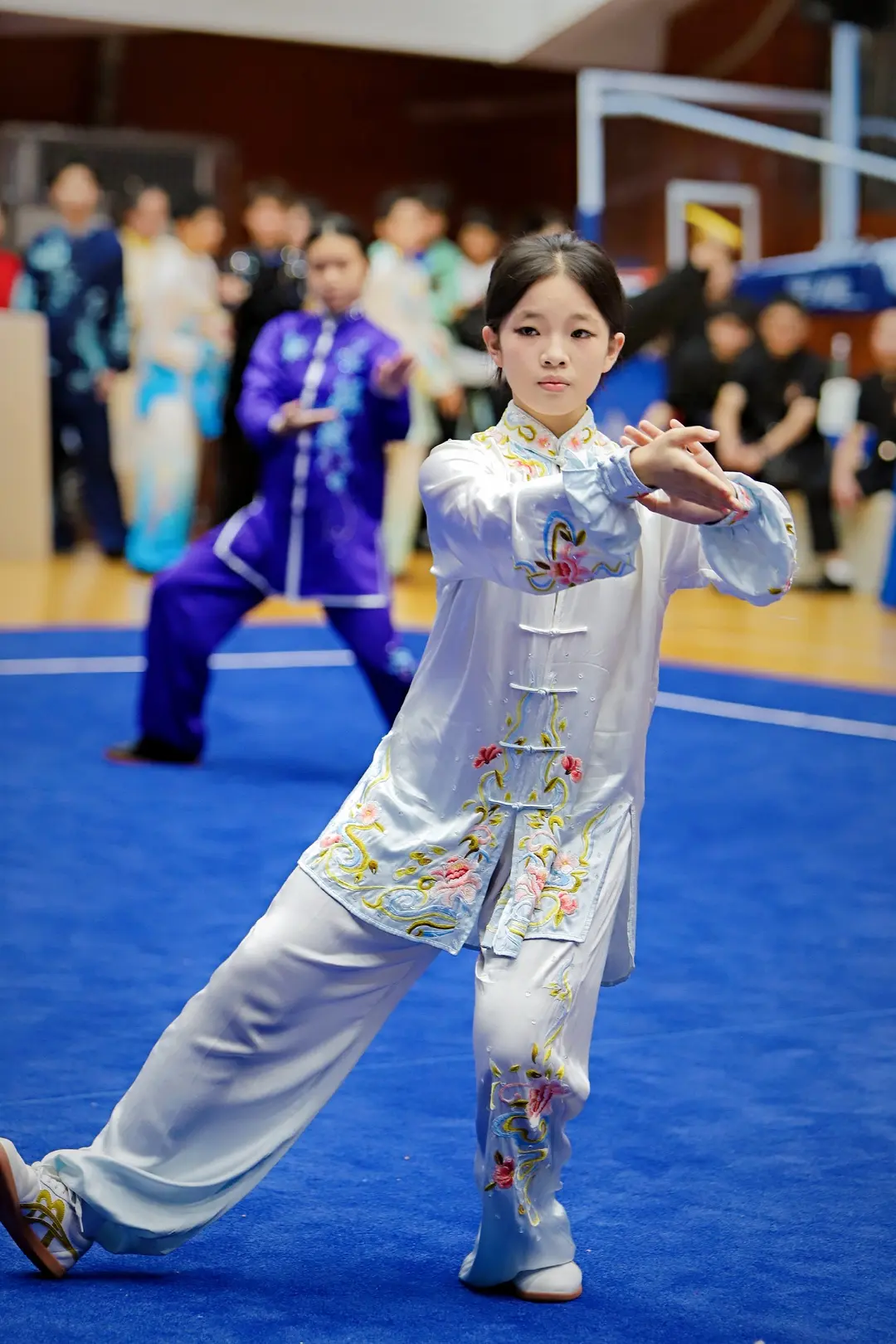
Form vs Style: Understanding the Difference
This confusion is extremely common.
- Style = lineage system (Chen, Yang, Wu, Sun)
- Form = specific routine inside a style
For example:
- Chen-style Taijiquan is a style
- 56 Form is a standardized routine within that style
- Yang-style Taijiquan is a style
- 24 Form and 85 Form are routines derived from Yang tradition
In English, “form,” “routine,” “set,” and “sequence” are often used interchangeably. On this site, we use form as the primary term for clarity and SEO consistency.
How Many Tai Chi Forms Exist?
There is no single number.
Forms fall into three broad categories:
1. Traditional Lineage Forms
These are family-transmitted long routines developed over generations.
Examples:
- Chen Laojia (Old Frame)
- Yang 85 Form
- Wu 96 Form
These preserve:
- silk reeling mechanics
- martial intent
- repetition structures
- complete internal training method
Historically, forms evolved through masters like Chen Wangting and Yang Luchan.
2. Government Standardized Forms
In 1956, Chinese sports authorities created simplified routines to promote public health.
These include:
- 24 Form
- 48 Form
- 42 Competition Form
- 56 Chen Competition Form
They were organized by the Chinese Wushu Association.
Purpose:
- easier learning
- shorter duration
- standardized judging criteria
- global dissemination
3. Weapon Forms
Tai Chi also includes weapon routines, such as:
- Tai Chi Sword
- Tai Chi Fan
For detailed guides, see:
- Sword Hub: https://www.taichiwuji.com/tai-chi-sword
- Beginner Sword Guide: https://www.taichiwuji.com/tai-chi-sword-guide
- Fan Guide: https://www.taichiwuji.com/tai-chi-fan
Weapon forms build on empty-hand principles but add coordination complexity.
!(https://cdn.taichiwuji.com/tai-chi-forms-guide-2.webp)
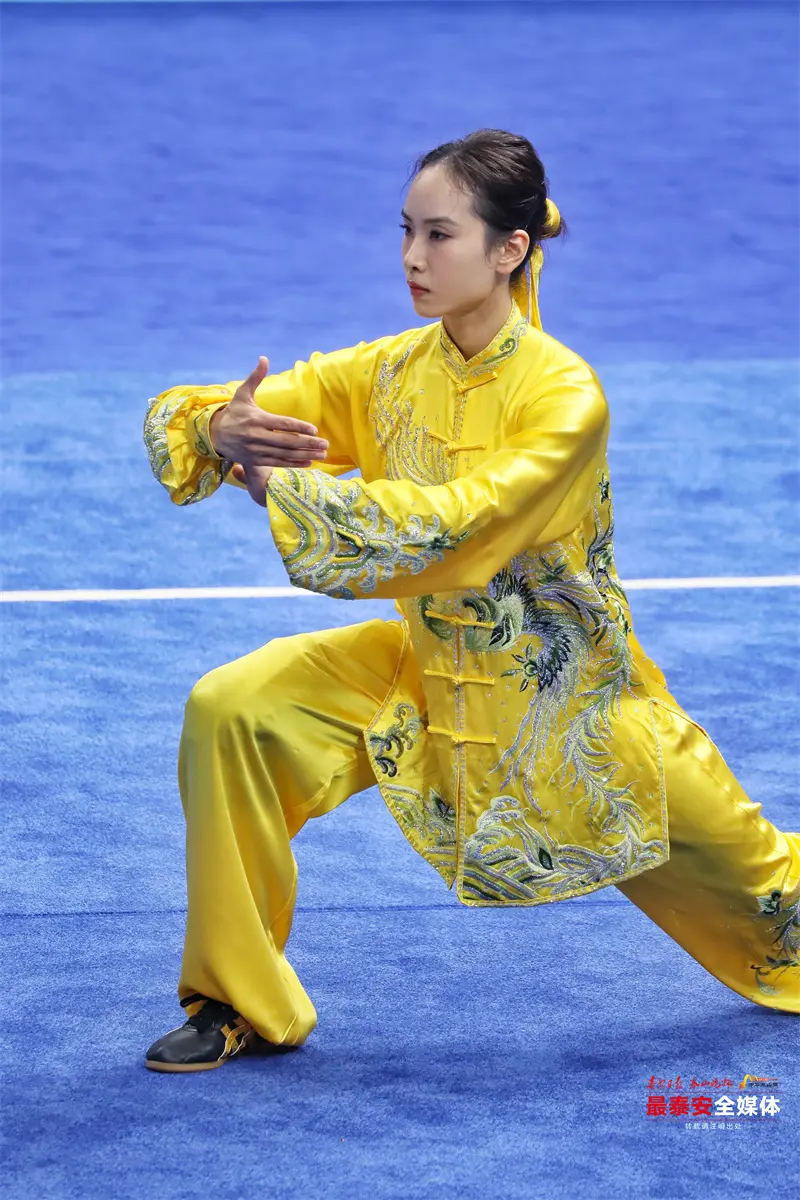
Short, Medium, and Long Forms
Another useful way to classify forms is by duration:
Short Forms (3–8 minutes)
8 Form 16 Form 24 Form
Medium Forms (8–15 minutes)
42 Form 48 Form 56 Form
Long Forms (20+ minutes)
85 Form Traditional Chen Long Forms
This helps beginners choose realistically based on time availability.
Suggested Learning Path
If you’re unsure where to begin, here is a practical progression model:
- Absolute Beginner → 8 Form
- Beginner → 16 Form (See full guide here: https://www.taichiwuji.com/tai-chi-16-form-a-step-by-step-guide-with-front-back-demonstration)
- General Health Practice → 24 Form
- Competition Focus → 42 or 56 Form (See detailed 56 guide: https://www.taichiwuji.com/chen-style-tai-chi-56-form)
- Traditional Deep Study → 85 Form (Complete Guide to Zhao Youbin’s Teaching)
- Pre-Tai Chi Foundations → Baduanjin (八段锦) — the Eight Brocades Qigong, a standalone 8-movement sequence that builds foundational body awareness before moving into Tai Chi forms
If you are completely new, you may start here first: 👉 https://www.taichiwuji.com/tai-chi-for-beginners
!(https://cdn.taichiwuji.com/tai-chi-forms-guide-3.webp)
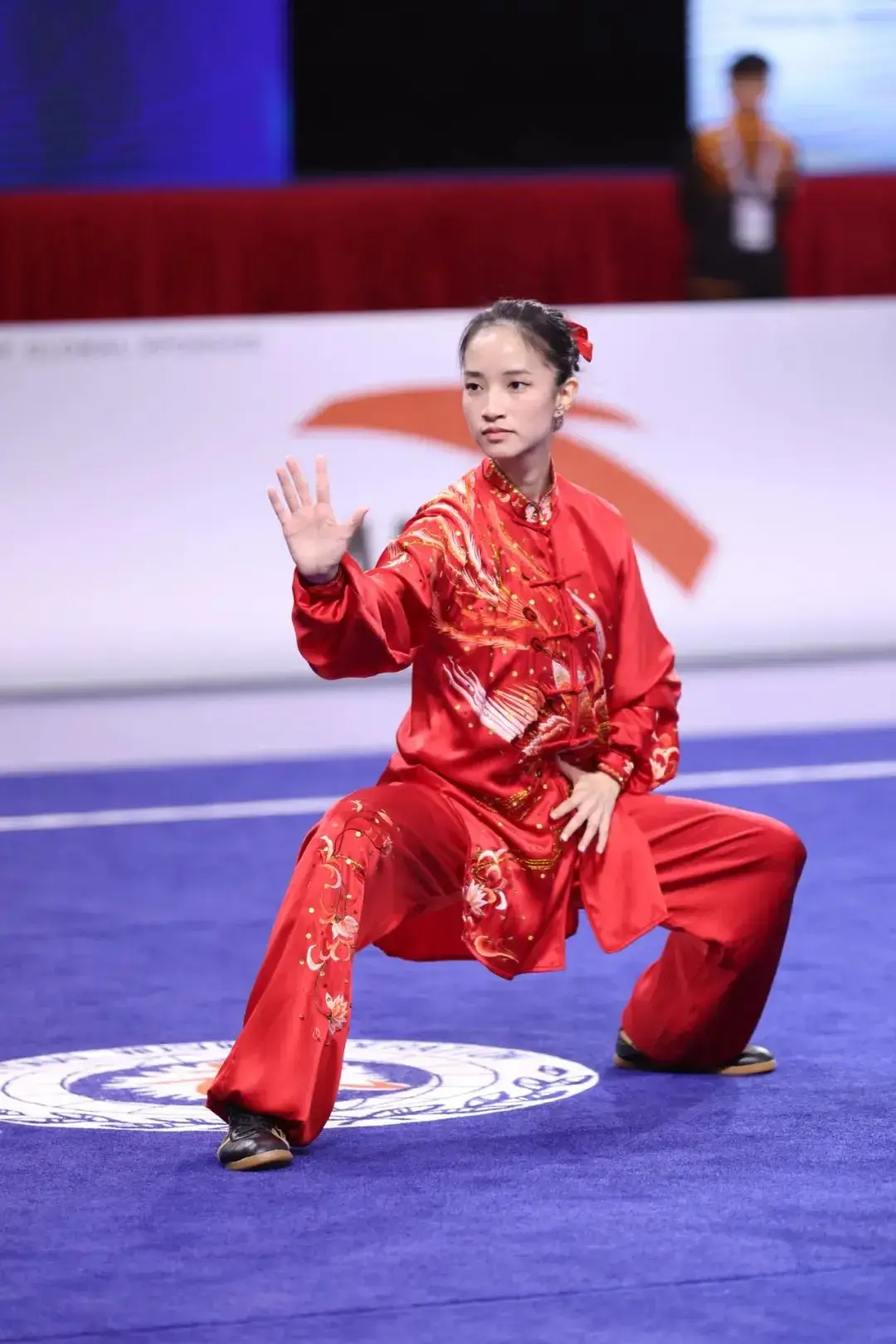
The Most Practiced Tai Chi Forms Explained
Below are the forms most commonly practiced worldwide, ordered by accessibility and global adoption.
8 Form Tai Chi
The 8 Form is the most simplified entry-level routine derived from Yang style fundamentals.
It includes:
- basic stepping patterns
- foundational postures
- simplified transitions
Best for:
- seniors
- complete beginners
- rehabilitation settings
It introduces the body mechanics of Yang-style Taijiquan without overwhelming complexity.
16 Form Tai Chi
The 16 Form builds upon the 8 Form and introduces:
- direction changes
- coordinated upper-lower body movement
- longer flow sequences
It maintains accessibility while adding structural coherence.
You can see our full step-by-step breakdown here: 👉 https://www.taichiwuji.com/tai-chi-16-form-a-step-by-step-guide-with-front-back-demonstration
For many learners, this is the ideal “true beginner form.”
24 Form Tai Chi (Simplified Tai Chi)
The 24 Form is the most widely practiced Tai Chi routine in the world.
Created in 1956 by Chinese sports authorities, it was designed to:
- preserve essential Yang-style characteristics
- shorten learning time
- promote public health
Characteristics:
- balanced left-right symmetry
- smooth transitions
- moderate learning curve
- duration around 5–8 minutes
It retains core Tai Chi principles such as:
- relaxation ( song )
- rooted stepping
- coordinated breathing
- continuous flow
For most people interested in long-term daily practice, this is the standard choice. See our step‑by‑step animated guide to the 24 Form .
!(https://cdn.taichiwuji.com/tai-chi-forms-guide-4.webp)
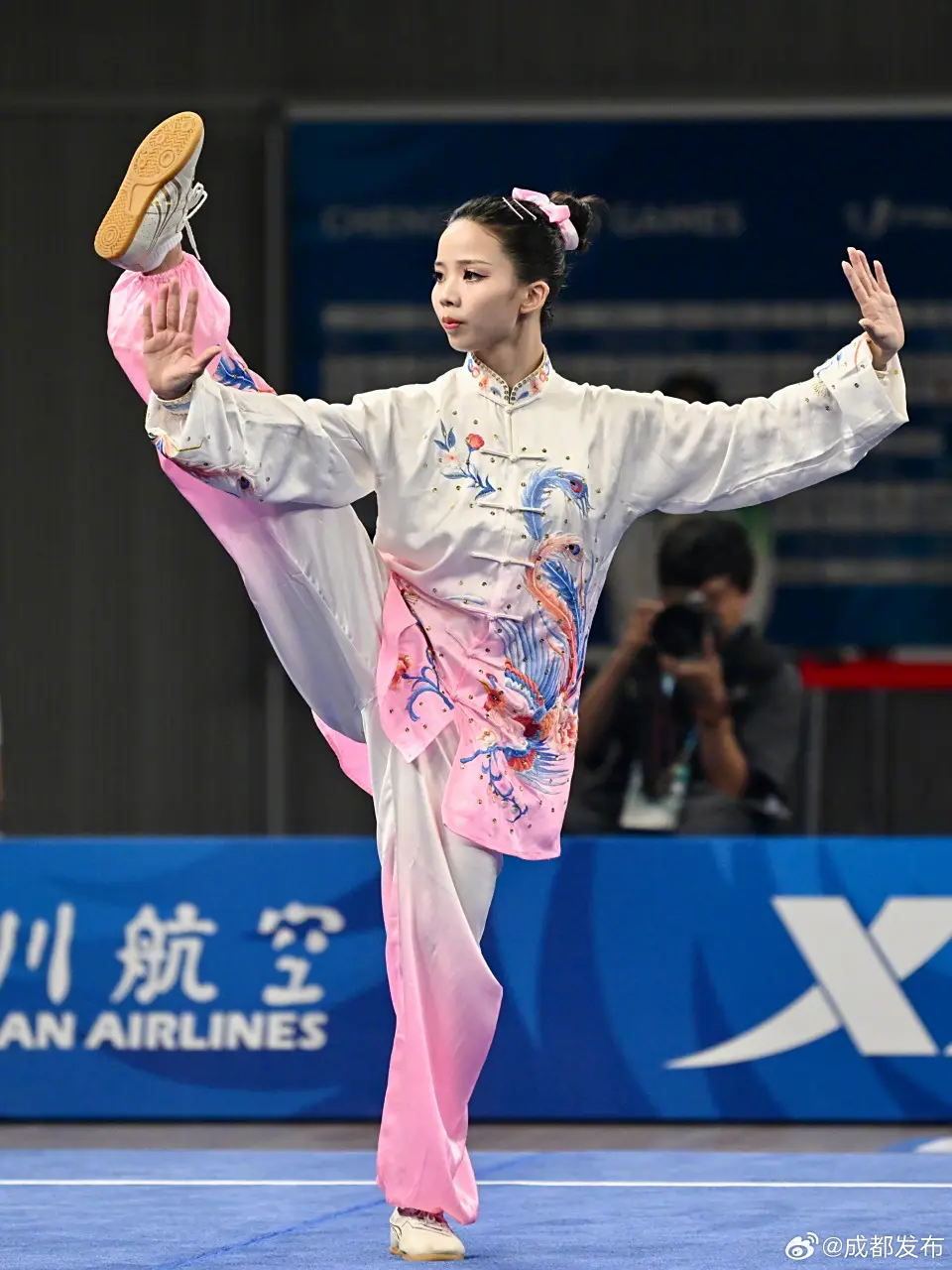
42 Form Tai Chi (Competition Form)
The 42 Form is a composite competition routine integrating elements from:
- Chen-style Taijiquan
- Yang-style Taijiquan
- Wu-style Taijiquan
- Sun-style Taijiquan
It was designed for standardized judging.
Features:
- clearer dynamic contrasts
- technical diversity
- defined tempo variation
- competition scoring structure
This form is ideal for:
- tournament preparation
- experienced practitioners
- those who want cross-style exposure
48 Form Tai Chi
The 48 Form bridges simplified and traditional practice.
Compared to 24 Form, it:
- introduces more directional changes
- includes advanced footwork
- expands posture variety
- increases cardiovascular demand
It is suitable for intermediate practitioners who want more technical depth without committing to a 20+ minute long form.
56 Form Chen Style (Competition Standard)
The 56 Form is the standardized Chen-style competition routine.
It preserves:
- silk reeling spirals
- visible fajin (explosive issuing)
- low stances
- dynamic transitions
Unlike the smoother Yang-based 24 Form, the 56 Form reflects the structural DNA of Chen-style Taijiquan.
You can read the full technical explanation here: 👉 https://www.taichiwuji.com/chen-style-tai-chi-56-form
This form is best for:
- practitioners interested in Chen mechanics
- competitive athletes
- intermediate to advanced learners
85 Form (Traditional Yang Long Form)
The 85 Form is the traditional long routine of Yang lineage.
It is significantly longer (20–30 minutes) and emphasizes:
- subtle weight shifts
- uninterrupted continuity
- repetition cycles
- internal refinement
Compared to 24 Form:
- transitions are more detailed
- stepping is more nuanced
- internal intent is emphasized
This form represents the full classical structure of Yang training.
!(https://cdn.taichiwuji.com/tai-chi-forms-guide-5.webp)
Traditional Long Forms vs Standardized Forms
Now that we’ve examined individual examples, let’s clarify the structural difference.
Traditional Long Forms
- Built for complete training systems
- Include repetition for skill internalization
- Emphasize martial logic
- Often exceed 20 minutes
Examples:
- Chen Laojia
- Yang 85
Standardized Modern Forms
- Designed for accessibility
- Shorter duration
- Streamlined movement
- Often adapted for performance
Examples:
- 24 Form
- 42 Form
- 56 Form
Both are legitimate expressions of Tai Chi.
One prioritizes lineage preservation. The other prioritizes dissemination and standardization.
The Theoretical Core: Thirteen Postures (十三势)
All Tai Chi forms—short or long—are built upon a theoretical framework known as the Thirteen Postures.
This includes:
Eight Energies (Ba Men)
- Peng (Ward Off)
- Lu (Rollback)
- Ji (Press)
- An (Push)
- Cai (Pluck)
- Lie (Split)
- Zhou (Elbow)
- Kao (Shoulder)
Five Directions (Wu Bu)
- Advance
- Retreat
- Look Left
- Look Right
- Central Equilibrium
These principles are embedded in every form.
For example:
The posture “Grasp Sparrow’s Tail” in 24 Form contains:
- Peng
- Lu
- Ji
- An
This theoretical structure dates back to classical writings such as the Taijiquan Classic and was historically associated with figures like Chen Wangting.
Future detailed explanation will be expanded in our glossary and dedicated Thirteen Postures article.
Learn the 62-Step Guide to Tai Chi’s 8 Methods & 5 Steps with our visual masterclass.
Do Tai Chi Forms Contain Real Martial Applications?
Yes.
Every posture has:
- striking intent
- joint manipulation potential
- structural alignment purpose
However, forms train the body method.
Practical application is further developed through:
- push hands
- partner drills
- sensitivity training
Forms are the blueprint. Application is the testing ground.
Forms vs Push Hands & Free Practice
Many beginners assume Tai Chi consists only of memorizing forms.
In reality, forms are one part of a larger training system.
A complete Tai Chi training structure often includes:
- Solo forms (fixed sequence)
- Push hands (partner sensitivity training)
- Silk reeling drills (especially in Chen style)
- Standing meditation
- Weapon forms
Push hands develops:
- timing
- structural stability
- sensitivity to force
- application understanding
While forms build:
- alignment
- coordination
- breath integration
- movement continuity
Forms are the architectural blueprint. Push hands tests the structure under pressure.
Can You Practice Multiple Forms?
Yes—but with strategy.
Early Stage Recommendation
If you are a beginner:
Focus on one form first. Build structural familiarity. Develop balance and coordination.
Jumping between multiple routines too early can slow progress.
Intermediate Stage
Once your body mechanics stabilize:
- You may explore a second form.
- Choose based on your goals (health vs competition vs traditional study).
For example:
You might practice 24 Form daily and occasionally study 56 Form for Chen mechanics.
There is no strict rule—but depth matters more than quantity.
Should You Master One Form Before Moving On?
The word “master” is relative.
You do not need perfection before learning another form.
However, you should:
- Understand transitions clearly
- Maintain balance without hesitation
- Execute core postures correctly
If your current form still feels unstable, adding another may create confusion.
Progression should feel layered—not fragmented.
Do Competition Forms Reduce Traditional Depth?
This is a common concern.
Standardized routines such as 42 and 56 were created under guidance of the Chinese Wushu Association.
Their purpose was:
- accessibility
- judging consistency
- global dissemination
While some repetitions were reduced, the core principles of:
- Peng
- Lu
- Ji
- An
- structural rooting
- coordinated movement
remain intact.
Competition forms do not eliminate traditional essence. They compress it.
Health Benefits of Practicing Tai Chi Forms
Although this guide focuses on forms structure, it is important to understand why these routines became globally popular.
Research published in journals such as:
- Journal of Aging and Physical Activity
- Neurology
- British Journal of Sports Medicine
has shown that consistent Tai Chi practice may improve:
- balance and fall prevention
- cardiovascular endurance
- cognitive function
- stress regulation
Because forms involve continuous weight shifting and controlled movement, they create:
- low joint impact
- moderate aerobic demand
- neuromuscular coordination
In 2020, Tai Chi was recognized as Intangible Cultural Heritage by UNESCO.
This reflects not only martial value, but cultural and health significance.
Weapon Forms as Advanced Extensions
After mastering empty-hand forms, many practitioners expand into weapon training.
Examples include:
- Tai Chi Sword
- Tai Chi Fan
These routines increase:
- coordination complexity
- wrist articulation
- spatial awareness
You can explore:
- Sword Hub → https://www.taichiwuji.com/tai-chi-sword
- Sword Beginner Guide → https://www.taichiwuji.com/tai-chi-sword-guide
- Fan Guide → https://www.taichiwuji.com/tai-chi-fan
Weapon training is optional—but structurally connected to empty-hand principles.
Final Perspective
Tai Chi forms are not random choreography.
They are structured training systems that encode:
- internal mechanics
- martial logic
- breath integration
- cultural philosophy
Whether you choose:
- 8 Form
- 24 Form
- 56 Form
- 85 Form
what matters most is consistent practice.
If you are just starting, begin here: 👉 https://www.taichiwuji.com/tai-chi-for-beginners
If you want detailed breakdowns of specific routines, explore our dedicated form guides linked throughout this article.
Tai Chi forms are structured systems — not just sequences to memorize.
Whether you choose 8 Form, 24 Form, 56 Form, or the traditional 85 Form, the key is consistency and clarity of purpose.
Choose a form that fits your level and your goals.
Bookmark this guide as your reference — we regularly update it as new forms and detailed breakdowns are added.
Frequently Asked Questions
- How long does it take to learn a Tai Chi form?
Short forms (8, 16, 24) can be memorized in weeks. Long forms (85) may take months to internalize. True refinement continues for years.
- What is the difference between Tai Chi form and Tai Chi style?
A Tai Chi style refers to a lineage or system, such as Chen-style Taijiquan or Yang-style Taijiquan. A Tai Chi form is a specific routine within that style. For example: Yang style is a system. 24 Form and 85 Form are routines derived from Yang style. Think of style as the family tradition, and form as a specific choreography within that tradition.
- Is a longer form better?
Not necessarily. Long forms provide depth and repetition. Short forms provide accessibility and daily practicality. The best form is the one you will practice consistently.
- Is 24 Form enough?
Yes. For general health, balance, and coordination, 24 Form is complete. Many practitioners never move beyond it—and still gain lifelong benefit.
- Can I mix styles?
You can—but be aware of structural differences. For example: Chen-style Taijiquan emphasizes spiral dynamics and visible explosive energy. Yang-style Taijiquan emphasizes extended frames and smooth continuity. Switching requires body adaptation.
- Are forms purely slow motion exercise?
No. Every posture encodes martial application logic rooted in the classical teachings of the Taijiquan Classic. Speed variation exists in traditional systems—especially in Chen forms.
Whether you are exploring the 8 Form for absolute beginners, the 24 Simplified Form for daily health practice, or the 85 Traditional Long Form for deep Yang-style study — this guide helps you choose the right path. Each form below links to dedicated step-by-step guides with video demonstrations and technical breakdowns. For a complete, self-paced curriculum with milestone checkpoints, explore our structured programs.
Detailed Form Breakdowns
Explore each major Tai Chi form with dedicated step-by-step guides, videos, and technical analysis.
8 Form Tai Chi
The most simplified entry-level routine — 8 movements derived from Yang style fundamentals, ideal for seniors and complete beginners.
Read Guide →16 Form Tai Chi
Builds on the 8 Form with direction changes and coordinated upper-lower body movement — the ideal "true beginner form."
Read Guide →24-Step Simplified Form
The most widely practiced Tai Chi routine worldwide. Created in 1956 for public health, balancing Yang-style essence with accessibility.
Read Guide →42 Form Competition
A composite competition routine integrating Chen, Yang, Wu, and Sun elements. Ideal for tournament preparation and cross-style exposure.
Read Guide →48 Form Tai Chi
Bridges simplified and traditional practice with more directional changes, advanced footwork, and expanded posture variety.
Read Guide →Chen Style 56 Form
Standardized Chen-style competition routine preserving silk reeling spirals, fajin, low stances, and dynamic transitions.
Read Guide →85 Form (Traditional Yang Long Form)
The traditional long routine of Yang lineage — 20-30 minutes emphasizing subtle weight shifts, uninterrupted continuity, and internal refinement.
Read Guide →Yang Style Tai Chi
The most popular Tai Chi style worldwide, characterized by large, slow, open movements and flowing grace.
Read Guide →Frequently Asked Questions
Everything you need to know about choosing and practicing Tai Chi forms.
How long does it take to learn a Tai Chi form?
What is the difference between Tai Chi form and Tai Chi style?
Is a longer form better?
Is 24 Form enough?
Can I mix styles?
Are forms purely slow motion exercise?
Can you practice multiple forms?
Should you master one form before moving on?
Ready to Begin?
Start with the 8 Form or 24 Form — no equipment needed. Build a foundation that lasts a lifetime.
Get Weekly Forms Tips
New to Tai Chi forms? Get one actionable tip each week plus our free eBook.
No spam. Unsubscribe anytime.