The Five Pillars of Tai Chi Push Hands: Technique, Science & Mastery
Key Takeaways
- 5 classical push hands methods progress from fixed-step single-hand to free-style moving-step sparring
- Dan Tui (single-hand) builds sensitivity; Ding Bu (fixed-step both hands) trains neutralization under pressure
- Hua Bu (moving-step) adds footwork; Da Lu (large roll-back) introduces advanced spiral techniques for Fa Jin
- Each method teaches a distinct layer — completing all 5 stages typically takes 2-3 years of consistent practice
Tai Chi Push Hands is a progressive training system built on five core methods—circular sensitivity drills, fixed-step structure training, moving-step adaptability, four-corner power redirection, and free-form spontaneous response. Together, they develop listening skill, balance control, and effortless whole-body power under pressure.
The Silent Dialogue of Touch
Two practitioners stand in quiet contact. No punches. No visible force. Hands glide, pause, yield, and return.
Nothing dramatic happens—until balance disappears.
This is Tai Chi Push Hands , not as fighting, but as a silent conversation of structure, timing, and intent . Every subtle shift reveals information. Every response rewrites the exchange.
Behind this quiet exchange lies a five-method training system , refined over generations, that leads practitioners from basic tactile awareness to spontaneous, unscripted adaptability.
This article decodes that system— method by method —through classical Tai Chi pedagogy, modern biomechanics, and verified training protocols.
Tai Chi Push Hands: A Structured System, Not Random Sparring
In classical Tai Chi Chuan , Push Hands (Tui Shou) is the bridge between solo form and real application. It is where principles are tested, not imagined.
Rather than a single drill, Push Hands is a progressive hierarchy :
| Training Level | Method | Core Skill Developed |
|---|---|---|
| Foundation | Circular Movements | Listening & Sensitivity |
| Structural | Fixed-Step Push Hands | Root & Alignment |
| Adaptive | Moving-Step Push Hands | Dynamic Balance |
| Tactical | Da Lü (Four Corners) | Angled Power & Close Control |
| Mastery | Hua Bu (Free-Form) | Spontaneous Response |
Each method builds a specific layer of Listening Jin , structural integrity , and neuromuscular coordination .
👉 For a biomechanical overview of how Push Hands works as a system, see [ Tai Chi push hands mechanics ] → Push Hands as Applied Science
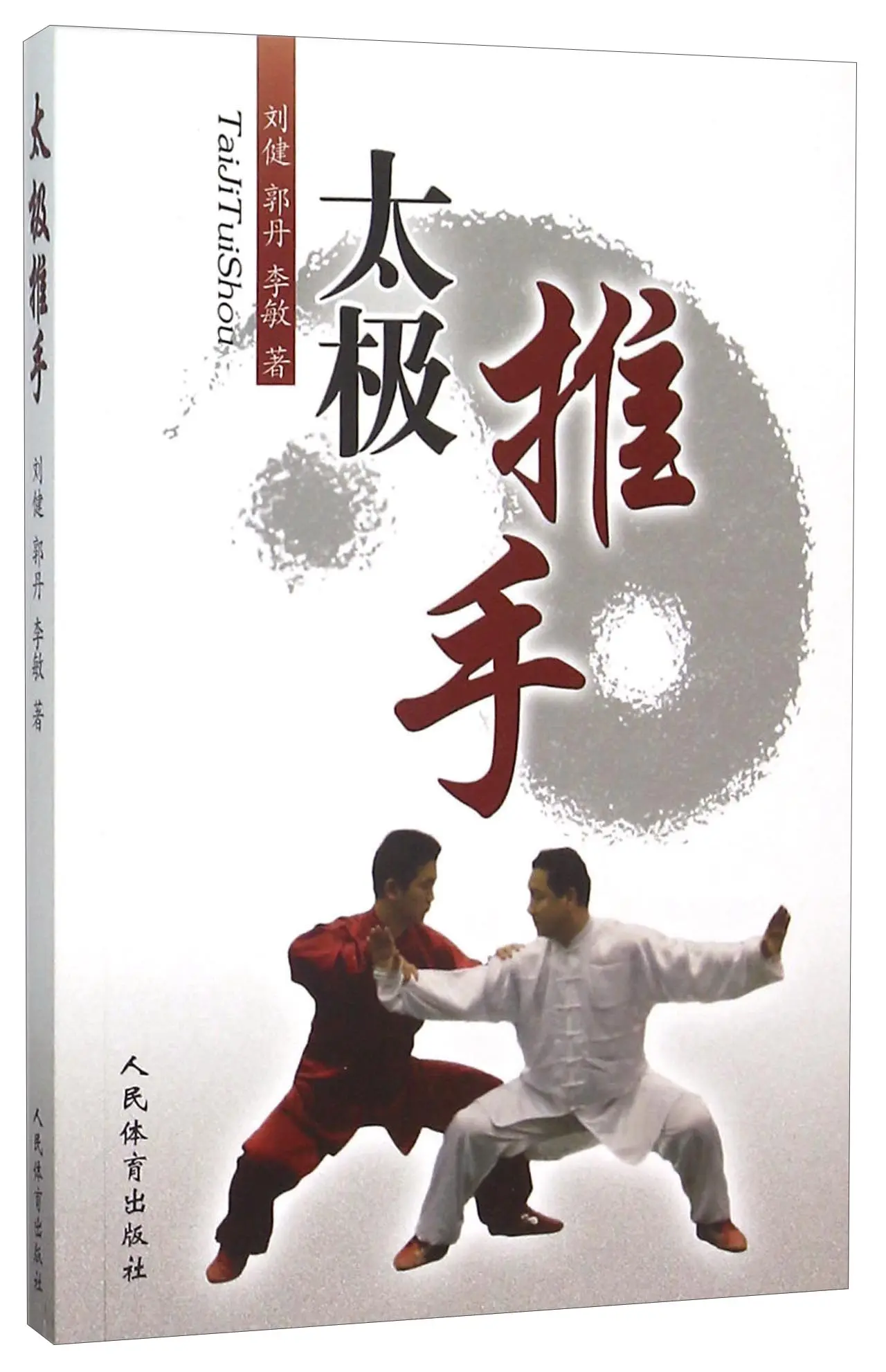
Method 1: Single-Hand & Double-Hand Circular Movement
The Foundation of Listening Jin
Training Focus
- Single-Hand Circular Movement isolates one arm to cultivate listening jin through continuous contact.
- Double-Hand Circular Movement integrates both arms with waist rotation, developing sticky hands sensitivity.
How It Works
One arm receives, yields, and redirects. The other remains quiet—until timing emerges.
The goal is not pushing , but sensing:
- Direction
- Magnitude
- Intention
Scientific Insight
- sEMG studies show reduced antagonist muscle co-contraction after 4–6 weeks
- Proprioceptive mapping improves significantly through uninterrupted circular motion
Common Error
Overusing the shoulders instead of the waist.
Correction cue : Let the waist lead; the arms follow.
To see how these five Push Hands methods are traditionally demonstrated within Chen-style Tai Chi, watch Grandmaster Chen Xiaowang explain the complete training progression below.
Method 2: Fixed-Step Push Hands
The Laboratory of Structural Integrity
Fixed-step Push Hands removes footwork to expose structural truth.
Training Rules
- Feet remain rooted
- Only waist rotation and weight shifting allowed
- Emphasis on Peng, Lu, Ji, An
Combat Logic
When movement is restricted, structure must work .
A common exchange:
- Opponent presses forward
- You roll back (Lu), lead them into emptiness
- A subtle forward An completes the cycle
Scientific Evidence
- Force plate data shows optimized center-of-pressure control
- Improved postural stability under load
👉 Structural root here directly connects to [ standing meditation and center of gravity control ] → Zhan Zhuang Weight Loss
Method 3: Moving-Step Push Hands
Dynamic Balance in Motion
Here, structure learns to move.
Training Features
- Forward, backward, lateral, and diagonal stepping
- Continuous contact maintained
- Hands, waist, and feet act as one unit
Tactical Upgrade
This method introduces anticipation:
- Not reacting after force arrives
- But adjusting as it forms
Biomechanical Findings
- Faster reaction latency compared to fixed-step practitioners
- Enhanced vestibular–visual integration
👉 This directly overlaps with [ Tai Chi walking mechanics ] → Tai Chi Walking
Method 4: Da Lü — Four-Corner Control
Winning Through Angles, Not Force
Da Lü (大捋) shifts Push Hands into oblique space.
Core Energies
- Cai (Pluck) – downward disruption
- Lie (Split) – rotational separation
- Zhou (Elbow) – short-range power
- Kao (Shoulder) – body mass alignment
Why Angles Matter
Biomechanical modeling confirms that 45° force vectors:
- Maximize torque
- Minimize energy cost
- Collapse structure efficiently
Da Lü is not aggression—it is redirected inevitability.
Method 5: Hua Bu Push Hands
When Technique Disappears
Hua Bu (花步), also called free-form Push Hands, removes preset patterns.
No counting. No sequences. Only contact.
The Principle
She Ji Cong Ren — abandon self, follow the other.
Responses arise before conscious thought.
Neuroscience Insight
- fMRI studies show reduced prefrontal activation
- Neural patterns resemble musical improvisation
This is where Push Hands becomes embodied intelligence , not technique.
Why These Five Methods Matter Together
Each method develops a layer of capability:
- Sensory awareness
- Structural reliability
- Adaptive movement
- Tactical angles
- Spontaneous response
Remove one, and the system collapses.
Push Hands is not about pushing someone down. It is about knowing when not to push at all .
Conclusion: From Training to Wisdom
All five methods depend on maintaining Zhong Ding (中定) — central equilibrium — under varying degrees of external force. The practitioner who loses the axis loses the structure.
The five methods of Tai Chi Push Hands form a complete progression—from perception to action, from structure to spontaneity.
What appears soft is precise. What appears slow is timed.
In this system, power is not forced —it is revealed.
FAQ — Advanced Questions About Tai Chi Push Hands
- Is Tai Chi Push Hands a fighting method or a training system?
Tai Chi Push Hands is not a standalone fighting style, but a structured training system. Its purpose is to develop sensitivity, timing, balance control, and whole-body coordination under pressure—skills that directly translate into real martial application when combined with form and striking practice.
- Why does Tai Chi Push Hands emphasize “listening” instead of force?
Because force without information is blind. Listening Jin allows a practitioner to detect direction, intention, and timing through contact, enabling efficient responses before muscular force is fully expressed. This is why advanced Push Hands appears effortless rather than aggressive.
- What is the correct progression for learning Tai Chi Push Hands?
A traditional and effective progression follows five stages: Circular sensitivity drills (single-hand and double-hand) Fixed-step Push Hands (structural integrity) Moving-step Push Hands (dynamic balance) Da Lü (four-corner angled control) Hua Bu (free-form spontaneous response) Skipping stages often results in force-based habits that limit long-term skill.
- How is Fixed-Step Push Hands relevant to real movement or combat?
Fixed-step Push Hands isolates structure and alignment by removing footwork. It reveals weaknesses in rooting, timing, and waist control that would otherwise be hidden by stepping. Once structure is reliable, mobility can be safely reintroduced through moving-step practice.
- What makes Da Lü different from standard Push Hands drills?
Da Lü focuses on angled force rather than frontal exchange. By using oblique vectors (approximately 45°), practitioners learn to disrupt balance with minimal effort, integrating Cai, Lie, Zhou, and Kao for close-range control and issuing power.
- Is Hua Bu Push Hands “anything goes,” or does it still follow principles?
Hua Bu has no fixed patterns, but it is not random. All responses still follow Tai Chi principles such as yielding, timing, structural alignment, and whole-body coordination. The difference is that decisions emerge spontaneously rather than from memorized sequences.
- How does Push Hands develop internal power ( Jing )?
Push Hands provides constant feedback. Any break in structure, timing, or coordination is immediately exposed through contact. Over time, this refines Jing—functional whole-body power—by eliminating unnecessary tension and reinforcing efficient movement pathways. 👉 For a clear definition of Jing, see: Jing (劲): Refined Power in Tai Chi
- Can Push Hands improve balance and stability for non-martial practitioners?
Yes. Research shows that Push Hands training significantly improves proprioception, center-of-gravity control, and neuromuscular coordination. These benefits directly support balance, fall prevention, and efficient walking mechanics.
- How long does it take to develop real skill in Push Hands?
Basic sensitivity can develop within months, but genuine adaptability requires years of consistent practice. Push Hands is not about accumulating techniques—it is about rewiring perception and response, which follows biological rather than intellectual timelines.
- Is Push Hands useful without practicing Tai Chi forms?
Push Hands can be practiced independently, but its effectiveness is limited without form training. Forms encode alignment, transitions, and power pathways that Push Hands tests under pressure. Together, they form a complete system.
- Why does advanced Push Hands look slow compared to other martial arts?
Slowness is often a training method, not a limitation. Reduced speed allows practitioners to refine timing, structure, and perception. When conditions demand it, the same mechanics can express power rapidly and decisively.
- What is the most common mistake in Push Hands training?
Confusing sensitivity with passivity. True listening does not mean yielding endlessly—it means yielding until conditions are created for decisive action.
- Is Push Hands meant for competition or self-cultivation?
Traditionally, Push Hands serves both purposes. Competitive formats emphasize balance and control, while traditional training prioritizes adaptability and internal development. The underlying principles remain the same.
Master Mingde Chen
12th generation Chen-style inheritor with decades of teaching experience.
View all articles →