Tai Chi Walking for Seniors: 5-Min Daily Balance & Fall Prevention Guide
Key Takeaways
- 5-minute daily Tai Chi walking routine specifically designed for seniors and fall prevention
- Reduces fall risk by improving proprioception and weight-shifting control at slow, safe speeds
- Can be done with chair support or walking aid — adaptable to any mobility level
- Clinically shown to improve gait stability and confidence in daily walking within 4 weeks
Written by Master Mingde Chen (12th Gen. Inheritor) | Reviewed by Dr. Jing Li, PhD (Biomechanics)
Quick Answer: How Tai Chi Walking Prevents Falls
Most falls happen during weight transfer (moving from one foot to the other). Tai Chi Walking retrains this specific moment by teaching clear separation between the substantial (weighted) leg and the insubstantial (free) leg — the principle of Xushi (虚实) — so every weight transfer is intentional rather than reactive. Key components include:
- Improving Proprioception: Increasing foot sensitivity to the ground.
- Strengthening Stabilizers: Activating deep hip and core muscles.
- Slowing Reaction Time: Teaching the brain to control momentum rather than reacting with panic.
A simple, safe walking method to stay steady, confident, and independent as you age.
Why Falls Are the #1 Hidden Threat for Seniors
For many older adults, the biggest health risk isn’t heart disease or arthritis—it’s falling.
Falls are one of the leading causes of injury and loss of independence among seniors. Most falls don’t happen during intense activity. They happen during everyday moments: getting up from a chair, turning in the kitchen, stepping onto an uneven surface, or starting to walk too quickly.
The good news is this: Most falls are not caused by “weak legs.” They are caused by a declining balance system.
And balance—especially walking balance—can be retrained. This is where Tai Chi Walking becomes especially valuable.
Why Walking Balance Is Different From Standing Balance
Many balance exercises focus on standing still (like standing on one leg). While helpful, they miss a critical point:
“Most falls happen while moving, not while standing still.”
Walking balance is dynamic. Every step requires you to shift weight, support yourself on one leg, and control forward momentum. The most dangerous moment is the transition between steps .
Tai Chi walk trains these exact transitional moments—slowly, safely, and intentionally. Many balance and knee issues improve not only through walking technique, but through the foundational postural training developed in Zhan Zhuang ( standing meditation ).
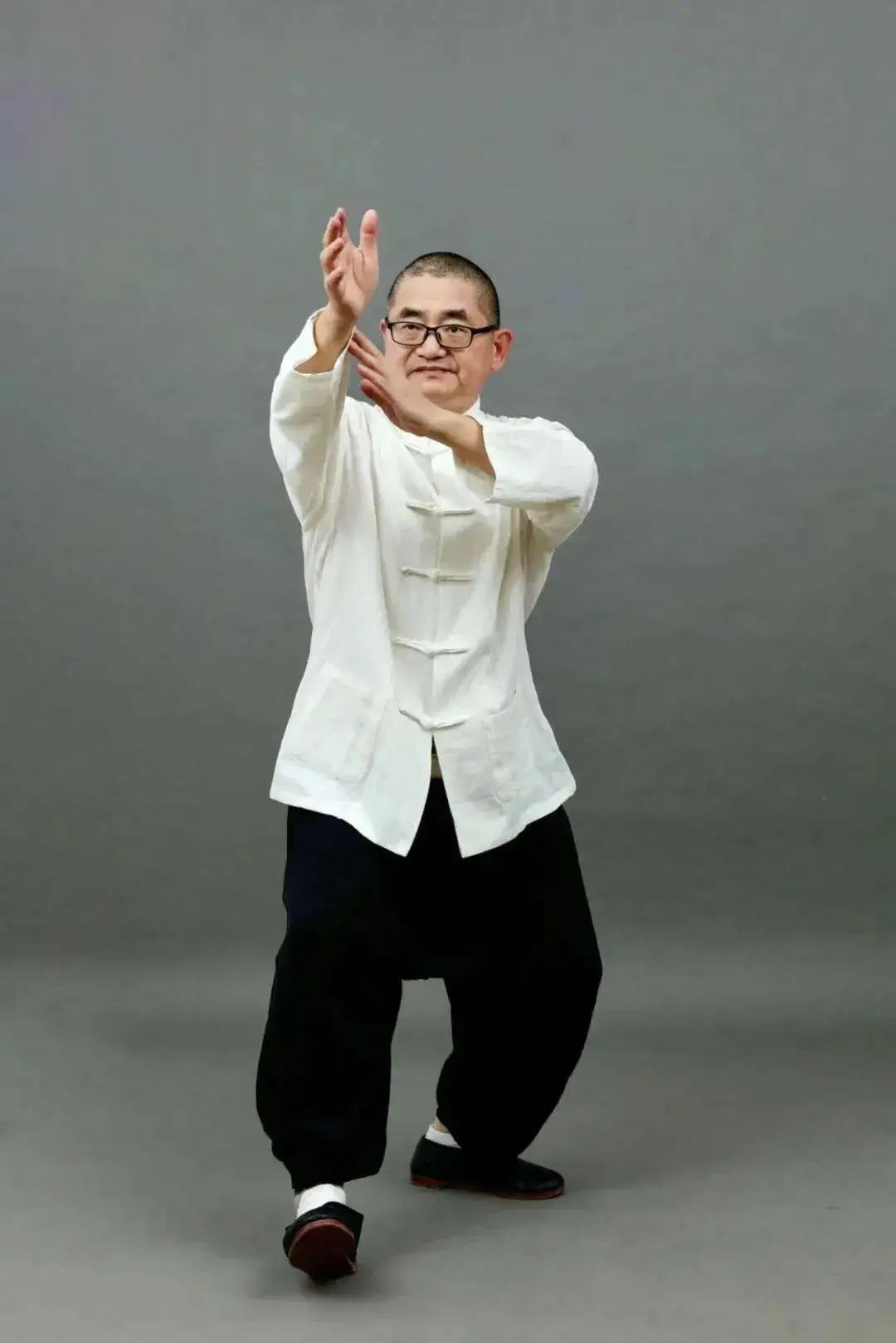
How Tai Chi Walking Re-Trains the Balance System
1. Foot Awareness and Ground Connection
Many seniors lose sensitivity in the feet (neuropathy). When the feet don’t clearly feel the ground, the brain reacts slowly.
Tai Chi walking restores awareness of the foot arch and gentle activation of the toes. By moving slowly, the nervous system relearns how to “read” the floor beneath you.
2. Hip-Led Movement and Weight Control
In safe walking, the hips—not the knees—should guide movement. When hips are weak, the body compensates by overloading the knees.
Tai Chi walking emphasizes hip-driven stepping and smooth weight transfer. This creates a more stable center of mass.
3. Nervous System Re-training
Balance is neurological. Slow movement gives the brain time to process sensory information and reduce panic responses.
💡 Tip: Calm breathing is essential for balance. If you feel anxious about falling, try our Free Breathing Trainer to relax your nervous system before walking.
3 Tai Chi Walking Movements That Help Prevent Falls
You don’t need to learn a full form. These three movements focus on the moments when falls are most likely to happen.
(Note: These are simplified foundations. For the complete technique, see our Ultimate Guide to Tai Chi Walking .)
Movement 1: Slow Weight-Shift Step
Target: Safe weight transfer and single-leg support.
- Stand with feet shoulder-width apart.
- Slowly shift your weight fully onto one foot.
- Only when the foot feels stable, gently lift the other foot.
- Step forward slowly and place the heel down first.
Why it works: Many falls happen when weight is shifted too quickly. This teaches patience.
Movement 2: Heel-to-Toe Grounded Walk
Target: Foot control and ground awareness.
- Step forward by placing the heel down first.
- Slowly roll through the foot until the toes contact the ground.
- Keep steps short and controlled.
- Maintain an upright posture—do not look down constantly.
Why it works: Reduces shuffling (a major trip hazard) and improves adaptability to uneven surfaces.
Movement 3: Controlled Turning Step
Target: Safe direction changes in tight spaces.
- Before turning, shift weight fully onto one leg.
- Turn the hips first, then allow the body to follow.
- Keep movements slow and balanced.
- Avoid twisting the knees.
Why it works: Most indoor falls happen during sudden turns in kitchens or bathrooms.
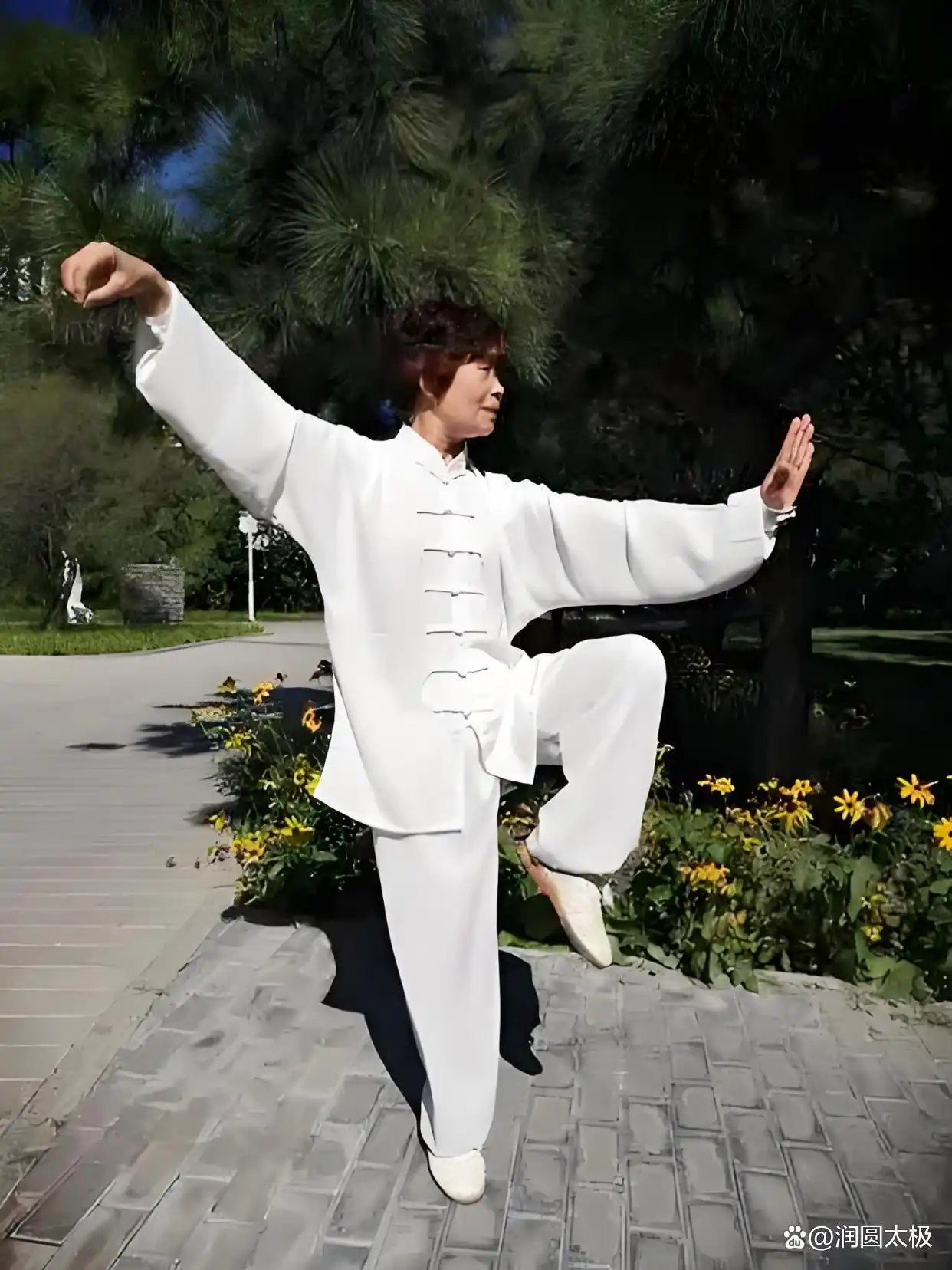
Common Mistakes Seniors Should Avoid
⚠️ Watch Out For:
- Lifting feet too high: Increases instability.
- Overly large steps: Strains balance.
- Knee collapse: Letting knees roll inward increases joint stress. (See our guide: Is Tai Chi Safe for Knees? )
- Looking down: Disrupts posture and balance. Look at the horizon.
How Often Should Seniors Practice?
Consistency matters more than duration. For most seniors, 5–10 minutes per day is enough. Practice in a safe, familiar space like a hallway or living room. Small, regular sessions help the nervous system adapt without fatigue.
Indoor Tai Chi Walking offers a controlled environment that reduces fall anxiety and improves training consistency for older adults.
Who Benefits Most?
Tai Chi walking is ideal if you:
- Have experienced a fall or near-fall.
- Feel unsteady when starting to walk.
- Struggle with balance during turns.
- Want to stay active without high-impact exercise.
Ready to reclaim your confidence? Start with the basics of proper alignment: 🚶 Start the Beginner’s Guide Here
For a decade-by-decade breakdown of how Tai Chi practice should adapt between your 50s and 60s, see our Tai Chi for Beginners Over 50 vs. Over 60 guide.
About Our Expert Team
Master Mingde Chen 12th Generation Chen Style Tai Chi Inheritor Gold Medalist, International Tai Chi Championships (2018) 25+ years of teaching experience, 3,000+ students worldwide
Dr. Jing Li PhD in Sports Science (Biomechanics) Author of 8 peer-reviewed Tai Chi research papers Chief Technical Consultant, Wuji Taichi
FAQ
- How long before seniors see balance improvements from Tai Chi Walking?
Most seniors begin to notice subtle balance improvements within 4–8 weeks of consistent Tai Chi Walking practice, with more measurable stability gains appearing around 10–12 weeks.
This timeline matches how neuromuscular adaptation works in older adults. Tai Chi Walking trains balance through slow, deliberate weight transfer and single-leg support phases — the exact capacities that decline with age and contribute to falls.
Early changes seniors often report:
- Standing feels steadier when shifting weight
- Turning while walking feels more controlled
- Less hesitation when stepping over obstacles
- Reduced fear of losing balance
These are functional balance gains, not just strength gains. Tai Chi Walking retrains coordination between the brain, inner ear, joints, and postural muscles — a process that takes weeks rather than days.
Practicing 3–5 times per week for 10–20 minutes produces the most reliable improvements. Seniors who practice daily typically progress faster than those practicing only once weekly.
For safe home practice guidance, see → Tai Chi Indoor Walking at Home
- Can seniors practice Tai Chi Walking at home without a class?
Yes. Tai Chi Walking is one of the safest and most accessible balance exercises seniors can practice independently at home.
Unlike many Tai Chi forms, Tai Chi Walking uses a linear stepping pattern with slow weight shifts, making it easier to learn without choreography or memorization. The movement can be practiced in:
- a hallway
- a living room
- a quiet corridor
- any space with 4–6 steps of clear floor
Home practice has specific advantages for seniors:
- no travel or scheduling barriers
- controlled, familiar environment
- ability to practice slowly without pressure
- consistent daily repetition
Many seniors begin at home and later join group classes if desired. Starting independently is completely valid and often more sustainable.
A structured beginner routine is provided here:→ 20-Minute Indoor Tai Chi Walking Routine
- Is Tai Chi Walking better than yoga for improving senior balance?
Both Tai Chi and yoga improve balance in older adults, but they train different types of stability.
Tai Chi Walking specializes in dynamic balance — stability while moving. Yoga emphasizes static balance — stability while holding positions.
For fall prevention in daily life, dynamic balance is often more relevant, because most falls occur during:
- walking
- turning
- stepping
- shifting weight
- changing direction
Tai Chi Walking directly rehearses these movement transitions through repeated slow stepping cycles. Each step includes:
- weight commitment
- single-leg support
- controlled transfer
- placement
This closely mirrors real-world walking stability demands.
Yoga contributes important benefits too — especially flexibility, posture, and joint mobility — and many seniors combine both practices successfully.
But for gait stability and fall-risk reduction, Tai Chi Walking generally provides more specific training because it conditions balance during locomotion rather than stationary poses.
Seniors often achieve the best results when Tai Chi Walking forms the core balance practice, with yoga added for mobility and range of motion.
- Can Tai Chi walking really help prevent falls in seniors?
Yes, Tai Chi walking can help prevent falls in seniors. Many falls happen during walking—especially when starting, stopping, or turning. Tai Chi walking specifically trains slow weight shifting, foot placement, and balance during movement. These skills improve stability and reduce the likelihood of losing balance in daily life.
- How does Tai Chi walking improve balance for older adults?
Yes, Tai Chi walking improves balance for older adults. It improves balance by retraining three key systems: foot awareness, hip control, and the nervous system. Slow, mindful steps help the brain better sense body position, improve reaction time, and maintain a stable center of mass while walking.
- Is Tai Chi walking safe for seniors with limited mobility?
Yes, Tai Chi walking is generally safe for seniors with limited mobility. Because movements are slow, controlled, and low-impact, Tai Chi walking places minimal stress on joints. Seniors can adjust step length and speed based on comfort, making it suitable even for those who feel unsteady or are returning to movement after inactivity.
- How often should seniors practice Tai Chi walking for balance?
Yes, regular practice is important for balance improvement. Most seniors benefit from practicing Tai Chi walking for just 5–10 minutes a day. Consistent, short sessions help the nervous system adapt over time and are more effective than occasional long workouts.
- Can Tai Chi walking help with fear of falling?
Yes, Tai Chi walking can reduce the fear of falling. By practicing slow, controlled movements in a safe environment, seniors rebuild confidence in their ability to walk steadily. As balance improves, fear naturally decreases, encouraging more regular movement and independence.
- Is Tai Chi walking suitable for seniors with knee problems?
Yes, Tai Chi walking can be suitable for seniors with knee concerns. Tai Chi walking emphasizes hip-led movement and smooth weight transfer, which reduces unnecessary stress on the knees. Practicing proper alignment and avoiding deep or forced steps helps protect knee joints while improving balance.
- What is the difference between Tai Chi walking and regular walking exercises?
Yes, Tai Chi walking is different from regular walking exercises. Regular walking focuses on distance and speed, while Tai Chi walking focuses on balance, control, and awareness. Tai Chi walking slows the movement down, allowing seniors to safely train stability during each step and transition.
- Do seniors need to learn full Tai Chi forms to improve balance?
No, seniors do not need to learn full Tai Chi forms to improve balance. Simple Tai Chi walking movements are enough to improve balance and reduce fall risk. Focusing on weight shifting, foot placement, and controlled turns provides most of the balance benefits without learning complex routines.
- Can Tai Chi walking improve coordination and reaction time?
Yes, Tai Chi walking can improve coordination and reaction time. Slow, deliberate movement gives the brain time to process sensory input and respond appropriately. Over time, this improves coordination and helps seniors react more effectively to sudden changes in balance.
- Who should consider Tai Chi walking for balance training?
Yes, Tai Chi walking is especially beneficial for many seniors. It is ideal for older adults who feel unsteady, have experienced a fall, want to prevent future falls, or wish to maintain independence through safe, low-impact movement.
Not sure whether Tai Chi Walking or interval-based methods are better for older adults? Explore our full walking methods comparison here.
⚠️ Not medical advice. This article is for educational purposes only. Always consult a qualified healthcare provider before starting any exercise or wellness program.