Home/Forums/[Masterclass] The Ultimate 24-Step Guide to Yang Style Tai Chi 24 Form with Animated Images
[Masterclass] The Ultimate 24-Step Guide to Yang Style Tai Chi 24 Form with Animated Images

Community MemberGeneral Discussion
Posted May 7, 2026
26 Replies
Senior Brother#1
May 11, 2026
Senior Brother#2
May 11, 2026
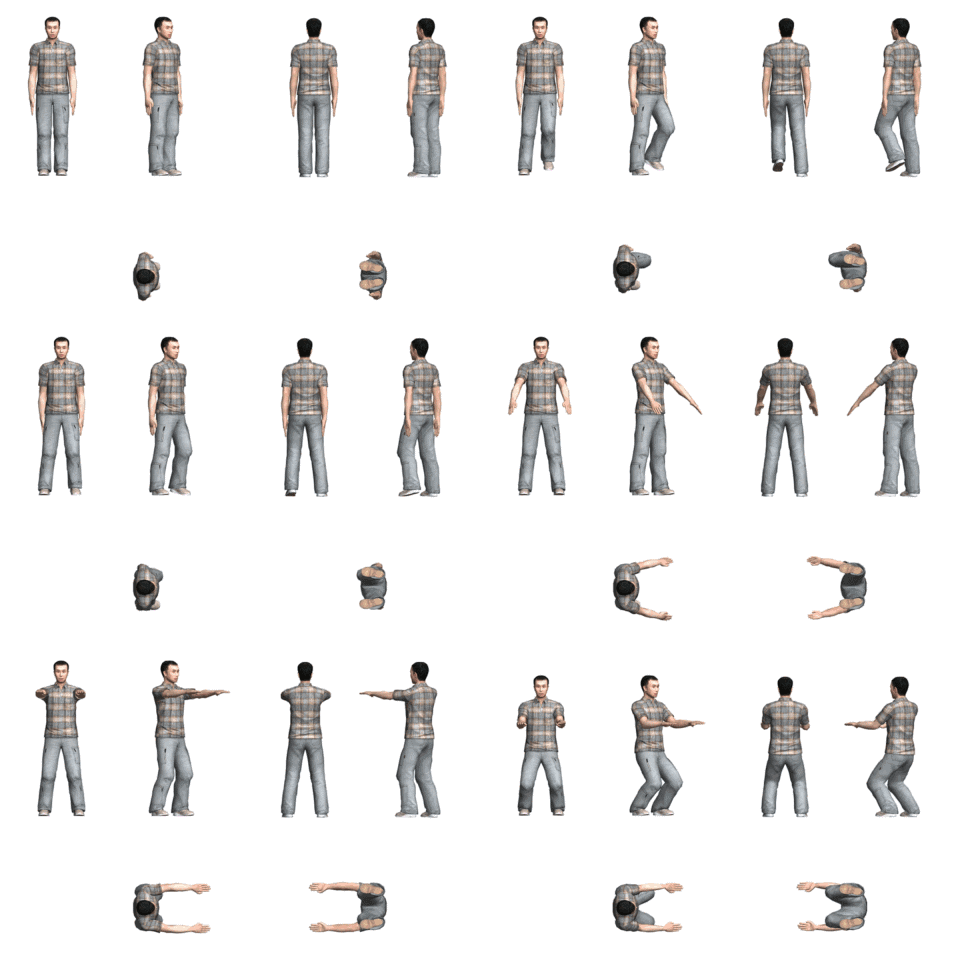 Key Points:
Stand naturally, with chest slightly in and back rounded (含胸拔背).
Crown of head suspended as if pulled by a string (头顶悬).
Knees slightly bent, waist relaxed, eyes looking forward.
Shoulders dropped, elbows down, Qi sinks to Dantian.
Common Mistakes:
Stiff shoulders and arched chest.
Locked knees or bent too much.
Looking down or up instead of forward.
Key Points:
Stand naturally, with chest slightly in and back rounded (含胸拔背).
Crown of head suspended as if pulled by a string (头顶悬).
Knees slightly bent, waist relaxed, eyes looking forward.
Shoulders dropped, elbows down, Qi sinks to Dantian.
Common Mistakes:
Stiff shoulders and arched chest.
Locked knees or bent too much.
Looking down or up instead of forward.Senior Brother#3
May 11, 2026
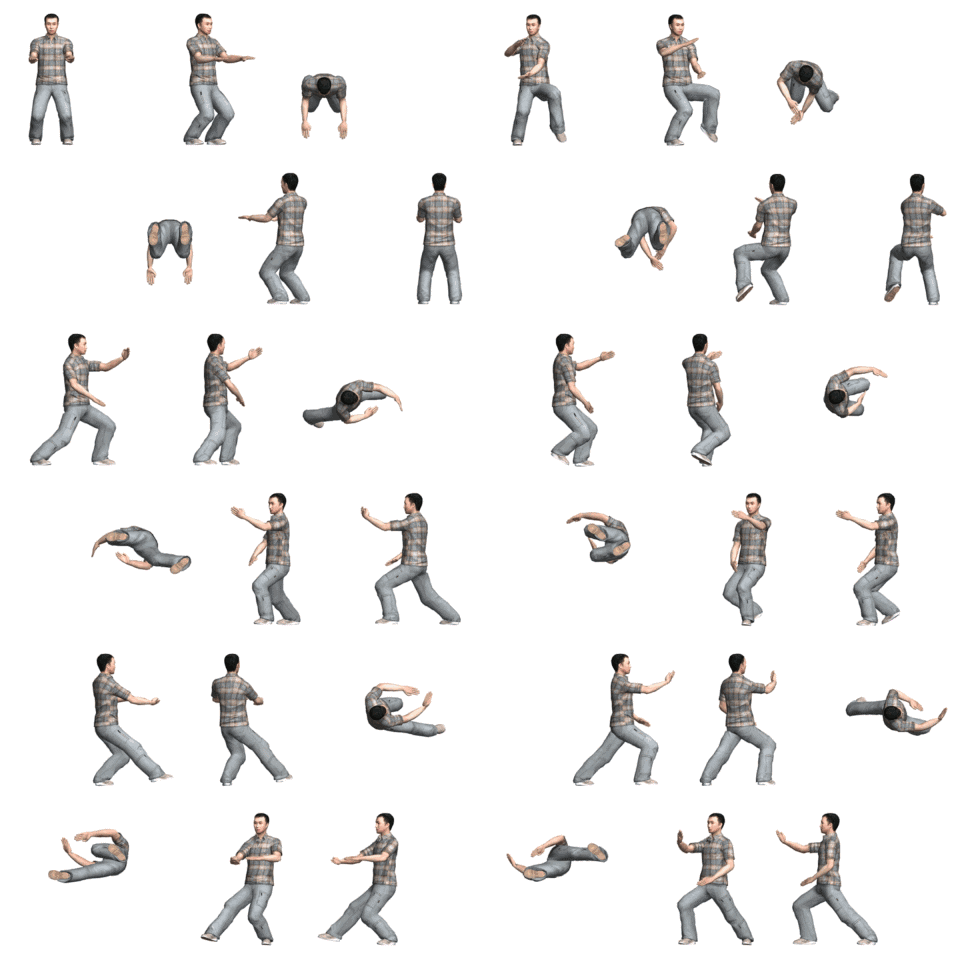 Key Points:
Start with "holding a ball" posture.
One arm forward and up, the other down by the side.
Step forward like a cat – smooth and light.
Clear empty‑full (虚实) weight transfer.
Common Mistakes:
Bow stance too long or too short.
Arms too stiff or not rounded.
Weight stuck in between, not fully shifted.
Key Points:
Start with "holding a ball" posture.
One arm forward and up, the other down by the side.
Step forward like a cat – smooth and light.
Clear empty‑full (虚实) weight transfer.
Common Mistakes:
Bow stance too long or too short.
Arms too stiff or not rounded.
Weight stuck in between, not fully shifted.Senior Brother#4
May 11, 2026
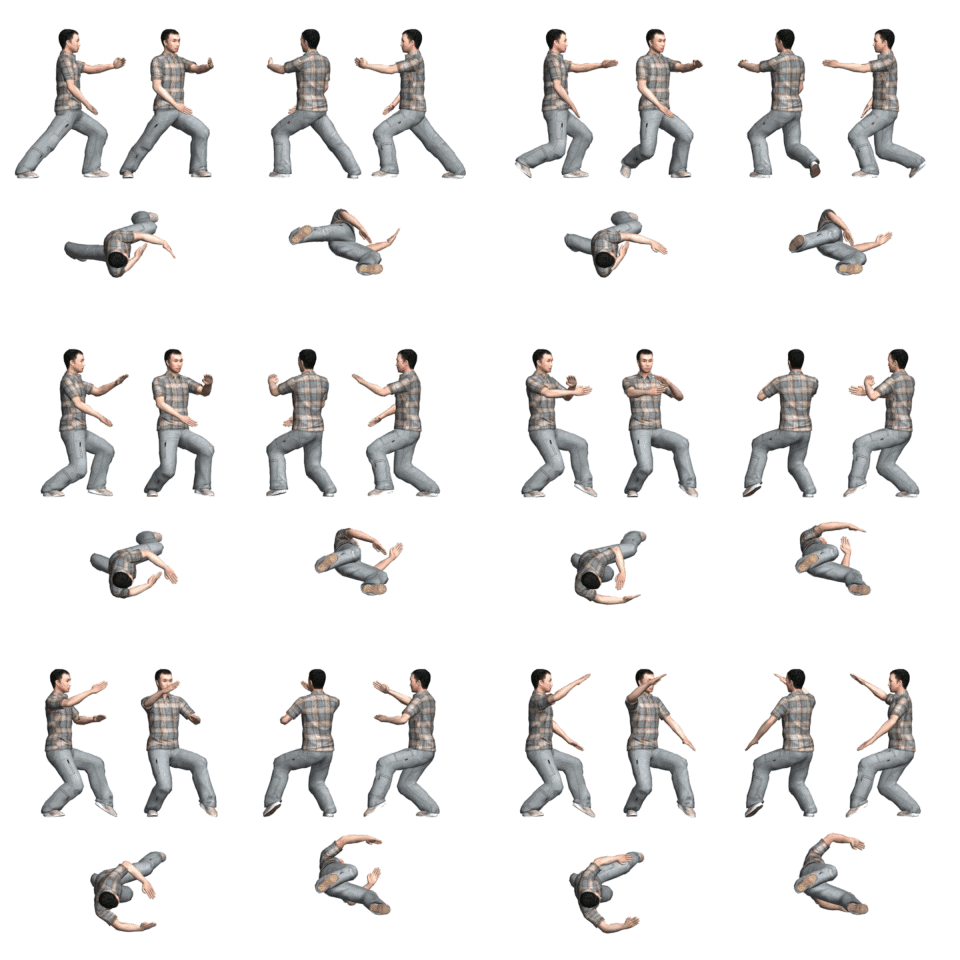 Key Points:
Left hand presses down, right hand lifts to eyebrow level.
Right leg solid (70% weight), left foot lightly touching with toes.
Shoulders sunk, elbows dropped.
Common Mistakes:
Raising the shoulder when lifting the arm.
Leaning forward or back, losing balance.
Right hand too high or too low.
Key Points:
Left hand presses down, right hand lifts to eyebrow level.
Right leg solid (70% weight), left foot lightly touching with toes.
Shoulders sunk, elbows dropped.
Common Mistakes:
Raising the shoulder when lifting the arm.
Leaning forward or back, losing balance.
Right hand too high or too low.Senior Brother#5
May 11, 2026
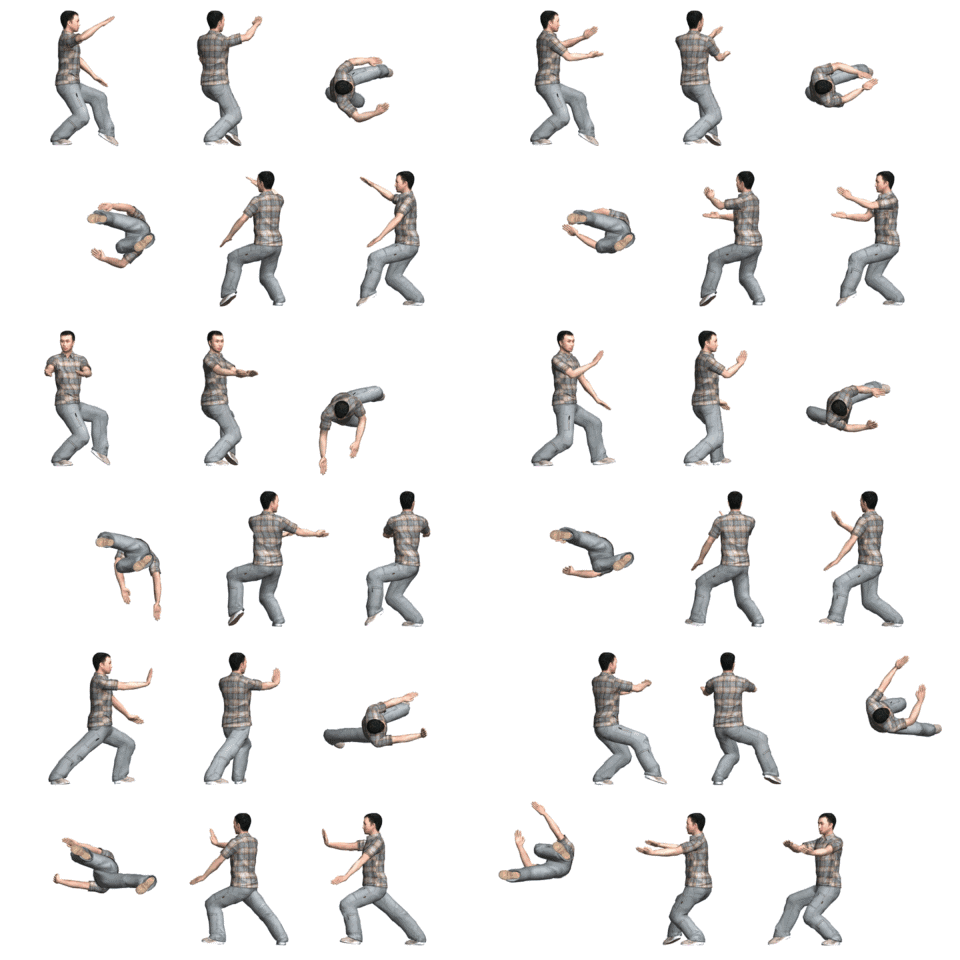 Key Points:
Brush the knee with one hand while the other pushes forward.
The movement is diagonal – not straight forward.
Coordinate the brush and push with the step.
Common Mistakes:
Hand and knee not synchronized.
Pushing hand too low or too high.
Upper body leaning forward.
Key Points:
Brush the knee with one hand while the other pushes forward.
The movement is diagonal – not straight forward.
Coordinate the brush and push with the step.
Common Mistakes:
Hand and knee not synchronized.
Pushing hand too low or too high.
Upper body leaning forward.Senior Brother#6
May 11, 2026
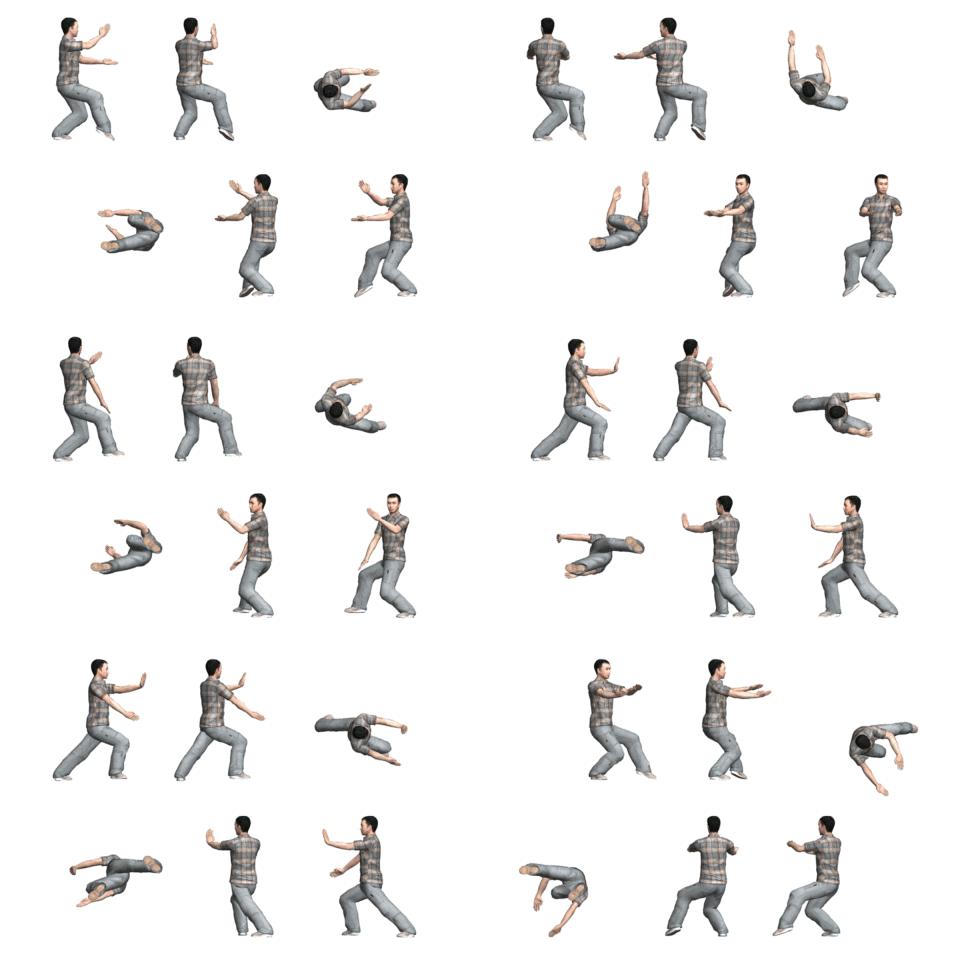 Key Points:
Extend the wrist and palm when pushing.
Strike forward with a relaxed yet focused palm.
Maintain clear empty‑full as you shift weight.
Common Mistakes:
Wrist bent or stiff.
Weight not fully transferred, making push weak.
Forgetting to turn the waist.
Deepen your understanding: This movement is a classic example of "empty‑full" (虚实) – a core concept in Tai Chi. Learn more about the philosophy of Yin Yang in our article Yin Yang in Tai Chi
Key Points:
Extend the wrist and palm when pushing.
Strike forward with a relaxed yet focused palm.
Maintain clear empty‑full as you shift weight.
Common Mistakes:
Wrist bent or stiff.
Weight not fully transferred, making push weak.
Forgetting to turn the waist.
Deepen your understanding: This movement is a classic example of "empty‑full" (虚实) – a core concept in Tai Chi. Learn more about the philosophy of Yin Yang in our article Yin Yang in Tai ChiSenior Brother#7
May 11, 2026
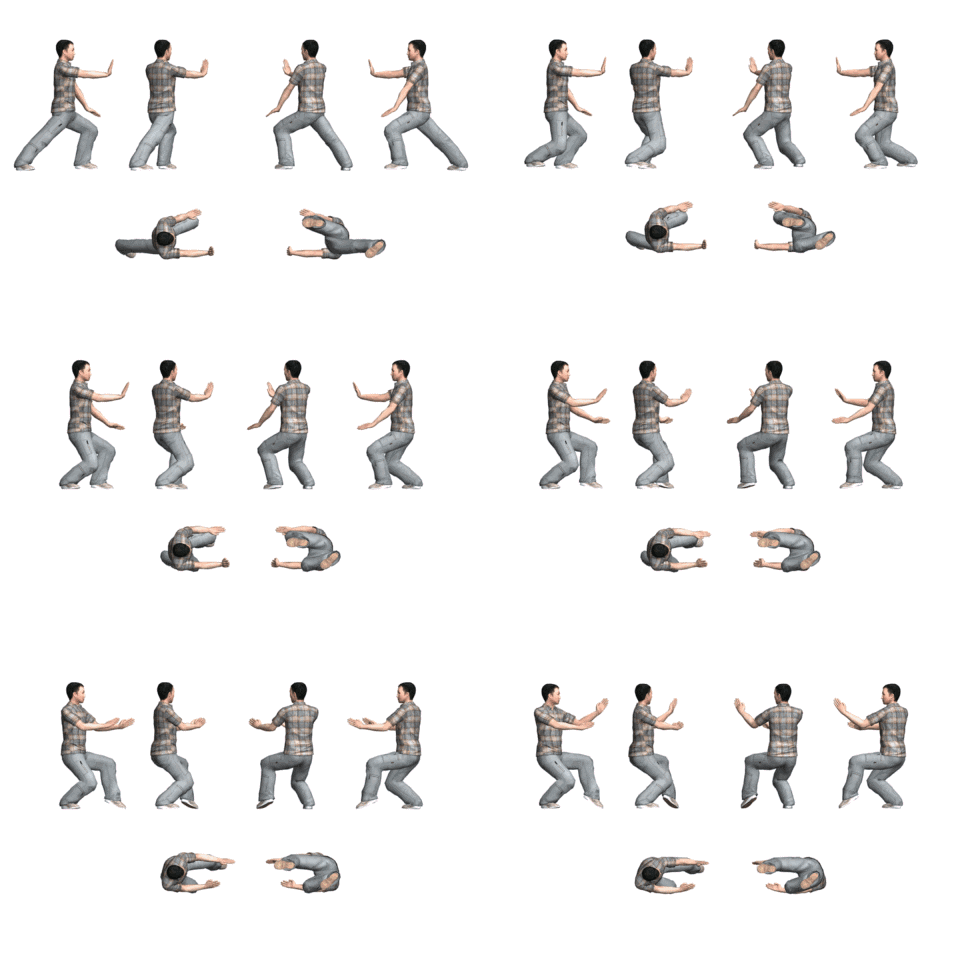 Key Points:
Hands form a shape like holding a lute – left forward, right near chest.
Right leg solid, left leg empty with heel lightly touching.
Shoulders and elbows relaxed and sunk.
Common Mistakes:
Arms too straight or too wide.
Weight too far forward on the empty leg.
Elbows sticking out instead of dropping.
Key Points:
Hands form a shape like holding a lute – left forward, right near chest.
Right leg solid, left leg empty with heel lightly touching.
Shoulders and elbows relaxed and sunk.
Common Mistakes:
Arms too straight or too wide.
Weight too far forward on the empty leg.
Elbows sticking out instead of dropping.Senior Brother#8
May 11, 2026
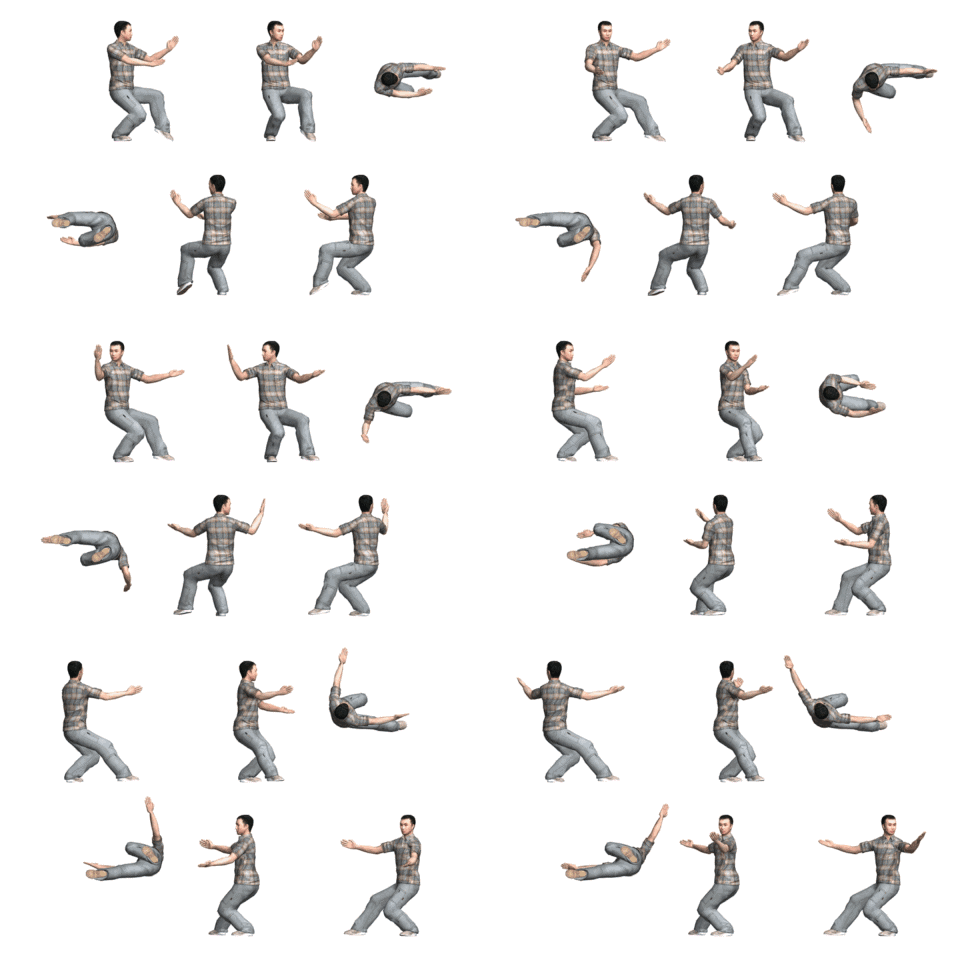 Key Points:
Step back with toes touching first, then settle into empty stance.
Turn waist and relax hips as you bring hands forward.
Maintain a steady height – no bobbing up and down.
Common Mistakes:
Rising up when stepping back.
Losing balance because of hasty steps.
Hands moving independently of waist turn.
Key Points:
Step back with toes touching first, then settle into empty stance.
Turn waist and relax hips as you bring hands forward.
Maintain a steady height – no bobbing up and down.
Common Mistakes:
Rising up when stepping back.
Losing balance because of hasty steps.
Hands moving independently of waist turn.Senior Brother#9
May 11, 2026
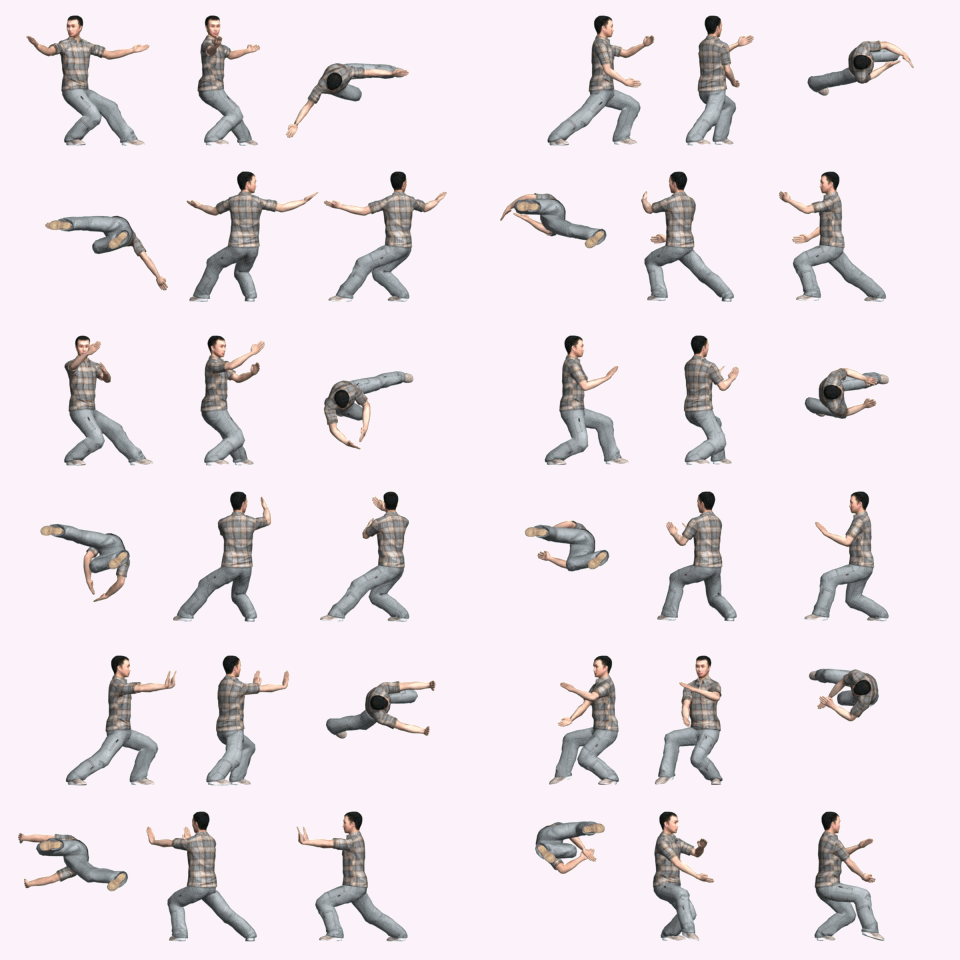 Key Points:
Peng (ward off): Arms rounded, forward energy.
Lu (rollback): Draw back with palms facing each other.
Ji (press): One hand presses with the other supporting.
An (push): Push forward with power rooted in the waist.
Common Mistakes:
Peng arms not rounded.
Lu becomes a pulling instead of a yielding redirect.
Ji lacks coordination – hands not working together.
An uses only arms, not whole body.
Key Points:
Peng (ward off): Arms rounded, forward energy.
Lu (rollback): Draw back with palms facing each other.
Ji (press): One hand presses with the other supporting.
An (push): Push forward with power rooted in the waist.
Common Mistakes:
Peng arms not rounded.
Lu becomes a pulling instead of a yielding redirect.
Ji lacks coordination – hands not working together.
An uses only arms, not whole body.Senior Brother#10
May 11, 2026
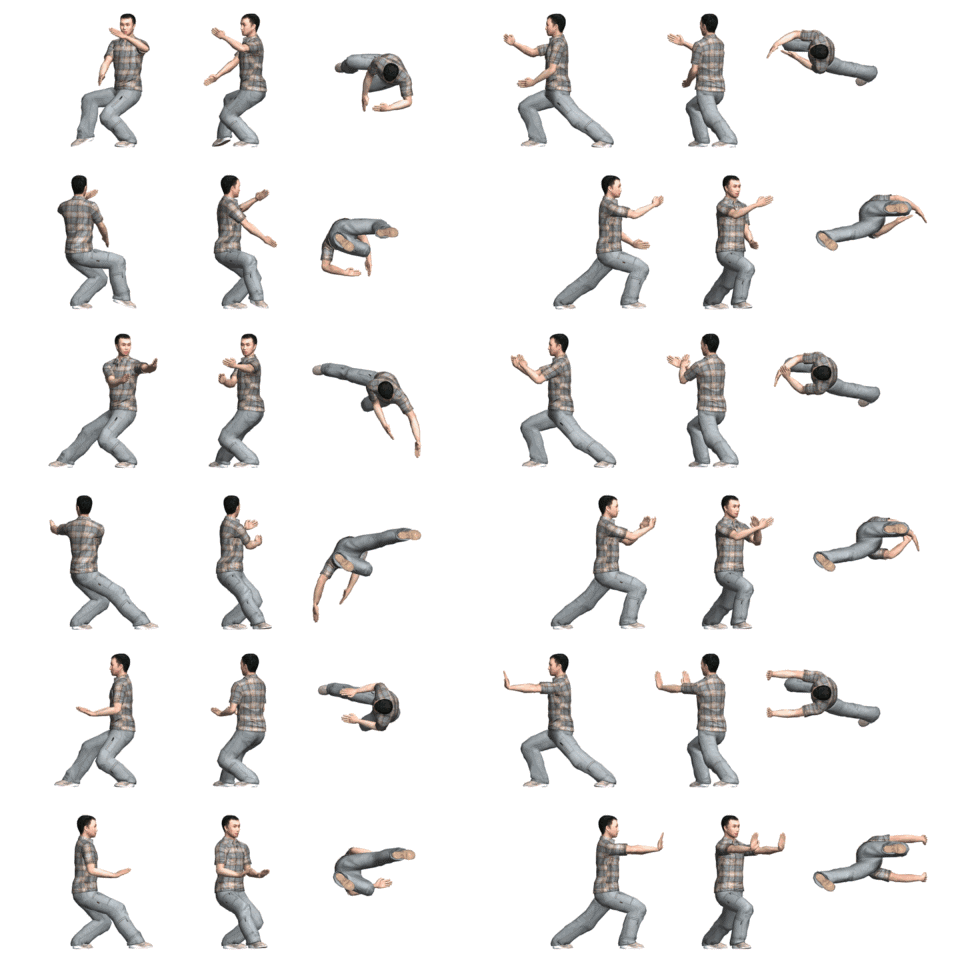 Key Points:
Same as left side, mirrored.
Remember to maintain the same quality of Peng, Lu, Ji, An.
Common Mistakes:
Same as left side, but often less coordinated on non‑dominant side.
Key Points:
Same as left side, mirrored.
Remember to maintain the same quality of Peng, Lu, Ji, An.
Common Mistakes:
Same as left side, but often less coordinated on non‑dominant side.Senior Brother#11
May 11, 2026
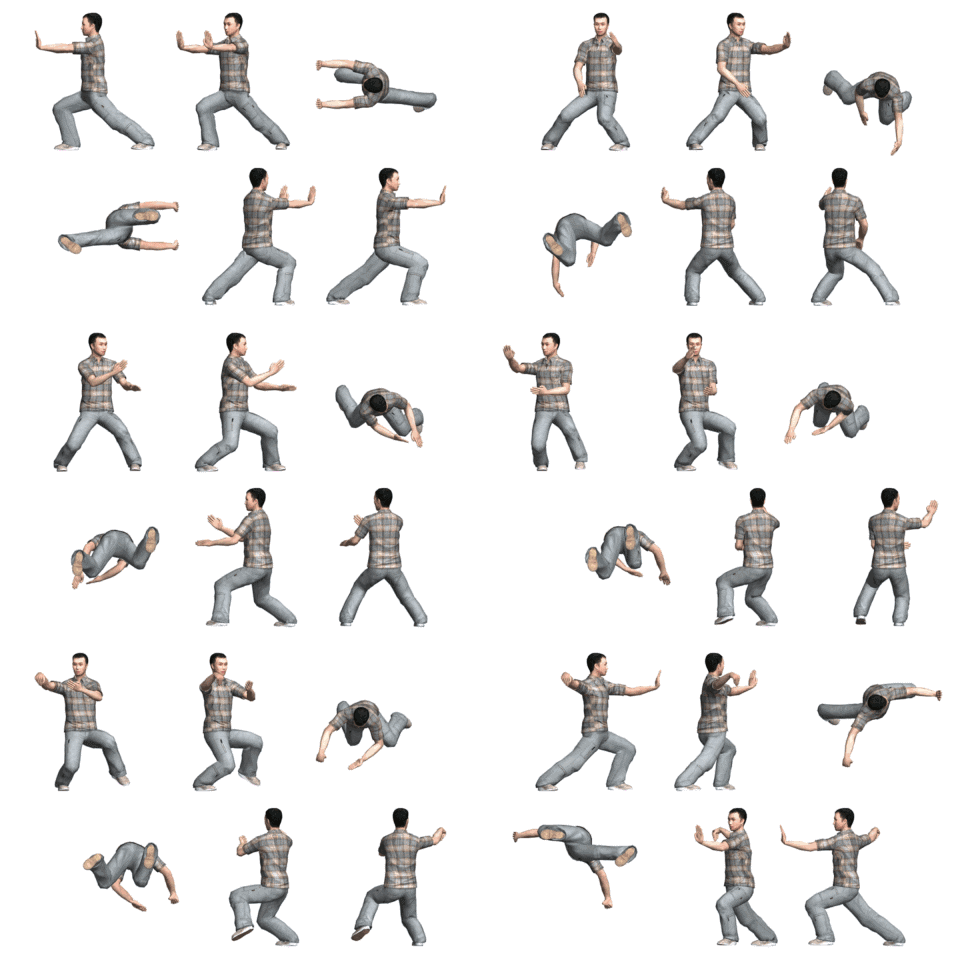 Key Points:
Left hand pushes, right hand forms a hook behind.
In bow stance, the heel of front foot lands first.
Clear weight shift before forming the hook.
Common Mistakes:
Hook hand too tight or too loose.
Front knee extending beyond toes.
Upper body leaning to the side.
📖 This form contains both Peng and An energies. To explore the meaning of the eight gates (Ba Fa), visit our dictionary: What is Ba Fa? The 8 Methods
Key Points:
Left hand pushes, right hand forms a hook behind.
In bow stance, the heel of front foot lands first.
Clear weight shift before forming the hook.
Common Mistakes:
Hook hand too tight or too loose.
Front knee extending beyond toes.
Upper body leaning to the side.
📖 This form contains both Peng and An energies. To explore the meaning of the eight gates (Ba Fa), visit our dictionary: What is Ba Fa? The 8 MethodsSenior Brother#12
May 11, 2026
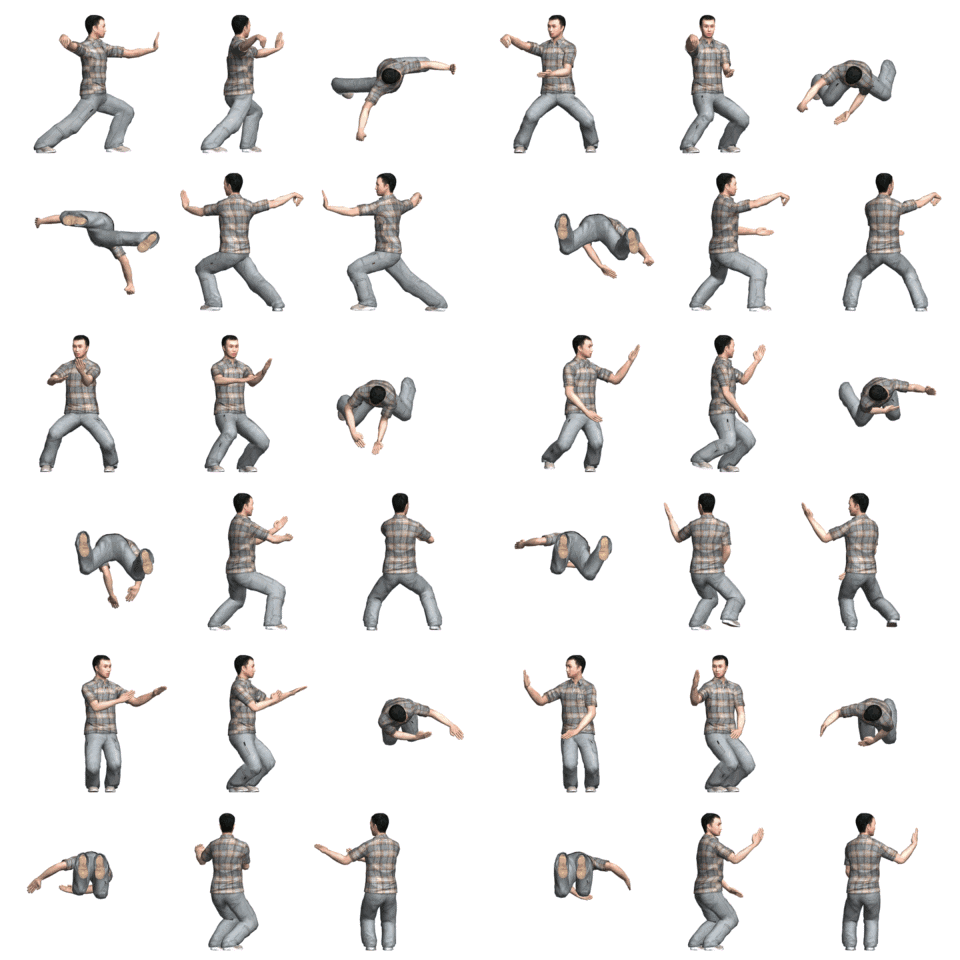 Key Points:
Hands trace circles in front of the body, moving with the waist.
Step sideways with left foot, then bring right foot alongside.
The movement is continuous, like clouds drifting.
Common Mistakes:
Moving hands without turning the waist.
Feet not synchronized – stepping and weight shift off.
Circles too large or too small.
Key Points:
Hands trace circles in front of the body, moving with the waist.
Step sideways with left foot, then bring right foot alongside.
The movement is continuous, like clouds drifting.
Common Mistakes:
Moving hands without turning the waist.
Feet not synchronized – stepping and weight shift off.
Circles too large or too small.Senior Brother#13
May 11, 2026
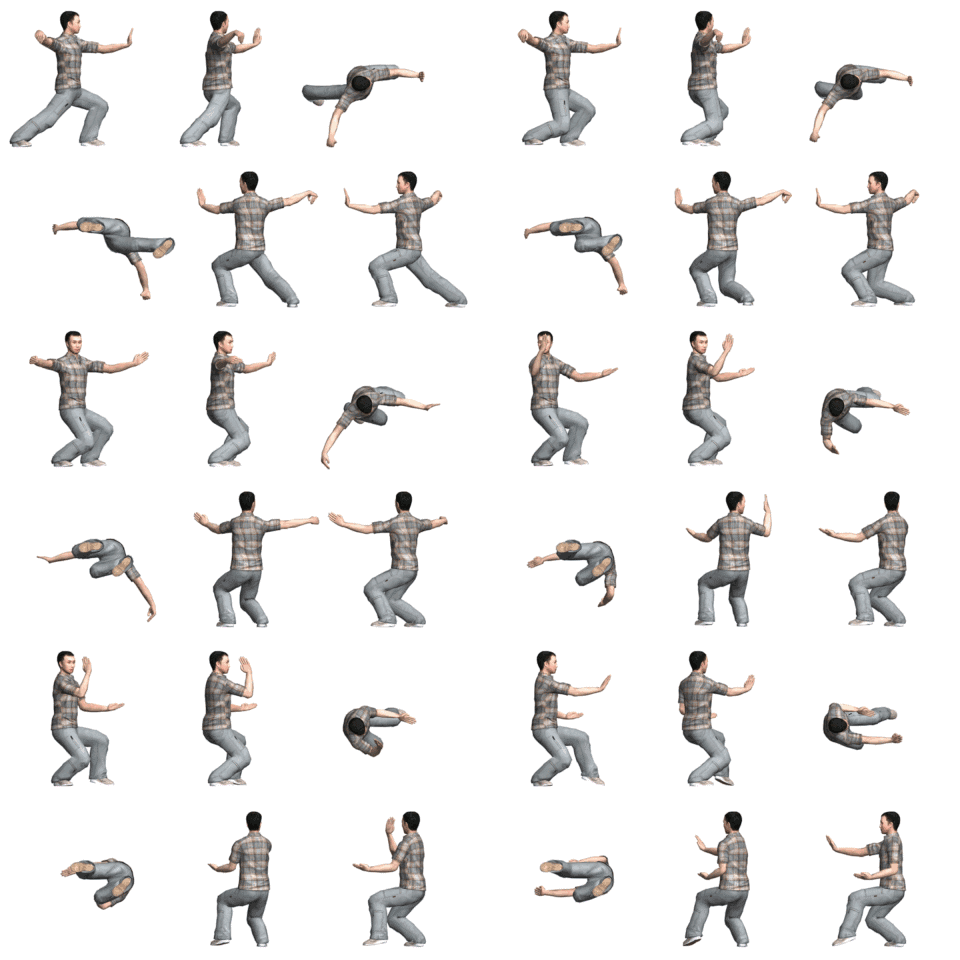 Key Points:
One hand cuts forward at face level, the other rests near the waist.
Rear leg solid, front foot empty (toe touching).
Shoulders sunk, elbows down.
Common Mistakes:
Striking hand too low or too high.
Front foot bearing weight (not empty).
Elbow lifted instead of dropped.
Key Points:
One hand cuts forward at face level, the other rests near the waist.
Rear leg solid, front foot empty (toe touching).
Shoulders sunk, elbows down.
Common Mistakes:
Striking hand too low or too high.
Front foot bearing weight (not empty).
Elbow lifted instead of dropped.Senior Brother#14
May 11, 2026
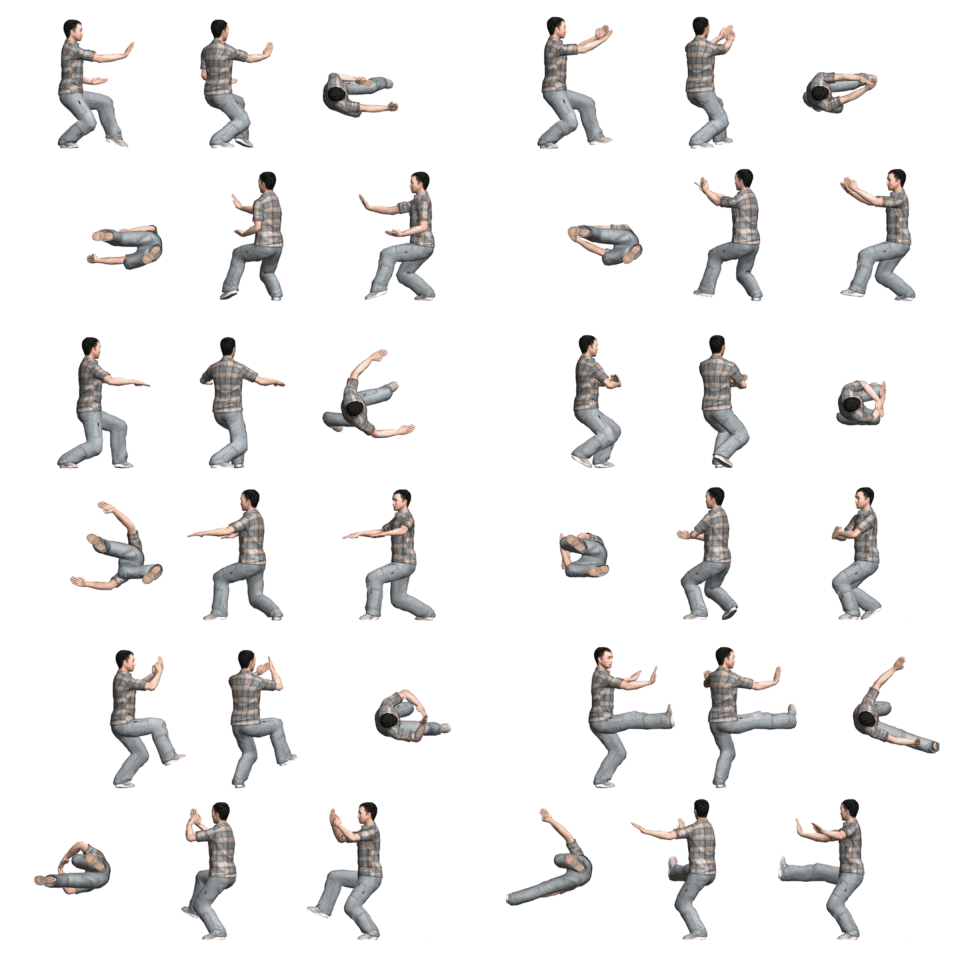 Key Points:
Power originates from the waist.
Left leg stable, right heel kicks forward with focus.
Keep body upright – don't lean back to kick higher.
Common Mistakes:
Falling or wobbling on standing leg.
Kicking with toe instead of heel.
Upper body bending forward or back.
Key Points:
Power originates from the waist.
Left leg stable, right heel kicks forward with focus.
Keep body upright – don't lean back to kick higher.
Common Mistakes:
Falling or wobbling on standing leg.
Kicking with toe instead of heel.
Upper body bending forward or back.Senior Brother#15
May 11, 2026
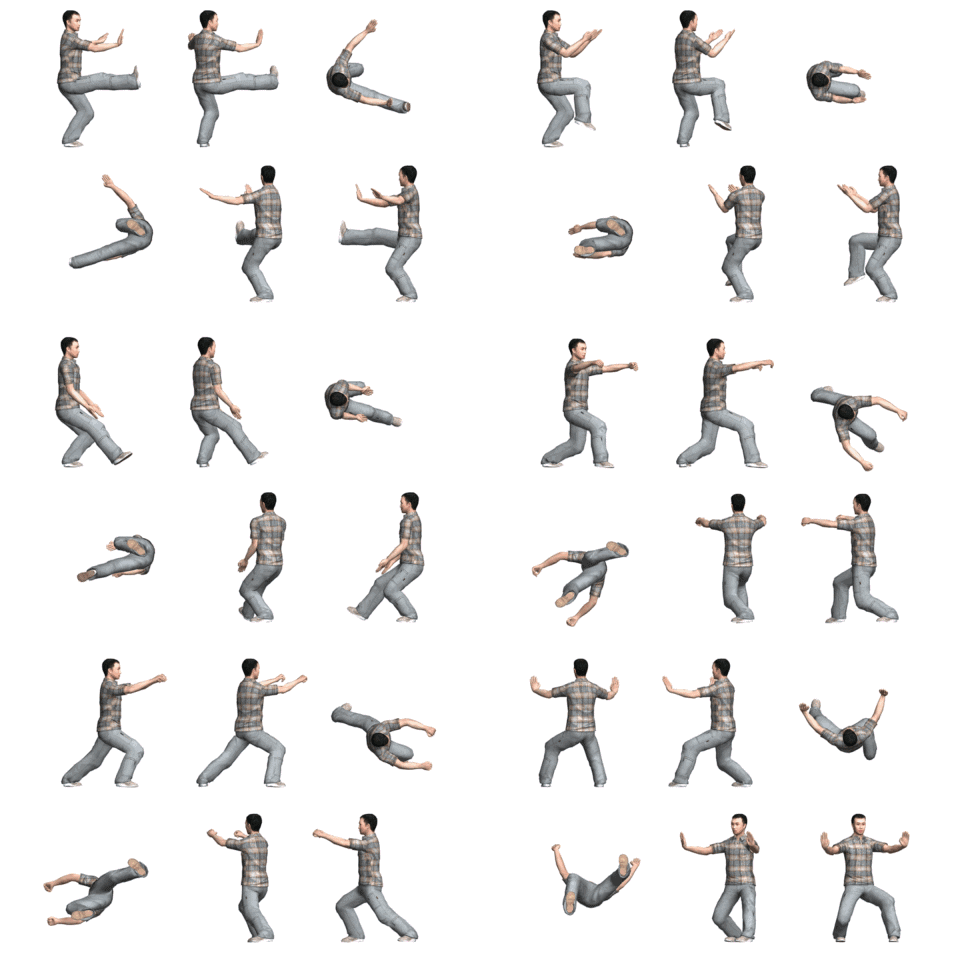 Key Points:
Both fists form a circular shape, striking forward like pincers.
Fists aim at ear level, arms slightly bent.
Common Mistakes:
Fists too high or too low.
Arms locked straight.
No power from the waist – only arm movement.
Key Points:
Both fists form a circular shape, striking forward like pincers.
Fists aim at ear level, arms slightly bent.
Common Mistakes:
Fists too high or too low.
Arms locked straight.
No power from the waist – only arm movement.Senior Brother#16
May 11, 2026
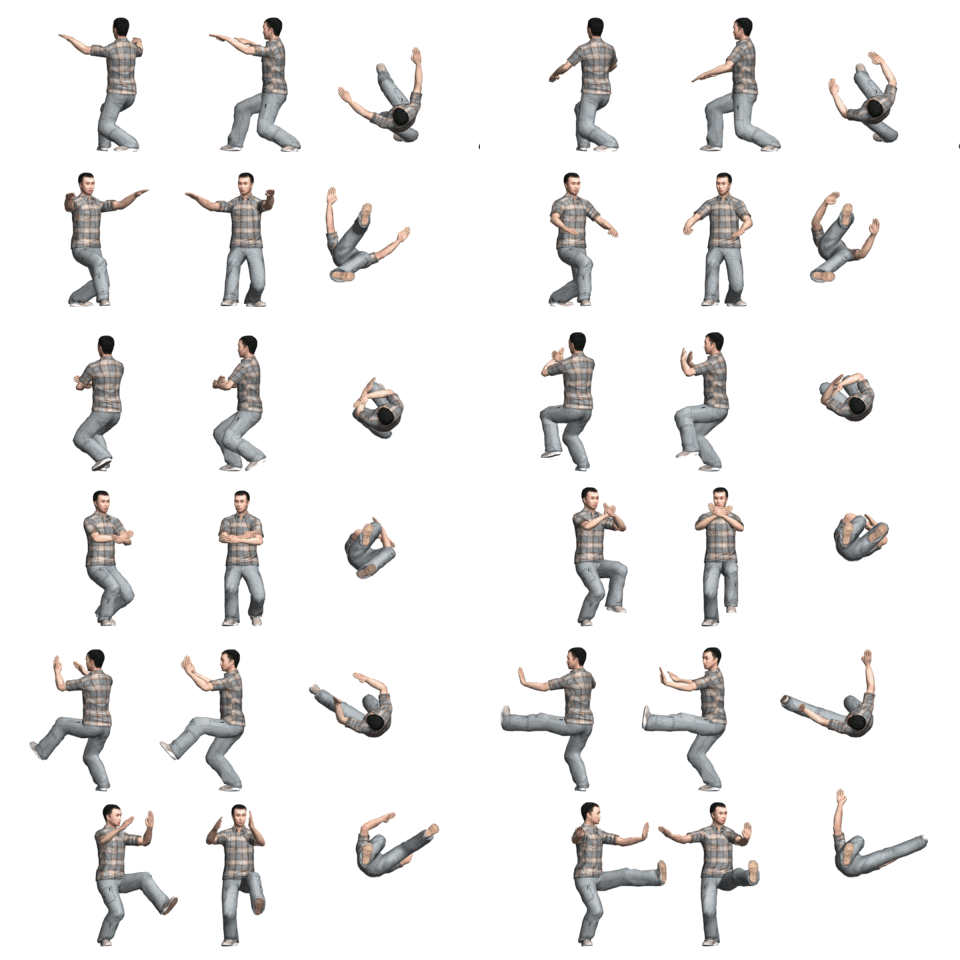 Key Points:
Lift knee, pivot on right foot, then step into bow stance.
Turn smoothly, then kick with left heel.
Keep turning foot stable.
Common Mistakes:
Losing balance during the turn.
Kicking without fully turning the body.
Kicking foot too low.
📖 Kicks challenge your balance and root. Learn how to improve your stability with Tai Chi for Balance
Key Points:
Lift knee, pivot on right foot, then step into bow stance.
Turn smoothly, then kick with left heel.
Keep turning foot stable.
Common Mistakes:
Losing balance during the turn.
Kicking without fully turning the body.
Kicking foot too low.
📖 Kicks challenge your balance and root. Learn how to improve your stability with Tai Chi for BalanceSenior Brother#17
May 11, 2026
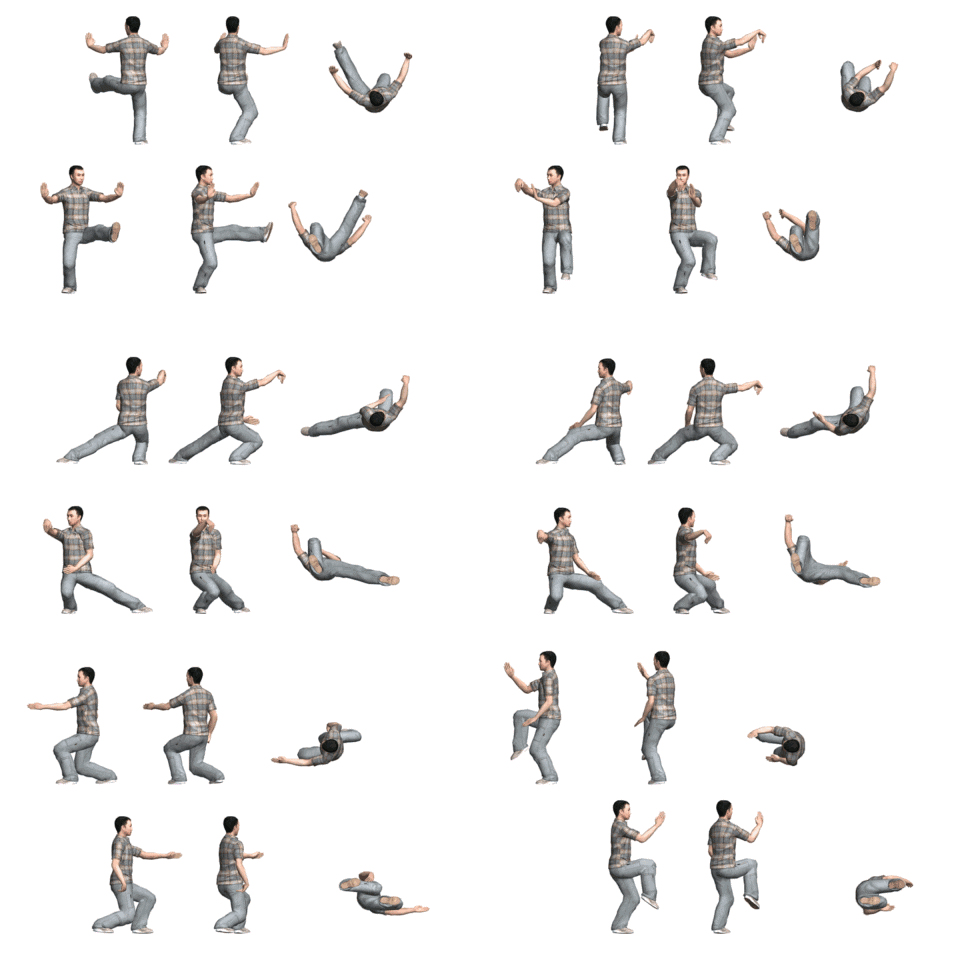 Key Points:
Sink down into a deep squat on left leg, right leg straight.
Right hand hooks, left hand reaches forward.
Rise up onto left leg, right knee lifted, right palm forward.
Common Mistakes:
Bending the upper body forward when sinking.
Not keeping the back straight during the rise.
Losing balance in the independent stance.
Key Points:
Sink down into a deep squat on left leg, right leg straight.
Right hand hooks, left hand reaches forward.
Rise up onto left leg, right knee lifted, right palm forward.
Common Mistakes:
Bending the upper body forward when sinking.
Not keeping the back straight during the rise.
Losing balance in the independent stance.Senior Brother#18
May 11, 2026
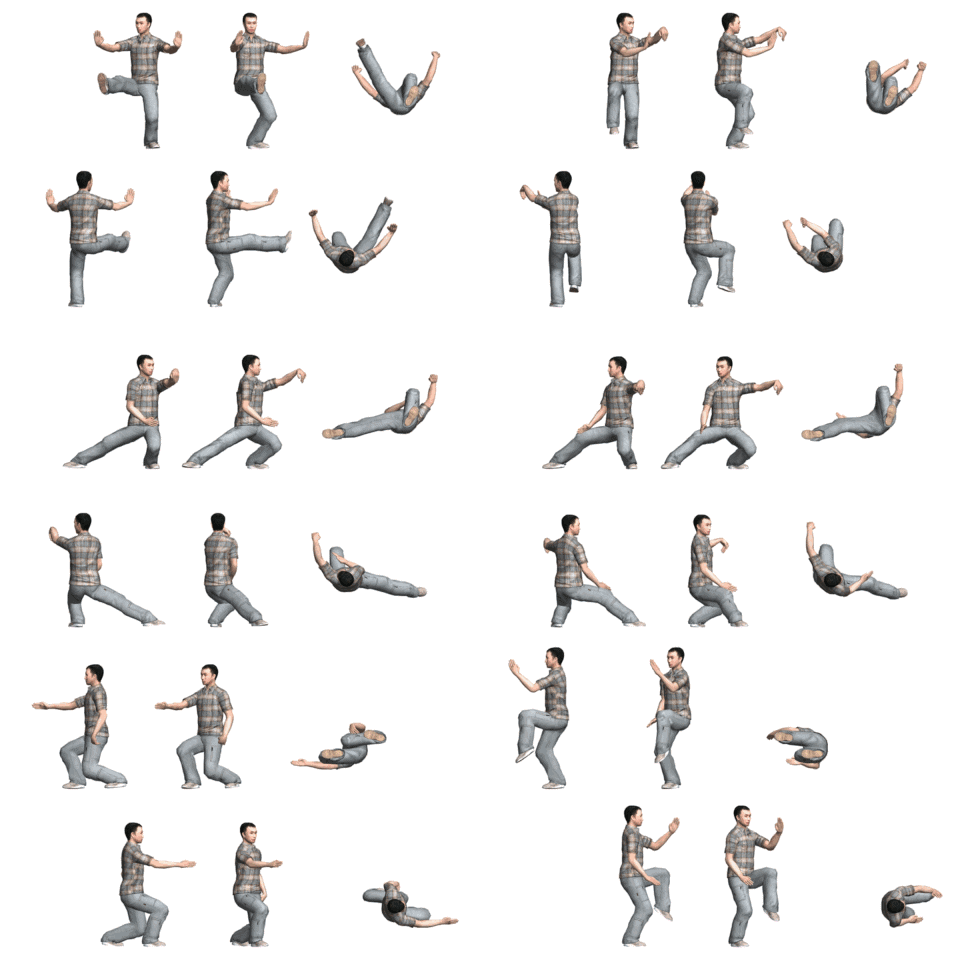 Key Points:
Mirror of left side.
Maintain the same fluidity and height control.
Common Mistakes:
Same as left side; often weaker on non‑dominant side.
Key Points:
Mirror of left side.
Maintain the same fluidity and height control.
Common Mistakes:
Same as left side; often weaker on non‑dominant side.Senior Brother#19
May 11, 2026
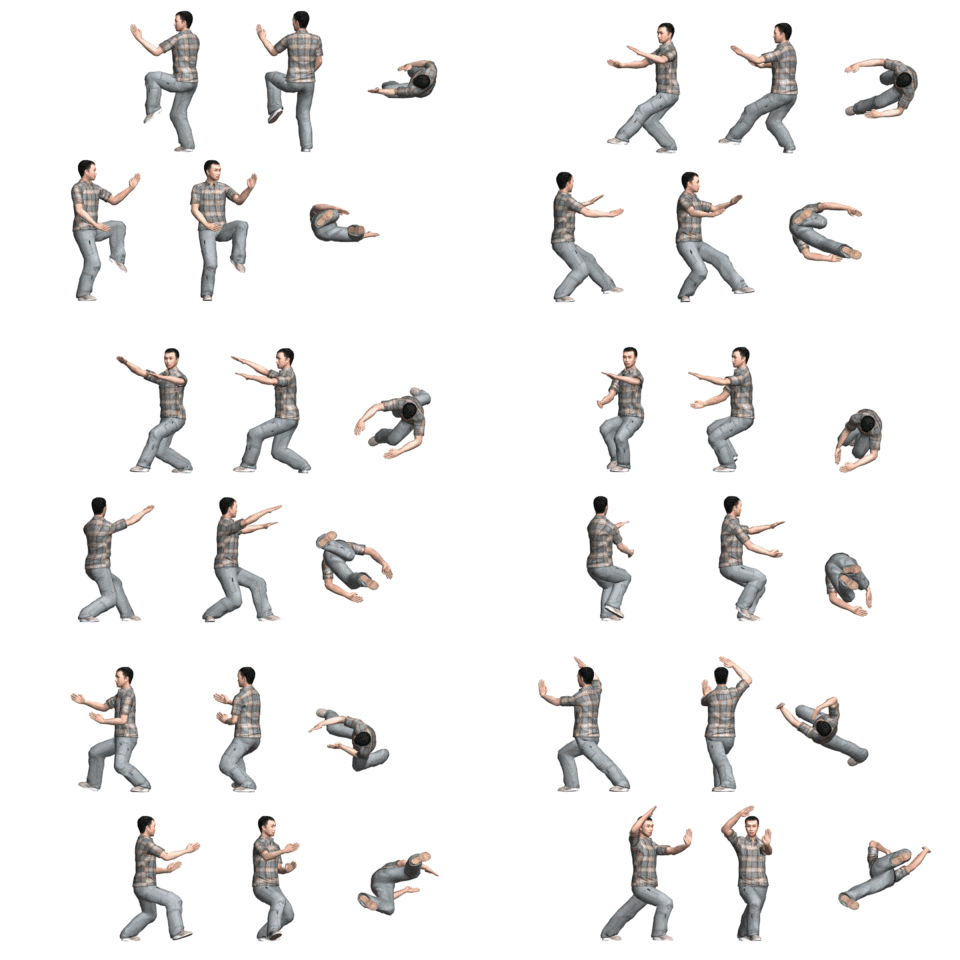 Key Points:
One arm spirals up and forward, the other pushes forward.
Imagine threading a shuttle – coordinated arm movement.
Step diagonally forward.
Common Mistakes:
Arms moving independently, not as a unit.
Stepping too wide or too narrow.
Key Points:
One arm spirals up and forward, the other pushes forward.
Imagine threading a shuttle – coordinated arm movement.
Step diagonally forward.
Common Mistakes:
Arms moving independently, not as a unit.
Stepping too wide or too narrow.Senior Brother#20
May 11, 2026
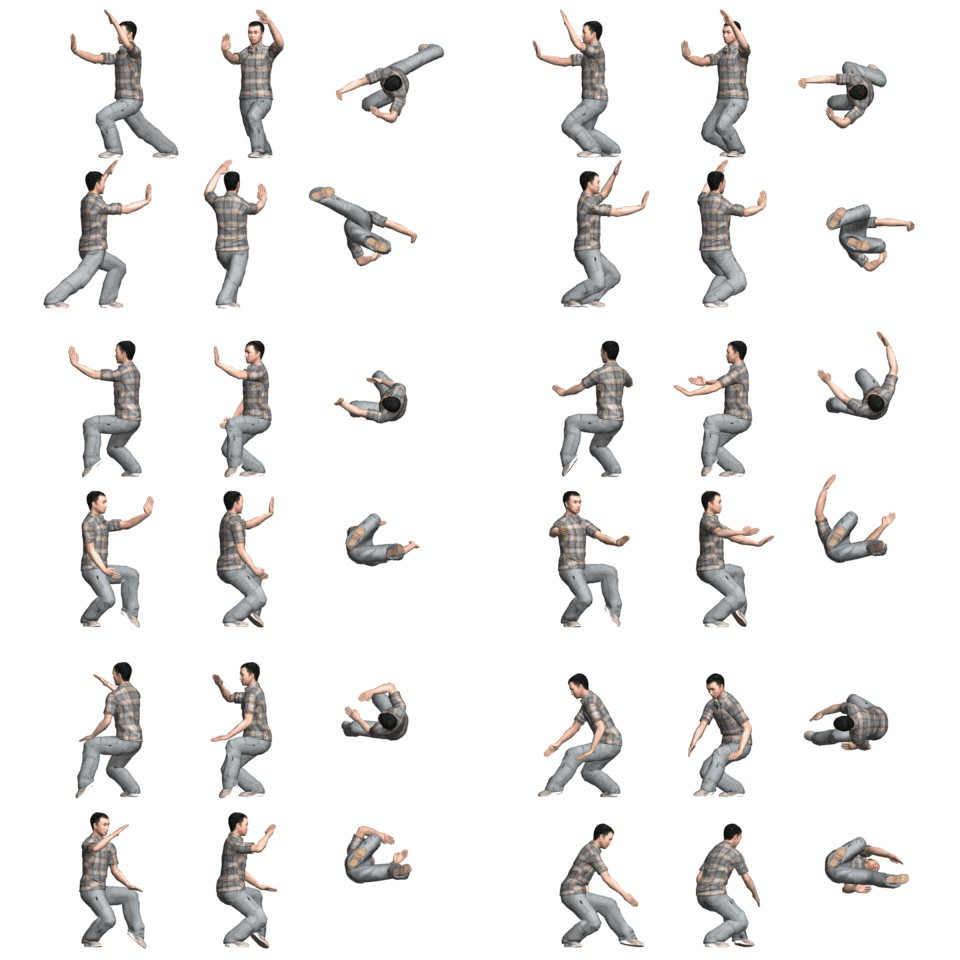 Key Points:
Right hand stabs downward like a needle, left hand presses by side.
Left leg empty (toe touch), right leg solid.
Keep head upright – don't bend forward excessively.
Common Mistakes:
Bending too much at the waist.
Stabbing hand too high or too low.
Weight shifting onto empty leg.
📖 This movement requires deep relaxation in the waist and hips. Read our guide on How to Relax in Tai Chi
Key Points:
Right hand stabs downward like a needle, left hand presses by side.
Left leg empty (toe touch), right leg solid.
Keep head upright – don't bend forward excessively.
Common Mistakes:
Bending too much at the waist.
Stabbing hand too high or too low.
Weight shifting onto empty leg.
📖 This movement requires deep relaxation in the waist and hips. Read our guide on How to Relax in Tai ChiSenior Brother#21
May 11, 2026
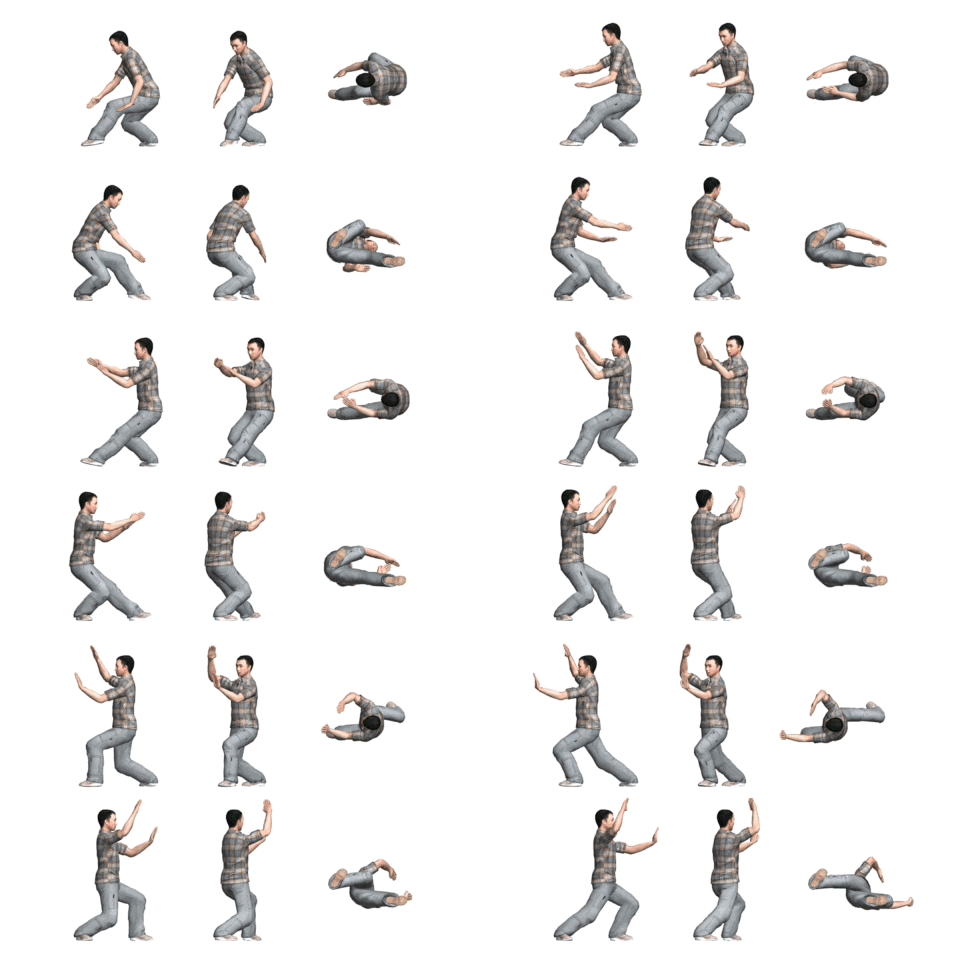 Key Points:
Right arm lifts and supports, left palm pushes forward.
Lift knee, step into bow stance.
Keep waist and hips relaxed.
Common Mistakes:
Lifting arm with shoulder tension.
Push and lift not coordinated.
Losing the bow stance alignment.
Key Points:
Right arm lifts and supports, left palm pushes forward.
Lift knee, step into bow stance.
Keep waist and hips relaxed.
Common Mistakes:
Lifting arm with shoulder tension.
Push and lift not coordinated.
Losing the bow stance alignment.Senior Brother#22
May 11, 2026
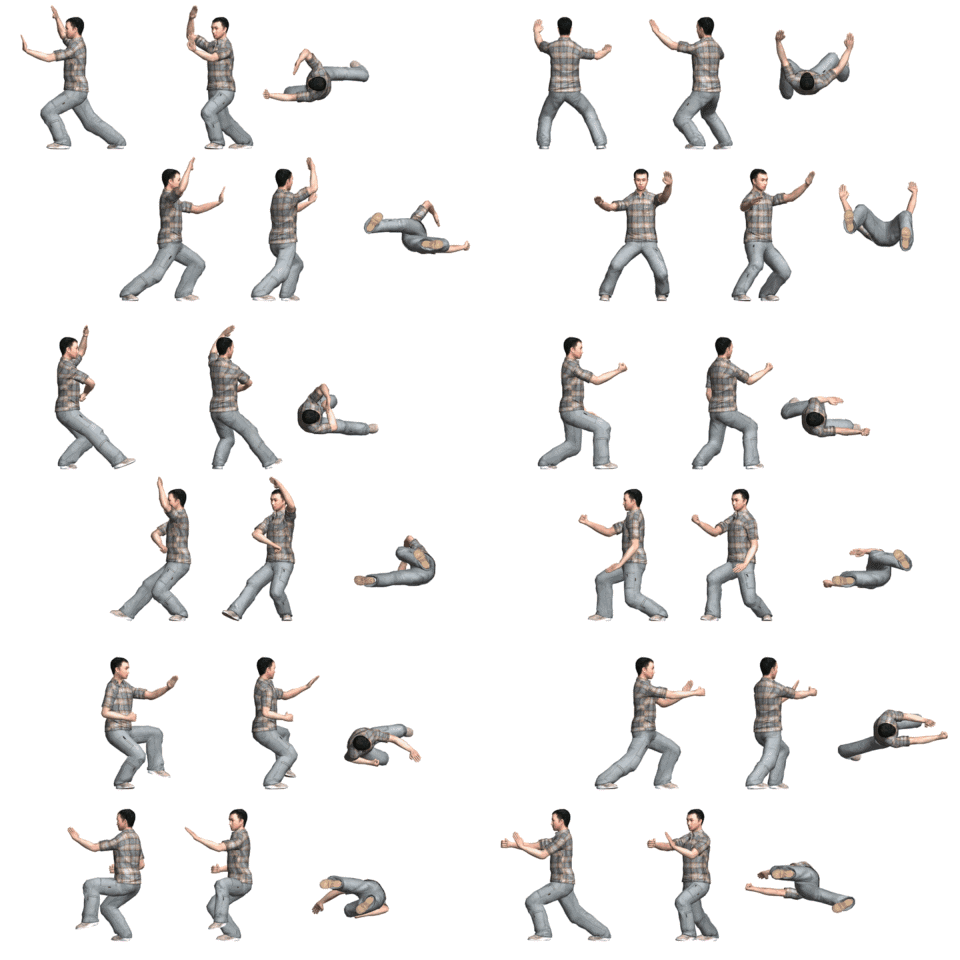 Key Points:
Turn, then deflect with right hand (搬).
Parry with left hand (拦).
Step forward and punch with right fist (锤), left hand protecting near elbow.
Right foot turns out, left foot steps in.
Common Mistakes:
Deflect, parry, punch disconnected.
Punch without waist power.
Footwork clumsy – not following the order.
Key Points:
Turn, then deflect with right hand (搬).
Parry with left hand (拦).
Step forward and punch with right fist (锤), left hand protecting near elbow.
Right foot turns out, left foot steps in.
Common Mistakes:
Deflect, parry, punch disconnected.
Punch without waist power.
Footwork clumsy – not following the order.Senior Brother#23
May 11, 2026
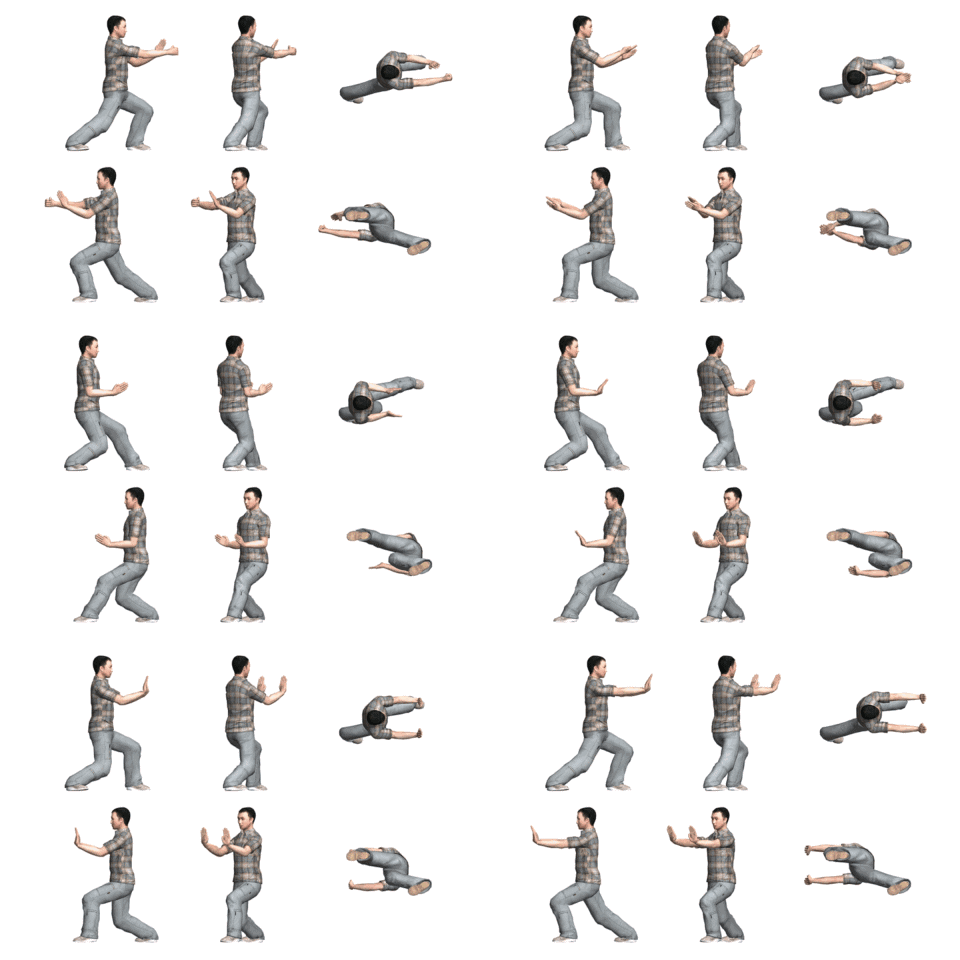 Key Points:
Cross hands to "seal" (封), then press forward to "close" (闭).
Lean back slightly, press down, then push forward.
Maintain a centered, upright posture – no leaning.
Common Mistakes:
Leaning too far back or forward.
Hands not working together in the close.
Losing the connection to the waist.
Key Points:
Cross hands to "seal" (封), then press forward to "close" (闭).
Lean back slightly, press down, then push forward.
Maintain a centered, upright posture – no leaning.
Common Mistakes:
Leaning too far back or forward.
Hands not working together in the close.
Losing the connection to the waist.Senior Brother#24
May 11, 2026
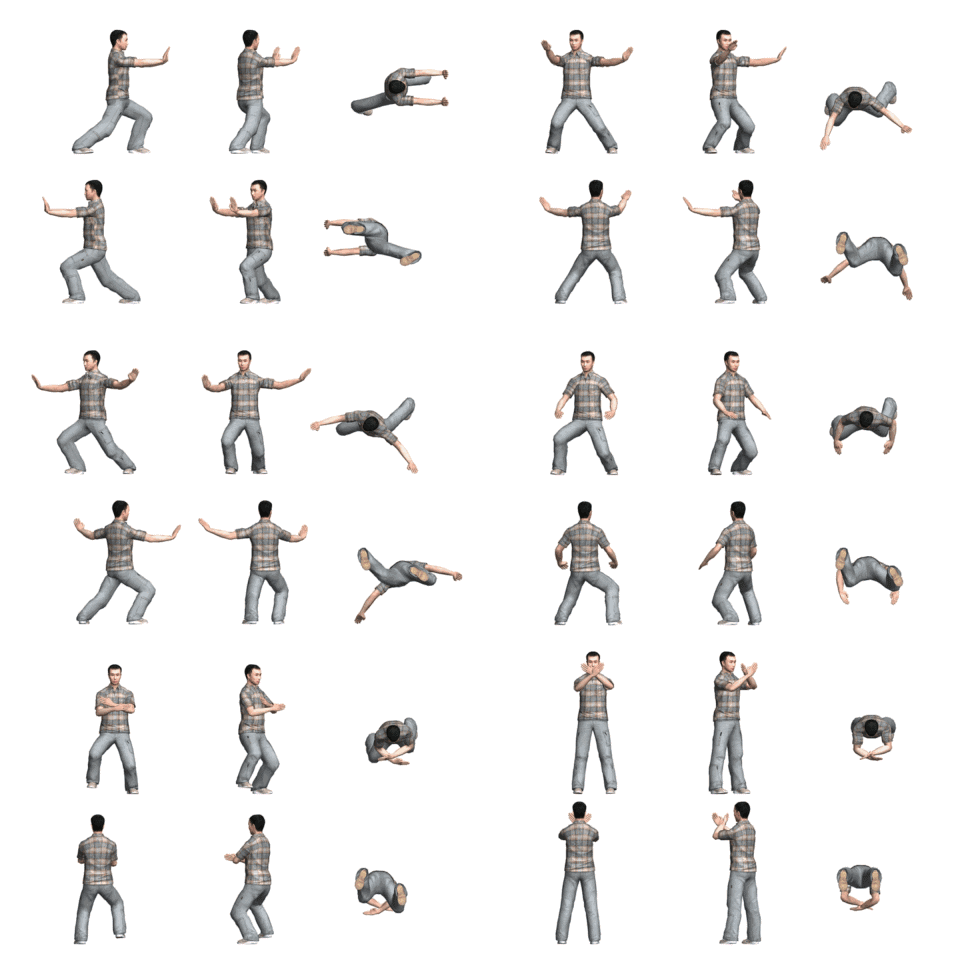 Key Points:
Cross forearms in front of chest, forming a cross.
Right foot draws in to shoulder width.
Relax waist and drop elbows.
Common Mistakes:
Arms too high or too low.
Crossing too tightly or loosely.
Tension in shoulders.
📖 Cross Hands symbolizes the union of yin and yang. Discover how this philosophy applies to everyday life in Yin Yang & Wuji in Daily Life
Key Points:
Cross forearms in front of chest, forming a cross.
Right foot draws in to shoulder width.
Relax waist and drop elbows.
Common Mistakes:
Arms too high or too low.
Crossing too tightly or loosely.
Tension in shoulders.
📖 Cross Hands symbolizes the union of yin and yang. Discover how this philosophy applies to everyday life in Yin Yang & Wuji in Daily LifeSenior Brother#25
May 11, 2026
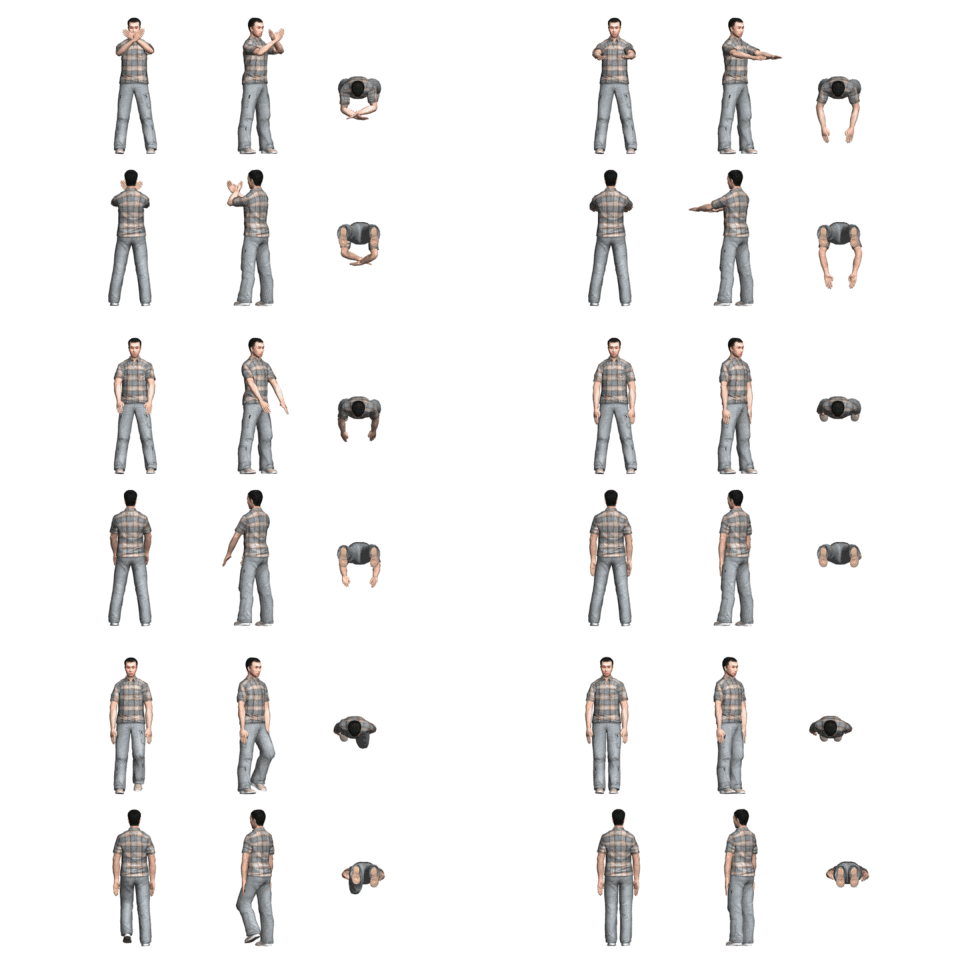 Key Points:
Press hands down slowly, then stand upright.
Bring left foot back to shoulder width.
End with a calm, collected feeling.
Common Mistakes:
Rushing the closing.
Not bringing the foot back fully.
Losing the relaxed state.
Key Points:
Press hands down slowly, then stand upright.
Bring left foot back to shoulder width.
End with a calm, collected feeling.
Common Mistakes:
Rushing the closing.
Not bringing the foot back fully.
Losing the relaxed state.Senior Brother#26
May 11, 2026
Related Articles
Tai Chi Forms Guide: 8, 16, 24, 42, 48, 56 & 85 Compared
Not sure which Tai Chi form to learn? This complete guide compares 8, 16, 24, 42, 48, 56, and 85 forms — with a clear learning path based on your level and goals. Includes the Thirteen Postures framework and expert progression advice.
Tai Chi vs. Baduanjin: Which is Better? Science-Based Comparison for Fitness & Health
Struggling to choose between Tai Chi and Baduanjin? Our in-depth 5,000-word analysis compares their origins, biomechanics, clinical benefits (for blood pressure, diabetes, balance), and scientific evidence. Discover which ancient Chinese practice is more effective for your specific fitness goals, ag
24-Form Tai Chi: The Complete Guide to Simplified Taijiquan
Discover 24-Form Tai Chi (Simplified Taijiquan). Our in-depth guide covers its history, philosophy, all 24 movements, and practice tips for balance, stress relief, and Qi flow. Perfect for beginners and beyond.
Related Threads

Discussions are curated and edited for educational clarity. Contributors are individual practitioners sharing personal experience. Not medical advice.
← Back to all discussions