Home / Forums / Tai Chi Books: The Lost Library of Tai Chi Unlocking Practice Through Ancient Books
Tai Chi Books: The Lost Library of Tai Chi Unlocking Practice Through Ancient Books

Community Member General Discussion

Posted May 9, 2026

Many of Tai Chi’s deepest secrets aren’t secrets at all—they’re hidden in plain sight, within the pages of old, often overlooked Tai Chi books. This series is your guide to that lost library. We’ll explore one foundational manual or treatise at a time, translating its ancient wisdom into clear, practical insights you can use in your very next practice. Consider this a book club for your Tai Chi journey. Series Index: Your Reading List Click any title below to jump to its dedicated post. The Theoretical Cornerstone The Iconic Practice Manuals (This index will grow weekly. Updated with every new post.) What to Expect in Each Post: For every Tai Chi book we open, you’ll find: The Context: When, why, and for whom it was written. Key Passages: Core excerpts translated into clear English. Why It Matters: The timeless principle that changes modern practice. A 5-Minute Drill: A simple exercise to feel the book’s teaching in your body. This isn’t just about history—it’s about finding the missing pieces for your own form, push hands, and understanding. Let’s read, discuss, and practice together. What’s the first book you’re curious about? Series curated by Tai Chi Wuji. Suggestions for future books are welcome! Just getting started with Tai Chi books? Check out our curated Best Tai Chi Books for Beginners (2026) for a practical, accessible reading list. #TaiChiBooks #TaiChiClassics #MartialArtsBooks #Taijiquan #KungFuLibrary #BookDiscussion

19 Replies

Senior Brother #1

May 11, 2026

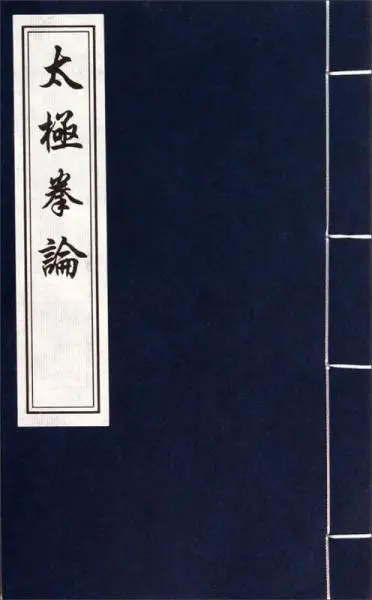
#01 | 《太极拳论》Wang Zongyue‘s Taijiquan Treatise (c.1795) ISBN 9787514909272 In One Sentence: This is the single most important text in all of Tai Chi—the short, poetic manuscript that lays the philosophical and practical foundation for every style that followed. The Core Text: What Does It Say? Imagine a text so profound that for over 200 years, every major master has used it as their ultimate reference. That’s the Taijiquan Treatise. Traditionally attributed to the scholar Wang Zongyue, its exact origins are mysterious, which only adds to its legendary status. It doesn‘t teach a single posture. Instead, it describes the internal state and principles that make movement become Tai Chi. Key Passage (Translated for Clarity): “Tai Chi is born from Wuji (the state of undifferentiated stillness). It is the mother of Yin and Yang. In motion, they separate; in stillness, they fuse.” This establishes the entire worldview. Your practice isn‘t just a sequence; it‘s a dynamic play of opposites (full/empty, expand/contract) arising from a calm center. “The ultimate softness overcomes the ultimate hardness… To withdraw is to release, to break connection is to connect.” This is the core combat strategy. It teaches you to conquer force not by meeting it, but by yielding, redirecting, and using the opponent‘s energy against them. Why It Matters Today: From Philosophy to Feeling This book matters because it’s a blueprint for efficiency, in both body and mind. For Your Body: It explains why we relax (“song”). It’s not to be limp, but to create a responsive, spring-like structure where power can issue from the ground without muscular force. For Your Mind: It reframes conflict. The ideal is not to clash (“ding”) or flee (“diu”), but to listen, adhere, and neutralize—a skill valuable far beyond the practice hall. The “Aha!” Moment: Next time you do Cloud Hands, observe: as one hand rises (Yang), the other sinks (Yin). That’s the “mutual transformation” Wang Zongyue described. The theory is happening in your body, right now. The 5-Minute Practice: “Feather on the Shoulder” Let’s translate “极柔软,然后能极坚刚” (The ultimate softness leads to the ultimate hardness) into a physical feeling. Stand in Wuji posture or sit comfortably. Close your eyes. Imagine a single, tiny feather is resting on your right shoulder. Your task: Feel its negligible weight not by tightening your muscles to “hold” it, but by letting your shoulder drop and relax so completely that the feather’s presence becomes perceptible. Notice: This profound relaxation makes your structure feel more solidly connected to the earth, not weaker. That’s the paradox of “softness creating hardness.” Try it for one minute. This is the first step in cultivating the sensitivity described in the famous line: “A feather cannot be added, a fly cannot land.” Practitioner‘s Note & A Cool Fact The Author Mystery: While credited to Wang Zongyue, historians debate the true author. However, the Tai Chi world agrees: the ideas are what count, and their truth is validated through practice, not pedigree. A Hidden Gem: The text is likely much older than the 1795 date suggests, possibly drawing from even earlier Chinese martial and Daoist traditions. Where to Find It & Go Deeper In the Public Domain: The original Chinese text is freely available on sites like Wikipedia or Chinese Wikisource. A Recommended Modern Edition: The ISBN you mentioned (9787514909272) corresponds to a modern Chinese compilation, often titled 《太极拳谱》, which includes the Treatise along with other classic texts. For English readers, an excellent translation with commentary is found in “The Essence of T‘ai Chi Ch‘uan” by Lo, Inn, Amacker, and Foe.
Senior Brother #2

May 11, 2026

#02 | 《十三势行功歌诀》The Thirteen Postures Song (c. 18th-19th Century) In One Sentence: If the Taijiquan Treatise is the “theory,” this song is the “manual”—it transforms profound philosophy into actionable, memorable verse, bridging the gap between mind and body in practice. The Core Text: What Does It Say? Also traditionally attributed to Wang Zongyue, this text is written in a classic, seven-character poetic form, making it easy to memorize and transmit. It moves beyond abstract philosophy to provide direct guidance on the mental focus and energetic flow during practice. It‘s often called “the Taijiquan Treatise in motion.” Key Passages (Translated for Clarity): “The source of intention and life is in the waist’s hollow; Pay close attention to every shift between empty and full.” What it means: Your power and intent do not originate in your limbs, but in your lower back/dantian area (the “waist’s hollow”). You must be meticulously aware of every transition between solid (实) and yielding (虚) stances. “Let qi flow throughout the body without the slightest stagnation; In stillness, be ready to move; in movement, retain stillness.” What it means: Cultivate a state where your vital energy (qi) circulates seamlessly from your core to your extremities without blockage. Your mind should be calm and alert when still, and your movements should remain rooted and composed even in action. Why It Matters Today: Putting Theory into Motion This song‘s brilliance lies in answering the “how to practice” question: Locates the “Engine”: It unequivocally states that power comes from the waist and dantian, not the arms and legs. This corrects a common beginner‘s mistake and redirects focus to the body‘s core. Defines “Internal Gongfu”: “Qi flowing throughout the body” is not mystical; it‘s the physical sensation of perfect coordination, sequential movement, and deep, integrated breathing. It gives you an internal target during your form—to feel a smooth, unobstructed connection. Guides Dynamic Balance: “In stillness, be ready to move; in movement, retain stillness” perfectly describes Taiji‘s dynamic equilibrium. It‘s the mental-physical state required for effective push hands: a calm center enables swift, appropriate responses. A Modern Metaphor: Imagine your body is a water balloon. The “waist’s hollow” is the hand that squeezes it, and the “qi” is the water inside. When the hand moves (waist turns), the water flows instantly and without resistance to all parts of the balloon. This song teaches you to cultivate that kind of whole-body, fluid connectivity. The 5-Minute Practice: “The Water Balloon Drill” Let‘s practice “qi flowing without the slightest stagnation.” Stand with feet shoulder-width apart, completely relaxed. Place your hands gently on your lower abdomen. Focus your mind on your “waist’s hollow”—the area between your lower back (mingmen) and your lower dantian. Very slowly, begin to turn this core area as if gently rotating a steering wheel, letting the movement ripple through your torso. Shift your weight subtly from left to right. The key: Forget about your arms and legs. Imagine your torso is a water balloon. As your core turns, feel the “water” (your awareness and internal sensation) flow smoothly, without delay, into your chest, shoulders, and even fingertips. The goal is not a large movement, but to experience a wave-like, uninterrupted internal flow from your center to your extremities. Practicing this for a few minutes daily will dramatically improve the connectedness and fluidity of your form. Practitioner‘s Note The “Thirteen Postures” refer to the eight hand techniques (Ward-off, Roll-back, Press, Push, Pluck, Split, Elbow, Shoulder) and the five steps (Advance, Retreat, Step Left, Gaze Right, and Central Equilibrium). This song is their essential “mental handbook.” Many traditional schools still require advanced students to memorize and contempl
Senior Brother #3

May 11, 2026

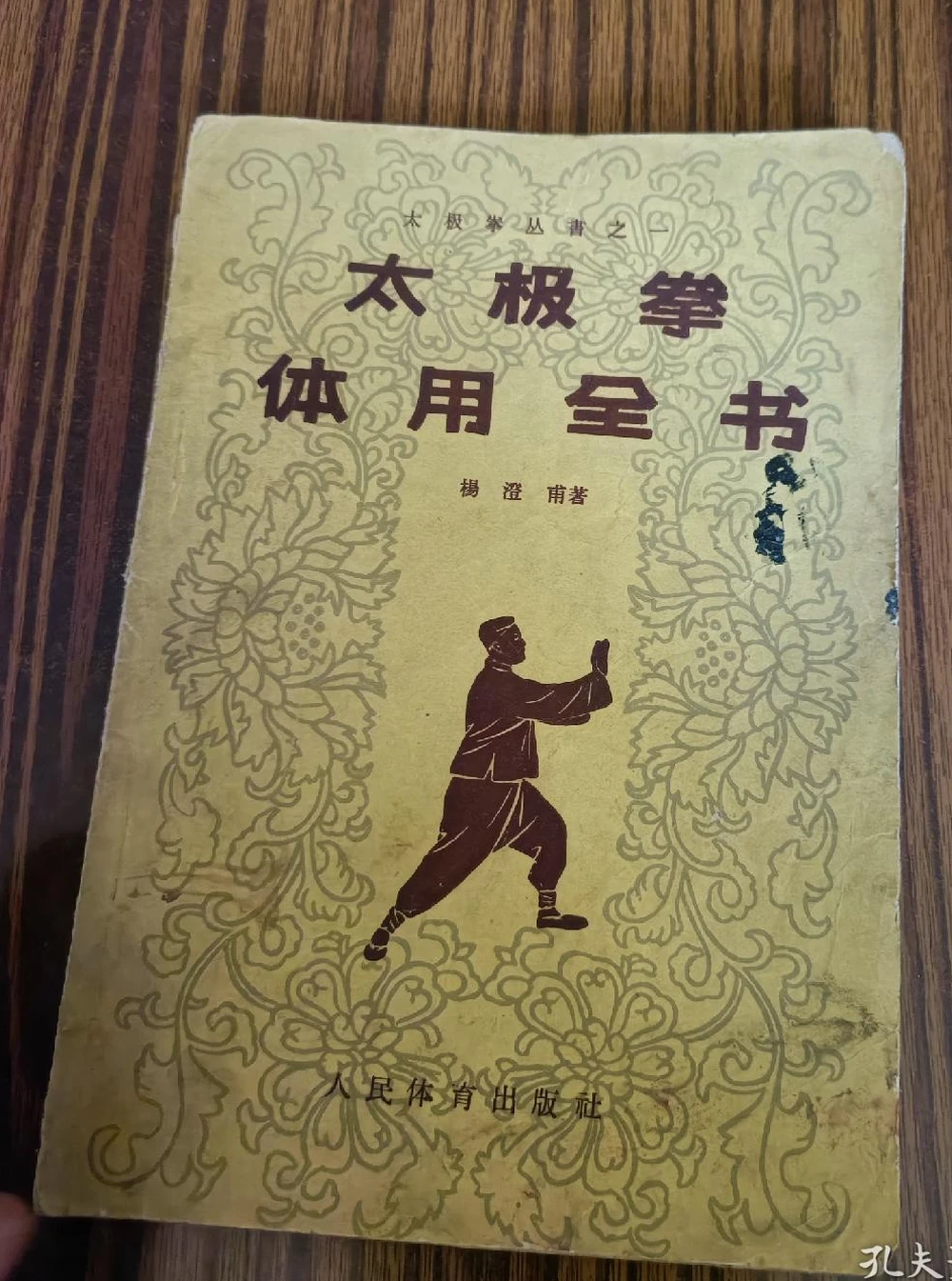
#03 | 《太极拳体用全书》Yang Chengfu‘s Complete Book of Taijiquan: Essence and Application (1934) In One Sentence: The definitive visual standard for Yang-style Tai Chi, where Grandmaster Yang Chengfu himself demonstrates the perfect form, creating an immortal reference for generations. The Core Text: What Does It Say? Published in 1934, this book is monumental not for complex theory, but for its unparalleled authority and clarity. It features large, clear photographs of Grandmaster Yang Chengfu (1883–1936) performing the entire traditional 85-movement long form. His posture—expansive, upright, perfectly balanced—became the gold standard for Yang style worldwide. The text, likely compiled by his student Zheng Manqing, explains both the essence (体, the internal principle of each posture) and the application (用, its martial intent). Key Concept (From the Book‘s Philosophy): “Every movement in Taijiquan must be light, agile, and connected. The entire body is integrated, with the waist as the commander… The mind leads, the body follows.” What it means: This defines the Yang-style aesthetic: graceful yet powerful, with no breaks. It visually teaches what “song” (relaxation) and “guan” (connection) look like in a human body at its peak. Why It Matters Today: The Power of a Standard Before this book, learning was mostly oral. This book democratized and preserved the art. Your Ultimate Form Check: Every Yang-style practitioner, consciously or not, compares their posture to Yang Chengfu‘s in this book. It answers the question, “Am I doing it right?” Bridges Form and Function: By explaining applications, it prevents the form from becoming a mere dance. It reminds you that each “wave hands like clouds” has a martial purpose—to deflect, unbalance, and control. A Cultural Treasure: These photographs capture the essence of a lineage at a pivotal moment, just before the art spread globally. It‘s a direct link to the source. A Modern Analogy: This book is the “IKEA manual” for Yang-style Tai Chi. While a teacher is irreplaceable for correction, this book gives every practitioner, anywhere in the world, the same reference diagram to build from. The 5-Minute Practice: “Posing with the Master” Let‘s directly engage with the book‘s power as a visual guide. Choose one foundational posture from the book (e.g., “Single Whip” (Dan Bian) or “Play the Lute” (Shou Hui Pipa)). You can find these images easily online by searching “Yang Chengfu [posture name].” Open the book (or a digital image) and study the photo for one full minute. Don‘t just glance. Note: the angle of his head, the curve of his spine, the openness of his chest, the direction of his gaze, the precise hand form. Now, stand up and mimic the posture as closely as you can. Don‘t force it. Focus on one key alignment—perhaps the feeling of your chest being “open” or your spine feeling “suspended from above.” Hold it for a minute. Feel the structure. Then, check the photo again. What‘s different? This process of observation, imitation, and self-correction is exactly how this book has been used for nearly a century. Practitioner‘s Note Many of the most famous photos of Yang Chengfu were taken for this book. His dignified and immensely powerful presence in these images is a lesson in itself. While the form is standard, observing the subtle differences in how different masters (like Yang Zhenduo or Yang Jun) interpret these same postures today can be a fascinating study in the living transmission of the art. Where to Find It & Go Deeper Reprints: Widely available. An English version is “The Essence and Applications of Taijiquan.” Digital: Scans of the original 1934 edition exist online.
Senior Brother #4

May 11, 2026

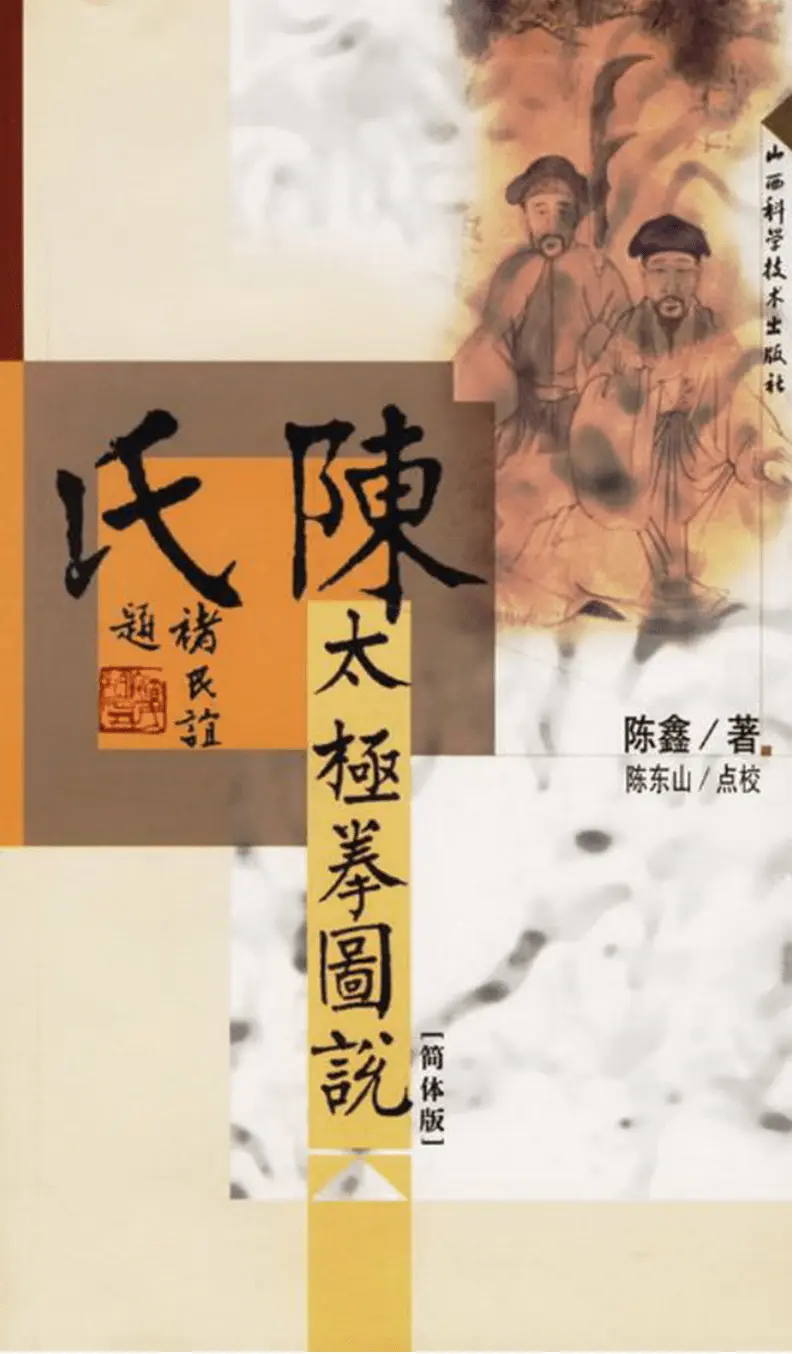
#04 | 《陈氏太极拳图说》Chen Xin‘s Illustrated Explanations of Chen Family Taijiquan (1933) In One Sentence: The encyclopedic theoretical pillar of Chen-style Tai Chi, a monumental work that weaves intricate martial techniques with profound classical Chinese philosophy. The Core Text: What Does It Say? Compiled by Chen Xin (1849-1929), a late Qing Dynasty scholar and 16th-generation master of the Chen family, this is arguably the most comprehensive and scholarly text on Chen-style principles. Written over 12 years to preserve the art for future generations, it combines detailed illustrations with dense, philosophical commentary rooted in the I Ching (Book of Changes), Daoism, and traditional medicine. Key Concept - “Chan Si Jin” (Silk Reeling Energy): “Jin originates from the feet, is commanded by the waist, and manifests in the fingers. It spirals endlessly, like reeling silk from a cocoon.” Meaning: This defines the signature power of Chen style. Every movement involves a coiling, spiraling energy that winds through the body, connecting every joint. It is the practical engine for generating power, not just a theoretical idea. Why It Matters Today: Theory in Action This book is essential because it demystifies the internal mechanics of Tai Chi‘s most dynamic style. Your Guide to “Jin” (Power): It explains how power (jin) is distinct from brute force (li). It maps how to cultivate and direct this spiraling, connected force—a roadmap for any internal art practitioner. Connects Movement to Philosophy: It shows how patterns like “Lazily Tying Coat” physically embody concepts like “soft overcoming hard,” grounding abstract philosophy in bodily sensation. Preserves a Complete System: Beyond the famous “Cannon Fist” and “Old Frame,” it records theories, weapon forms, and combat applications that might otherwise have been lost. Modern Analogy: Think of it as the “technical service manual” for a high-performance engine. While the Yang-style book shows you the perfect exterior, this book gives you the diagrams and physics for the internal drive system. The 5-Minute Practice: “Finding the Spiral” Let‘s physically explore the core concept of “Silk Reeling Energy.” Stand with feet parallel, shoulder-width apart. Relax. Raise your right arm to chest height, palm facing you as if holding a large ball. Initiate a tiny, slow movement from your waist (the commander), turning it slightly to the right. Let this turn cause your right forearm to rotate outward (supinate), as if a gentle screw is turning from your core through your arm. Reverse: Turn your waist slightly left, letting it cause your forearm to rotate inward (pronate). Focus on the feeling of connection. The arm doesn‘t move on its own; it is “reeled” by the waist. This tiny, connected rotation is the seed of chan si jin. Practitioner‘s Note Chen Xin was a scholar, not a fighter, which is why his book is uniquely rich in theory. He wrote it out of fear the art would be lost, dictating it from his sickbed. His work allows us to understand the “why” behind Chen-style‘s characteristic low stances, explosive releases (fajin), and clear spirals. Where to Find It English Translation: A full translation is available: “Chen Style Taijiquan Illustrated and Explained” by Chen Xin, translated by Alex Golstein. Original Texts: Facsimiles of the 1933 Chinese original are prized by collectors and available in some digital libraries. Let‘s Discuss: For all: When trying the “spiral” exercise, did you feel a different sense of connection compared to your usual movement? For Chen-style practitioners: How does studying this text change your perception of your form‘s “external shape” versus its “internal path”?
Senior Brother #5

May 11, 2026

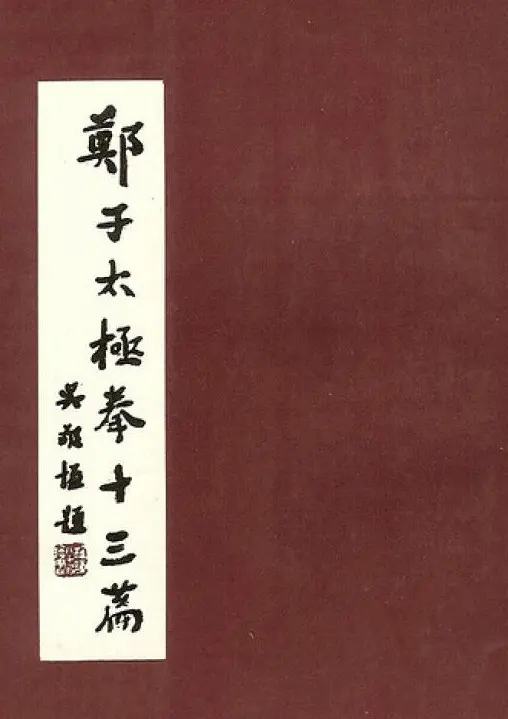
#05 | 《郑子太极拳十三篇》Zheng Manqing‘s Thirteen Treatises on Taiji Boxing (1950) In One Sentence: The scholar-artist’s masterwork that presents Tai Chi as a unified art of healing, self-cultivation, and effortless power through poetic prose and unforgettable metaphors. The Core Text: What Does It Say? Written by Zheng Manqing (1902-1975)—a renowned painter, calligrapher, doctor, and student of Yang Chengfu—this book reflects a deeply cultured and intellectual mind dissecting Tai Chi. It is structured as thirteen essays, each exploring a fundamental facet of the art, from “The Study of Relaxation” to “The Relationship of Taiji to Medicine and The Book of Changes.” Unlike manuals focused solely on form, it delves into the “why” behind principles. Key Metaphor - “Fair Lady’s Hand” (美人手) & “Swimming on Land” (陆地游泳): “The hand should be like that of a fair lady sewing: gentle, precise, with alive sensitivity, not a stiff tool.” “Practice the form as if swimming in air. There is resistance to play with, yet you move through it without force.” Meaning: These are not just pretty phrases. “Fair Lady’s Hand” redefines relaxation as alert, intelligent softness. “Swimming on Land” teaches you to cultivate and use the sensation of qi/resistance to guide movement, fostering internal connection over external muscle. Why It Matters Today: The Art of Refinement Zheng‘s work is crucial for moving beyond mechanics into artistry and internal sensitivity. Demystifies Internal Sensation: He provides tangible images (“swimming”) for abstract feelings (qi, peng jin), making advanced concepts accessible to all. Holistic Health Focus: As a doctor, he explicitly links correct Tai Chi practice to physiological and mental well-being, appealing to modern health-conscious practitioners. Promotes the “Short Form”: He famously created a concise 37-posture form to preserve the essence for busy modern life, arguing that quality of understanding trumps quantity of movements. Modern Analogy: If Yang Chengfu‘s book is the perfect technical blueprint, Zheng‘s book is the inspiring artist’s statement and user‘s guide that explains the philosophy behind the design and how to live with it beautifully. The 5-Minute Practice: “The Fair Lady’s Hand Drill” Let‘s embody Zheng‘s most famous metaphor. Hold your hand out in front of you, palm down, as you normally would in a posture like “Ward Off.” Now, clench it into a stiff fist. Feel the tension radiate up your arm to your shoulder. This is pure force (li), a “dead” hand. Completely release the fist, letting the hand go utterly limp and floppy. This is collapse, lacking any structure. Find the middle way: Let your fingers gently extend and come together, with the slightest space between them. Imagine holding a delicate thread or touching a soap bubble—there is a defined shape and alive awareness, but zero rigid force. This poised, sensitive, “alive” configuration is the Fair Lady’s Hand. Carry this feeling into your next form practice. Practitioner‘s Note Zheng Manqing was a pivotal figure in bringing Tai Chi to the West from Taiwan in the 1960s. His 37-posture form and this book became the gateway for countless Western students. His approach is sometimes called “Professor Cheng’s Taiji,” emphasizing the intellectual and refined aspects of practice. Where to Find It English Version: The standard translation is “Cheng Tzu‘s Thirteen Treatises on T‘ai Chi Ch‘uan” by Benjamin Pang Jeng Lo and Martin Inn. Legacy: His work is foundational for many schools in North America and Europe. Let‘s Discuss: Does the “Fair Lady’s Hand” or “Swimming on Land” metaphor change how you think about “relaxation” or “connection” in your practice? What is the value of a shorter, condensed form versus a longer, traditional form?
Senior Brother #6

May 11, 2026

#06 | Zheng Manqing‘s Tai Chi Ch‘uan: A Simplified Method of Calisthenics for Health & Self-Defense (1966) In One Sentence: The first truly popular English-language Tai Chi book, a cultural bridge that masterfully adapted the art for the Western world, prioritizing accessibility and health. The Core Text: What Does It Say? This is not a direct translation of Zheng Manqing‘s Chinese work. Published in 1966, it was created specifically for an English-speaking audience. It presents his famous 37-posture shortened Yang style form, with clear, sequential photographs and concise instructions. The text is pragmatic, explaining movements in terms of health benefits, basic principles, and self-defense concepts without overwhelming philosophical depth. It was many Westerners‘ first and only exposure to Tai Chi for decades. Key Principle - “The Three Harmonizations”: “The harmony of mind and body; the harmony of body and movement; the harmony of movement and spirit.” Meaning: Zheng frames Tai Chi as a practice of gradual integration. You start by coordinating your limbs with your torso, then synchronize your breath with the movement, and ultimately unify your focused intention with the whole process. This stepwise approach made the art less daunting for beginners. Why It Matters Today: The Gateway This book‘s historical impact is immense. The Original “Gateway Drug”: For a generation, this was the manual. It demystified and democratized Tai Chi outside of Asia, proving the art could be learned from a book. Health-First Focus: At a time when Tai Chi was often perceived as a mysterious martial art, Zheng (a medical doctor) positioned it primarily as a scientific health exercise, which greatly increased its mainstream appeal and acceptance. The Model for Adaptation: It demonstrated how to preserve the core of a traditional art while adapting its presentation for a new culture—a lesson relevant to all cross-cultural teaching. Modern Analogy: This book is the “Beatles’ ‘White Album’” of Tai Chi—it wasn‘t the first, but it was the one that broke through to a massive, mainstream global audience, changing the cultural landscape forever. The 5-Minute Practice: “The 70% Principle” Zheng famously advised students to only ever use 70% of their stretch, reach, or effort. This prevents stiffness, maintains balance, and cultivates the internal sensation of song (relaxation). Perform a simple movement like “Ward Off” or even just raising your arms overhead. First, do it at 100% effort: stretch your arms and fingers to their absolute maximum length. Notice the tension in your shoulders and back. Now, do it again, but consciously stop at 70% of your maximum reach. Let your elbows be slightly bent, your shoulders completely dropped. Compare: The 70% version should feel more stable, more relaxed, and paradoxically, more powerful and ready to move. This is the practical essence of “leaving margin” and avoiding double-weightedness. Practitioner‘s Note While purists sometimes criticized the shortened form, its genius was in its pedagogy. By removing repetitions, it allowed students to grasp the complete sequence and core principles faster, sustaining motivation. It made the profound accessible. Where to Find It Status: It remains in print and widely available in paperback. Used copies are very common. Legacy: Studying this book is a lesson in the history of Tai Chi‘s global transmission. Comparing its photos to Yang Chengfu‘s 1934 manual shows a clear evolution in teaching presentation.
Senior Brother #7

May 11, 2026

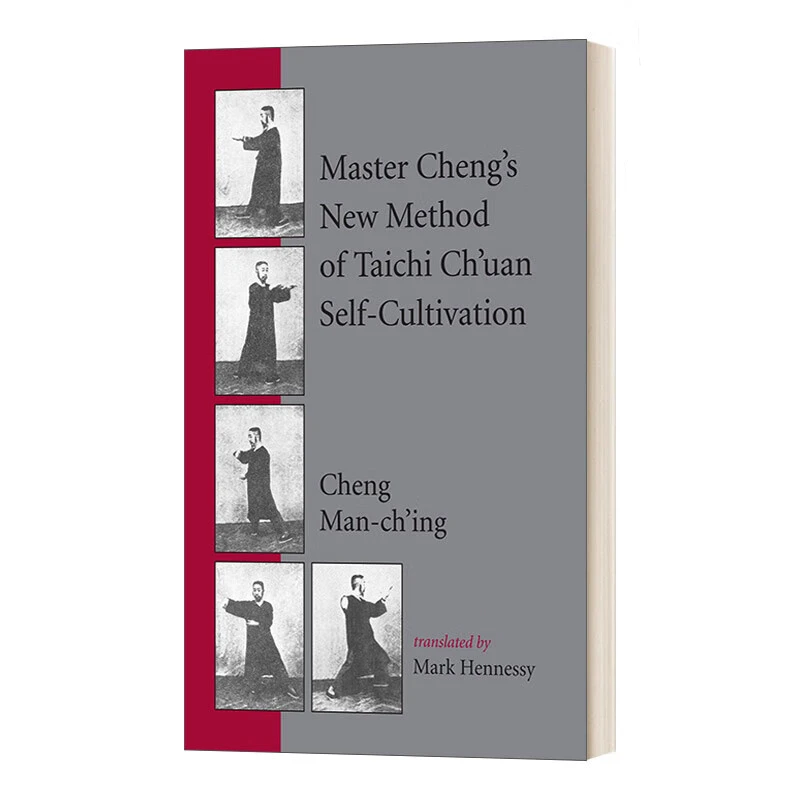
#07 | 《Master Cheng‘s New Method of Taichi Ch‘uan Self-Cultivation》 - Zheng Manqing (1999) In One Sentence: The culmination of Professor Cheng's lifework—a detailed manual focusing on the "process" of movement in his 37-posture Short Form, connecting precise posture with deep philosophy. The Core Text: What Does It Say? Translated into English by Mark Hennessy, this 1999 volume is recognized as Zheng Manqing‘s final and most detailed work on his Simplified Method. It moves beyond static postures to meticulously detail the transitions between them, emphasizing the continuous flow of Taiji. The book is richly illustrated with 180 photographs and 160 foot diagrams for clarity. The Author's Own Words (Opening Line): "My New Method of Taichi Ch'uan Self-Cultivation can help those pressed by work schedules, women busy with household chores, or any enthusiast whose remote location precludes him the opportunity for class study." Meaning: Zheng Manqing explicitly designed this method for the modern, self-directed learner, making profound practice accessible outside a formal classroom. Why It Matters Today: A Bridge to Internal Art This book is essential because it acts as a practical bridge between his earlier works. From "What" to "How": If his 1966 book "A Simplified Method..." provides the basic outline, this volume offers the deep "how-to," expanding greatly on posture details and smooth transitions. Integrates Theory and Practice: Like his "Thirteen Treatises," it connects the physical form to classical Chinese philosophy (like the I Ching and Dao De Jing), but here the philosophy is directly linked to movement instructions. A Complete Self-Study System: With its extensive visuals and step-by-step guidance on the entire Short Form, it fulfills its promise of being a concise guide for rapid progress on one's own. A Modern Analogy: Think of it as the "director's commentary" for Zheng Manqing's Short Form. You get not just the final performance (the postures), but the expert's notes on intention, pacing, and connection for every scene (transition). The 5-Minute Practice: "The Three-Second Transition" Apply the book's core principle of mindful transition to any movement. Choose a simple transition, like shifting weight from "Ward Off" to "Roll Back." Take 3 full seconds to complete the shift. Forget the start and end poses. For each second, focus on a different internal guide: Second 1: Initiation from the waist. Second 2: Flow of the turning spine. Second 3: Settling of the weight and opening of the posture. The goal is to make the moving process itself the object of your cultivation, not just a means to get to the next pose. Practitioner‘s Note This book is often considered the capstone of Zheng Manqing's teaching legacy. Translator Mark Hennessy, who spent over a decade studying in Asia, brings deep cultural and linguistic insight to the text. For practitioners of any style seeking "internal achievement," this book is presented as an essential volume. Where to Find It & Go Deeper Publisher: Blue Snake Books (1999). It remains in print and widely available in paperback. ISBN: 9781883319922. Content: Includes the complete 37-posture form, essays on self-cultivation, and examples of Taiji philosophy from classical literature.
Senior Brother #8

May 11, 2026

#08 | 《太极拳刀剑杆散手合编》Chen Gong's Combined Compilation of Taiji Boxing, Saber, Sword, Spear, and Free Hand (1943) In One Sentence: A comprehensive training manual from the golden era of Yang-style Tai Chi, documenting not only the bare-hand form but also the complete arsenal of traditional weapons—preserving the art as a complete martial system. The Core Text: What Does It Say? Published in 1943, this book stands as one of the most complete records of Yang-style Tai Chi as it was taught in the mid-20th century. Chen Gong (陳公, often known as Chen Weiming) was a senior student of Yang Chengfu and a scholar who dedicated himself to preserving his teacher's legacy. This volume is remarkable for its scope: it contains detailed instructions and photographs of the bare-hand form, push hands, da lu (the larger rolling patterns), two-person fixed-step routines, and the complete weapon forms—saber (dao), sword (jian), spear (qiang), and staff. Unlike books focused purely on philosophy or solo practice, this is a training curriculum. It shows how the principles from Wang Zongyue's Treatise and Yang Chengfu's Complete Book are actually trained in partnered practice and weapon work. Key Passage (Paraphrased from the Preface): "Taijiquan is not merely a method of health preservation; it is a martial art. The solo form plants the seeds. Push hands cultivates the soil. Weapons are the harvest—they extend the body's natural weapons and deepen one's understanding of distance, timing, and jin." This framing emphasizes that weapons practice is not a separate pursuit but a direct extension of bare-hand principles. Why It Matters Today: The Completeness of the Art This book is essential for anyone who wants to understand Tai Chi as a martial tradition, not just a health practice. Weapons as Teachers: A sword or saber exaggerates any flaw in your structure. Chen's detailed photos show precisely how to align the weapon with the body's central axis—making subtle errors in posture suddenly visible. Two-Person Work: The book documents fixed-step push hands, moving-step push hands, and da lu (the "great rollback") with partner diagrams. These are the missing links between solo form and practical application. Historical Authenticity: These photographs capture a generation of Yang-style practitioners who trained under Yang Chengfu himself. Studying them is like having a window into the training hall of the 1930s and 40s. The 5-Minute Practice: "The Spear Hand" Even without a weapon, you can experience the martial extension this book teaches. Stand in a forward stance (left leg forward, right leg back, weight 60/40 forward). Extend your right arm forward as if holding a spear, left hand near your right hip as if steadying the shaft. As you shift weight forward, imagine you are not pushing with your arm. Instead, feel the power originating from your back leg, traveling through your waist, and leaving through the tip of an imaginary spear. Repeat slowly, focusing on the sensation of the weapon as an extension of your core structure—not an additional effort from your arms. Practitioner's Note Chen Gong's book was reprinted in Taiwan and remains a treasured resource for traditional Yang-style practitioners. While less famous than Yang Chengfu's Complete Book, it arguably offers a more complete picture of the traditional curriculum. The weapons sections alone are worth the study, showing that Tai Chi's "internal" principles apply whether your hands are empty or holding steel. Where to Find It: Rare original editions exist in collectors' hands. Republished versions in Chinese are available through specialty martial arts publishers in Taiwan and mainland China. For English readers, translations of key sections appear in journals like T'ai Chi magazine from the 1990s.
Senior Brother #9

May 11, 2026

#09 | 《太极拳谱》Shen Shou's Taijiquan Manual: The Collected Classics (1931) In One Sentence: The definitive modern compilation of Tai Chi's classical texts—the book that gathered the scattered treatises, songs, and oral teachings into a single authoritative volume, becoming the foundational reference for scholars and practitioners alike. The Core Text: What Does It Say? If you have ever read a translation of Wang Zongyue's Treatise, Wu Yuxiang's writings, or the Song of the Thirteen Postures, you are ultimately indebted to Shen Shou (沈寿, 1899–1986). A scholar and practitioner in the Wu/Hao lineage, Shen spent decades tracking down manuscripts, comparing versions, and establishing the most reliable texts of Tai Chi's classical literature. Published in 1931 and revised multiple times, his Taijiquan Manual: The Collected Classics (太极拳谱) is not a "how-to" book but a "sourcebook"—it gathers the foundational theoretical works of the art and provides authoritative commentaries. This volume includes: Wang Zongyue's Taijiquan Treatise The Song of the Thirteen Postures Wu Yuxiang's Explanations of the Thirteen Postures Li Yiyu's Five-Character Formula Various oral teachings from the Wu/Hao lineage Why It Matters Today: Authenticity and Depth The Standardized Canon: Before Shen, these texts existed in fragmented, often contradictory versions. His work created a stable textual foundation, allowing practitioners to reference a common source. Scholarship Meets Practice: Shen was both a scholar and a practitioner. His commentaries bridge the gap between classical Chinese philosophy and embodied experience—he explains what a phrase like "the jin of the four directions" actually feels like in the body. A Lifelong Project: Shen continued refining this collection for over 50 years. The final editions represent a lifetime of cross-referencing, correcting transcription errors, and reconciling lineage variations. A Key Concept: "The Body Is Not Yet Moved" One of Shen's most clarifying commentaries addresses the opening line of the Treatise: "Taiji is born from Wuji." Shen explains: "Wuji is not nothing. It is the state of readiness before action—the body still, yet all potential exists. The mistake is to interpret this as limpness or emptiness. Rather, it is the coiled spring before release." This shifts the understanding from abstract philosophy to a tangible training state: the stillness before movement is alive and aware. The 5-Minute Practice: "Stillness as Readiness" Stand in Wuji posture: feet parallel, arms hanging naturally, eyes closed. Instead of "emptying your mind," cultivate a state of alert stillness. Imagine you are waiting for a friend to appear around a corner—your body is still, but your awareness is fully present. Take three slow breaths. With each exhale, feel your weight settle deeper into your feet, but maintain that sense of readiness. Now, move—any movement. Notice: was the transition from stillness to motion seamless? Or did you have to "gather yourself" first? Shen's Wuji is seamless transition. Practitioner's Note Shen Shou's work is the foundation for nearly every serious English-language translation of the Tai Chi classics. Authors like Douglas Wile, Stuart Olson, and Barbara Davis all rely on his textual scholarship. For practitioners who want to go beyond surface-level quotes and truly understand the classical literature, this book (or its modern descendants) is essential reading. Where to Find It: The original Chinese edition is a collector's item. English readers can access its content through Douglas Wile's Lost Tai-chi Classics from the Late Ching Dynasty (1996) or Barbara Davis's The Taijiquan Classics (2004), both of which build on Shen's foundational work.
Senior Brother #10

May 11, 2026

#10 | 《太极拳运动》The People's Sports Publishing House's Taijiquan Exercise (1976) In One Sentence: The official standardized manual that transformed Tai Chi from a family art into a nationwide public health system—creating the simplified 24-form, 48-form, and competitive routines practiced by millions worldwide. The Core Text: What Does It Say? In 1956, the Chinese government tasked a committee of masters—including Li Tianji, Li Jingwu, and others—with creating a simplified Tai Chi routine suitable for mass instruction. The result was the 24-Form Simplified Taijiquan, and the official manual explaining it was Taijiquan Exercise (《太极拳运动》), published by the People's Sports Publishing House and revised multiple times through the 1970s and 80s. This book is not a single-author work but a state-produced curriculum, reflecting a pivotal moment when Tai Chi was systematically extracted from its family and lineage contexts and reframed as a scientific, accessible health practice. The manual presents: The complete 24-form sequence with step-by-step photographs Simplified 32-form sword (optional) Later editions added the 48-form combination routine Standardized terminology and teaching methods Key Principle: "Accessibility Without Loss of Essence" The architects of the 24-form faced a challenge: how to distill a 100+ movement long form into 8 minutes while preserving its internal principles. Their solution was to select representative postures from Yang style and arrange them to teach core concepts systematically: Opening movements teach weight shifting Repulse Monkey teaches coordinated stepping and turning Cloud Hands teaches lateral movement and waist rotation Closing movements reinforce structural integration The book emphasizes that the simplified form is not a "diluted" Tai Chi but a gateway—a complete pedagogical arc that introduces all essential principles. Why It Matters Today: The Democratization of Tai Chi The World's Most Practiced Form: Over 100 million people have learned the 24-form. If you have seen Tai Chi in a park, community center, or tourist video, you have almost certainly seen this form. This book is the source text for that global practice. Standardization vs. Lineage: The manual's language is deliberately non-mystical. It avoids terms like qi and dantian in early sections, presenting principles in biomechanical terms: "sink the shoulders, drop the elbows," "keep the spine straight," "move from the waist." This made Tai Chi acceptable to a modern, scientifically-minded society. A Living Controversy: Critics argue that stripping Tai Chi of its philosophical and martial context created an empty shell. Supporters argue it saved the art from extinction during a turbulent political period and made it accessible to people who would never have stepped into a traditional school. Both arguments are true—and this book sits at the center of that debate. The 5-Minute Practice: "The 24-Form Check" Choose any posture from the 24-form sequence (e.g., "Part the Wild Horse's Mane"). Using the manual's photo or diagram, check three mechanical alignments: Is your weight fully in one leg before stepping? Does your turning originate from the waist, not the shoulders? Are your hands synchronized with your stepping? Move through the posture three times slowly, focusing only on these three mechanical points. This is exactly how the manual was designed to be used: as a self-correction tool for mass practice. Practitioner's Note Despite its simplified nature, the 24-form remains a sophisticated teaching tool. Advanced practitioners often return to it to refine fundamental principles. The manual's photographs show the original committee members demonstrating the form—many of whom were senior disciples of Yang Chengfu's generation, making this, in some ways, a continuation of the Yang lineage in a new format. Where to Find It: Widely available
Senior Brother #11

May 11, 2026

#11 | Lost T‘ai-chi Classics from the Late Ch‘ing Dynasty — Douglas Wile (1996) In One Sentence: The definitive scholarly collection that unearthed and translated a treasure trove of 19th-century Tai Chi manuscripts, forever changing how we understand the art‘s history, lineages, and classical literature. The Core Text: What Does It Say? For decades, the Tai Chi classics were a scattered collection of attributed works—Wang Zongyue‘s Treatise, the Thirteen Postures Song, and a handful of other texts. But in the late 20th century, a series of manuscript collections from the Wu and Li families surfaced, revealing a far richer literary tradition. Douglas Wile, a scholar of Chinese martial arts, translated and contextualized these “lost” works in this landmark volume. The book presents four major collections: the writings of Li I-yü (the Li Family Manuscripts), the Wu Family Manuscripts of Wu Ju-ch‘ing, the Yang Pan-hou Manuscripts, and the Song of the Eight Ways attributed to Chang Nai-chou. Each sheds new light on the development of Tai Chi theory, the roles of legendary figures like Chang San-feng, and the practical training methods of the 19th century. Key Discovery: “The Missing Link” One of Wile‘s most significant contributions is his analysis of the Chang Nai-chou manuscripts. Chang was a scholar who taught the Wu family in the mid‑1800s, and his writings explicitly connect the philosophical concepts of the I Ching to martial techniques. Wile argues that these manuscripts represent a crucial bridge between the esoteric Daoist traditions and the practical fighting art that became modern Tai Chi. The book also includes the original Chinese texts, making it an essential resource for serious researchers. Why It Matters Today: Beyond Lineage Legends This book matters because it replaces romantic origin stories with documented evidence. It challenges the myth of a single “founder” (Chang San-feng) and instead shows Tai Chi as an evolving synthesis of multiple traditions. For practitioners, it offers a deeper understanding of terms like zhong ding (central equilibrium) and xu shi (empty/full) as they were originally taught—not as abstract ideals but as concrete training methods. Wile‘s translations are meticulous, and his commentary helps modern readers grasp the intellectual rigor that accompanied physical training in the 19th century. The 5-Minute Practice: “The Four Directions Drill” The Wu Family Manuscripts describe a method for sensing jin (internal power) in four directions—up, down, forward, back. Stand in a relaxed stance. Slowly raise your arms forward, feeling an imaginary resistance as if pushing through water. Then, with the same feeling, press downward, then sideways. Finally, combine them into a single “wave” that travels from your feet through your spine. This simple drill captures the manuscript‘s emphasis on whole‑body connectivity. Practitioner‘s Note Wile‘s book is not light reading—it‘s a scholarly work intended for those who want to go beyond surface‑level quotes. However, its impact on the Tai Chi world has been profound. Every serious teacher today who references the classics owes a debt to Wile‘s painstaking research. For the dedicated practitioner, this volume is a gateway to understanding the art as a living intellectual tradition, not merely a physical exercise. Where to Find It: Published by SUNY Press (1996). Out of print but available in university libraries and through used book sellers. The translations are also referenced in many later anthologies.
Senior Brother #12

May 11, 2026

#12 | T‘ai Chi Classics: Illuminating the Ancient Teachings on the Art of Moving Meditation — Waysun Liao (2023 Revised Edition) In One Sentence: Often called the “T‘ai Chi Bible,” this book combines complete translations of the three core classics with Master Liao‘s practical commentary, bridging ancient Chinese cosmology and modern bodily experience. The Core Text: What Does It Say? Waysun Liao, a long‑time teacher in the lineage of Chang San-feng, presents the three foundational treatises: the Chang San-feng Classic, the Wang Chung-yua Classic, and the Wu Yu-hsiang Classic. What sets this book apart is its dual approach: each original passage is given in Chinese, followed by a translation and then a detailed commentary that explains how the principle manifests in the body. The 2023 revised edition updates the language and adds new diagrams. Liao also introduces his concept of the “Three Treasures” (jing, qi, shen) and shows how they are cultivated through specific movement qualities. The book is structured as a progressive course, moving from fundamental alignment to the development of internal power. Key Teaching: “The Four Stages of Practice” Liao describes four progressive stages: li (muscular force), jin (coordinated power), qi (energy circulation), and shen (spiritual expression). He emphasizes that most people stop at jin without ever experiencing the deeper dimensions. His commentary on the classics repeatedly returns to this framework, making abstract concepts like “soft overcoming hard” feel attainable through step‑by‑step training. Why It Matters Today: A Practical Guide to the Classics Many books translate the classics but leave readers wondering, “What do I do with this?” Liao answers that question. His explanations of ch‘i are grounded in physical sensation—he teaches you how to feel it, not just believe in it. The revised edition also addresses modern misconceptions, such as confusing relaxation with collapse. For practitioners who have read earlier posts in this series (like Wang Zongyue‘s Treatise), Liao‘s book offers the next step: a coherent, embodied method to apply those principles in every movement. The 5-Minute Practice: “Sensing the Dantian” Liao famously taught that the dantian is not just a location but a “voltage regulator” for internal power. Stand with your hands on your lower abdomen. Without moving your hands, contract the pelvic floor gently and expand your lower back slightly. Then, imagine that area is the center of a sphere, and all your movements originate from its expansion and contraction. Walk around the room for a few minutes, letting your steps be driven by this subtle core action. This simple shift often makes walking feel lighter and more connected. Practitioner‘s Note Waysun Liao was a lineage holder of the Chang San-feng tradition, which claims a longer history than the Chen/Yang lineages. Whether or not one accepts that origin story, his practical insights are universally applicable. The book‘s reputation as a “bible” is well‑earned—it is one of the few texts that can be read at the beginner level and again after decades of practice, with new insights emerging each time. Where to Find It: Shambhala Publications, 2023 revised edition. Widely available in paperback and e‑book. ISBN 978-1645471204.
Senior Brother #13

May 11, 2026

#13 | Tai Chi Chuan Martial Applications: Advanced Yang Style Tai Chi Chuan — Liang, Yang & Wu (YMAA, 1996) In One Sentence: The most comprehensive English‑language guide to the fighting applications hidden within the Yang‑style form, revealing joint locks, takedowns, cavity strikes, and two‑person training methods. The Core Text: What Does It Say? This book, produced by the Yang Martial Arts Association (YMAA), is a systematic catalog of martial applications for the traditional Yang-style long form. Each movement is broken down into its combat intent: from the obvious strikes (like fist under elbow) to the subtle chin na (joint‑locking) techniques embedded in transitions. The authors—Dr. Yang Jwing‑Ming, Liang Shou‑yu, and Wu Wen‑ching—are renowned for their ability to explain internal mechanics in clear, anatomical terms. The book is heavily illustrated with photographs showing two‑person sequences for every application. It also includes chapters on tui shou (push hands), da lü (the larger rollback), shen fa (body methods), and the rarely documented Tai Chi Ball training for developing jing (power). Key Principle: “Every Movement Has a Martial Meaning” The book demonstrates that Tai Chi form is not a dance but a series of responses to imagined attacks. For example, Wave Hands Like Clouds is not merely a graceful sway; it is a method of deflecting multiple strikes while controlling the opponent’s arms. Single Whip is not just a posture; it contains a strike, a lock, and a throw depending on the situation. The authors stress that understanding these applications transforms solo practice from abstract movement into purposeful training. Why It Matters Today: Reconnecting Form and Function In many modern Tai Chi schools, the martial roots are glossed over or forgotten. This book restores them. For practitioners who have only done solo forms, it offers a startling revelation: the postures they’ve practiced for years were designed to break joints, unbalance opponents, and deliver devastating strikes. Even for those not interested in fighting, studying applications clarifies alignment and intent—why the hand is placed here rather than there, why the weight shifts at a particular moment. It also provides the foundation for safe two‑person practice, which is essential for developing ting jin (listening energy). The 5-Minute Drill: “The Lock in Single Whip” Stand in the Single Whip posture. Notice the hook hand: instead of seeing it as a passive position, imagine your hook is gripping an opponent’s wrist. Your other hand, palm facing forward, is pressing against their elbow. With a subtle rotation of your waist, simultaneously pull the hooked wrist toward you and push the elbow away. Feel how this creates a locking lever across the opponent’s arm. Now, return to your solo practice of Single Whip and perform it with this martial awareness—your hook will naturally become more alive, and your posture more grounded. Practitioner‘s Note This book is part of YMAA‘s extensive Tai Chi library, which includes companion volumes on push hands, chin na, and weapons. While the applications are drawn from Yang style, the principles apply across styles. The book also emphasizes safety—joint locks should be practiced with a cooperative partner under supervision. For solo practitioners, simply visualizing the application adds a new dimension to the form. Where to Find It: YMAA Publication Center, 1996. In print and widely available. ISBN 978-1886969618.
Senior Brother #14

May 11, 2026

#14 | Complete Tai Chi Chuan — Dan Docherty (2014) In One Sentence: A comprehensive guide to the art by one of the West‘s most respected teachers, covering history, philosophy, form, applications, weapons, and the “inside the door” training methods rarely shared outside traditional schools. The Core Text: What Does It Say? Dan Docherty studied in Taiwan with Cheng Man‑ching‘s students and later founded the Tai Chi Chuan & Chi Kung Union for Ireland. This book, updated in 2014, distills decades of teaching experience. It is divided into five sections: history and theory; the hand form (Wudang style, a derivative of the Yang tradition); push hands and applications; weapons (saber, sword, staff); and the internal art—including chi kung, meditation, and the alchemical principles underlying Tai Chi. What sets this book apart is its frank discussion of “inside the door” (men nei) concepts: the unwritten methods that separate form practice from genuine internal skill. Docherty also presents original historical research on the origins of Tai Chi, challenging some of the more romanticized versions of its history. Key Concept: “The Meaning of the Postures” Docherty goes beyond listing applications; he explains why each posture was named as it was. For example, Grasp the Bird’s Tail is not about catching birds but refers to the sensation of capturing an opponent’s energy without resistance—like holding a bird in the hand: firm enough to prevent escape, yet gentle enough not to crush it. This metaphor extends to every movement, and Docherty shows how these images guide internal development. Why It Matters Today: The Missing Inner Teachings Many books teach the external form; few explain the internal training that makes Tai Chi a martial art and a method of self‑cultivation. Docherty dedicates significant space to neigong (internal exercises), the role of yi (intent) over muscular force, and the therapeutic aspects of Taoist alchemy. His approach is practical: he provides clear exercises to develop jin, from the “standing post” to “silk reeling,” and explains how to test one’s progress through push hands. For practitioners who feel they have mastered the choreography but sense something missing, this book supplies the missing pieces. The 5-Minute Drill: “The Bird’s Tail” Stand in a neutral position. Extend your arms as if holding a small bird in your hands—one hand lightly supporting its back, the other over it. Your touch should be so gentle that the imaginary bird feels safe, yet your hands are positioned so that any sudden movement would be contained. Now, slowly move your arms in a circle, maintaining that precise degree of contact. This is the feeling of ting jin—listening energy—that Docherty describes. Practice it daily, and your push hands sensitivity will improve noticeably. Practitioner‘s Note Dan Docherty passed away in 2021, but his legacy lives on through this book and the organizations he founded. His approach is refreshingly no‑nonsense: he demystifies Tai Chi without reducing it to a mere exercise. The book’s subtitle, “A Comprehensive Guide to the Principles and Practice,” is accurate—it is one of the few single volumes that truly attempts to cover the entire art, from philosophy to sparring. Where to Find It: The Crowood Press, 2014. In print. ISBN 978-1847976358.
Senior Brother #15

May 11, 2026

#15 | Tai Chi Dynamics: Principles of Natural Movement, Health and Self‑Development — Robert Chuckrow (2024) In One Sentence: A physicist’s incisive analysis of Tai Chi’s core principles, using anatomy, biomechanics, and Newtonian physics to explain why “soft overcomes hard” and how to train it. The Core Text: What Does It Say? Robert Chuckrow holds a Ph.D. in experimental physics and spent five years studying directly with Zheng Manqing (Cheng Man‑ching) in the early 1970s. This book applies the rigor of scientific thinking to the often‑mystifying language of Tai Chi. Chuckrow clarifies concepts such as song (relaxation), chi (internal energy), and jin (power) by describing them in terms of muscle physiology, leverage, and force vectors. He also addresses common misconceptions—for instance, the difference between being “relaxed” and being “collapsed,” or why an apparently weaker person can uproot a stronger one. The 2024 edition includes updated diagrams and a new chapter on self‑development, reflecting Chuckrow’s lifelong refinement of his practice. Key Analysis: “The Geometry of Rooting” One of the book’s most valuable sections is a step‑by‑step breakdown of rooting. Chuckrow uses simple drawings to show how the alignment of bones—not muscular tension—transfers force to the ground. He then demonstrates how even a slight deviation in posture can dissipate that force, making a practitioner easy to push. This analytical approach does not diminish the art; it makes the internal principles accessible to anyone with a logical mind. Why It Matters Today: Bridging East and West For practitioners who are skeptical of “mystical” explanations, Chuckrow provides a language that resonates. He shows that chi can be understood as the felt sensation of coordinated fascia and breath, and that jin is simply the efficient transfer of momentum through a correctly aligned skeleton. At the same time, he honors the depth of the tradition—his chapters on Zheng Manqing’s teaching offer rare insights into how the master worked with students. This book is ideal for intermediate students who have questions like, “Why does this posture feel weak?” or “What am I supposed to be feeling?” The 5-Minute Drill: “The Push Test” Stand with a partner (or use a wall). Place your palms on your partner’s shoulders. First, push with your arms only—note how much force is needed. Now, stand with your weight evenly distributed, your spine erect, and your legs slightly bent. Push not with your arms, but by slowly shifting your weight forward, keeping your arms as “dead weight” connected to your torso. Your partner will feel a much heavier, more solid pressure even though your arms are relaxed. This simple experiment, which Chuckrow describes in detail, demonstrates the difference between local muscular force and whole‑body jin. Practitioner‘s Note Chuckrow’s background as a physicist gives him a unique voice in Tai Chi literature, but his tone is never cold or academic. He writes as an enthusiastic practitioner who happens to have analytical tools. The book also includes a valuable critique of common teaching errors, such as the misinterpretation of “sink the shoulders.” For anyone seeking a rational, yet deeply respectful, exploration of Tai Chi’s internal dynamics, this is an essential read. Where to Find It: Published by YMAA, 2024. Available in paperback and e‑book. ISBN 978-1594399918.
Senior Brother #16

May 11, 2026

#16 | Mindful Exercise: Metarobics, Healing, and the Power of Tai Chi — Peter Anthony Gryffin (2024) In One Sentence: A groundbreaking synthesis of ten years of medical research, introducing the concept of “metarobics” to explain how slow, mindful movement produces profound health benefits beyond conventional exercise. The Core Text: What Does It Say? Peter Anthony Gryffin, a researcher and practitioner, coined the term “metarobics” to describe exercises that enhance oxygen absorption, diffusion, and cellular metabolism without requiring cardiovascular intensity. This book compiles over 120 scientific studies and more than 50 case histories to build a compelling case for Tai Chi as a therapeutic intervention. Gryffin explains mechanisms such as improved endothelial function, vagal tone, and interoceptive awareness—all of which are stimulated by the slow, focused nature of Tai Chi practice. The book is structured as both a reference for healthcare professionals and a guide for practitioners who want to maximize the health benefits of their training. Key Concept: “Oxygen Diffusion vs. Delivery” Gryffin distinguishes between aerobic exercise (which increases oxygen delivery by raising heart rate) and metarobic exercise (which improves oxygen diffusion by enhancing capillary density and cellular uptake). He argues that Tai Chi’s slow, sustained postures and deep breathing create conditions for improved diffusion—an effect that conventional exercise often misses. This explains why Tai Chi can lower blood pressure, reduce inflammation, and aid recovery in populations who cannot tolerate high‑intensity workouts. Why It Matters Today: Evidence‑Based Practice As Tai Chi becomes increasingly prescribed by doctors, practitioners need to understand why it works. Gryffin’s book provides the evidence. It also offers practical advice: how to structure a practice to emphasize the metarobic effect, how to breathe to optimize oxygen exchange, and how to integrate Tai Chi with other health modalities. For teachers, it supplies the language to explain the art’s benefits to skeptical students or medical professionals. The 5-Minute Drill: “The Diffusion Breath” Sit or stand comfortably. Inhale slowly through your nose for 4 seconds. As you inhale, imagine the breath not just filling your lungs but spreading into every cell of your body—your fingertips, your toes, your scalp. Exhale gently for 6 seconds, releasing any tension. Repeat for 3 minutes. Gryffin’s research suggests that this slow, mindful breathing stimulates nitric oxide release and improves oxygen diffusion. It is a simple yet powerful way to experience the metarobic principle. Practitioner‘s Note Gryffin’s work is part of a growing movement to validate traditional practices through modern science. Unlike some authors who reduce Tai Chi to a mere physical therapy, Gryffin maintains a deep respect for its meditative and energetic dimensions. His concept of metarobics does not replace the traditional language of qi but offers a complementary framework that can open doors in medical and academic settings. Where to Find It: Published by YMAA, 2024. ISBN 978-1594399925.
Senior Brother #17

May 11, 2026

#17 | T‘ai Chi and Qigong for Your Health: Historical and Scientific Foundations — Breslow, Rhoads & Cohen (2022) In One Sentence: A multi‑author collection that weaves together the historical roots, scientific evidence, and practical applications of Tai Chi and Qigong, offering a comprehensive overview for both practitioners and healthcare professionals. The Core Text: What Does It Say? This volume, edited by three respected figures in the field, presents contributions from leading scholars and practitioners. Kenneth S. Cohen, one of the foremost Qigong teachers in the West, provides the historical and philosophical chapters, tracing the development of energy practices from ancient Daoist traditions to modern hospitals. The science sections, authored by Breslow and Rhoads, review the research on Tai Chi for balance, fall prevention, cardiovascular health, immunity, and mental well‑being. The book also includes practical chapters on how to integrate these practices into clinical settings, with case examples and protocols. Key Contribution: “The Unbroken Thread” Cohen’s historical chapters are particularly valuable. He demonstrates that the separation between Tai Chi as a martial art and Qigong as a healing practice is a modern artifact—in traditional China, they were understood as two aspects of the same cultivation. His scholarship helps practitioners see their training as part of a continuous tradition rather than a collection of disparate techniques. Why It Matters Today: A Unified View Many books cover either history, science, or practice. This one attempts to unify them, making it a useful resource for a wide audience. For the solo practitioner, it provides depth and context; for teachers, it offers evidence‑based arguments to support their teaching; for healthcare providers, it supplies the rationale for recommending Tai Chi to patients. The inclusion of multiple authors also means that the book balances different perspectives—traditional, scientific, and clinical. The 5-Minute Drill: “Historical Awareness” Find a quiet spot. Before beginning your form, take a minute to reflect: you are participating in a practice that has been transmitted for centuries, refined by countless individuals, and now validated by modern research. Stand in Wuji posture for three breaths, feeling that connection to the lineage. Then perform the opening movement of your form with the awareness that you are continuing a living tradition. This simple mental framing, drawn from the book’s historical sections, can infuse your practice with deeper intention. Practitioner‘s Note Kenneth S. Cohen is widely respected for his ability to translate classical concepts into contemporary language without diluting their essence. His contributions to this volume alone make it worthwhile. The book also includes extensive references for those who wish to delve deeper into the scientific literature. It serves as a capstone for the “science and history” arc of this series, showing that the ancient and the modern are not opposed but complementary. Where to Find It: Published by YMAA, 2022. ISBN 978-1594399789.
Senior Brother #18

May 11, 2026

#18 | Closing the Library: A Recommended Reading Path & What’s Next In One Sentence: You now have seventeen keys to Tai Chi’s literary treasure—here’s how to open them in an order that builds skill, understanding, and lasting practice. The Series in Retrospect We began with the classical foundation: Wang Zongyue’s Treatise and the Thirteen Postures Song—texts that define the art’s philosophical soul. From there we moved to the great manuals that gave those principles form: Yang Chengfu’s photographic standard, Chen Xin’s encyclopedic Chen‑style work, and Zheng Manqing’s three volumes that adapted the art for a modern world. We then explored the complete martial curriculum with Chen Gong’s weapons manual, uncovered lost history through Shen Shou and Douglas Wile, and saw how Tai Chi became a global health practice through the 24‑form and the latest scientific works by Chuckrow, Gryffin, and the Breslow/Rhoads/Cohen collection. This is not a random list. It is a curated library—a collection that can guide a practitioner from absolute beginner to advanced understanding, whether the goal is health, martial skill, or scholarly depth. A Suggested Reading Path For the Absolute Beginner Start with #06 (Zheng Manqing’s Simplified Method) to learn the 37‑posture form, or #10 (Taijiquan Exercise) for the 24‑form. Both were written to make Tai Chi accessible. Pair them with #12 (Waysun Liao’s T‘ai Chi Classics) for a gentle introduction to the philosophy behind the movements. For the Dedicated Student After you have a form, read #03 (Yang Chengfu’s Essence and Applications) to refine your posture using the master’s photographs. Then #13 (Liang/Yang/Wu’s Martial Applications) to understand why each movement was shaped as it was. If you practice Chen style, #04 (Chen Xin) is essential. For the Internal Practitioner #05 and #07 (Zheng Manqing’s Thirteen Treatises and New Method) deepen your grasp of song (relaxation) and jin (power). #14 (Docherty’s Complete Tai Chi Chuan) opens the “inside the door” teachings. Then #15 (Chuckrow’s Tai Chi Dynamics) and #16 (Gryffin’s Mindful Exercise) give you the scientific language to articulate what you feel. For the Scholar & Historian #09 (Shen Shou’s Collected Classics) and #11 (Wile’s Lost T‘ai‑chi Classics) are non‑negotiable. They provide the raw materials—original texts, translations, and careful scholarship—that underpin everything else. For Everyone #17 (Breslow, Rhoads & Cohen’s Historical and Scientific Foundations) ties history, science, and practice together. It is a fitting capstone for the entire library. What’s Missing—and Where We Go From Here No single series can cover everything. We did not dedicate a full post to Sun‑style or Wu‑style texts, nor to the growing body of Tai Chi literature written by and for women. These are not omissions but opportunities. A future thread on Tai Chi Books for Women—featuring works that address female physiology, historical women masters, and contemporary perspectives—is already in discussion. Likewise, a series on weapons manuals or push hands‑specific texts could follow if there is interest. Final Thought The books in this series are more than reading material. They are companions for a journey that unfolds over years. A good Tai Chi book will not teach you the form in a weekend, but it will be waiting for you when you are ready to understand something you have been practicing for months or decades. Thank you for reading, discussing, and practicing alongside this series. The library is now open. The next step is yours. — Curated by Tai Chi Wuji
Senior Brother #19

May 11, 2026

Series Index (Complete) 01 | Wang Zongyue — Taijiquan Treatise 02 | The Thirteen Postures Song 03 | Yang Chengfu — Essence and Applications 04 | Chen Xin — Illustrated Explanations 05 | Zheng Manqing — Thirteen Treatises 06 | Zheng Manqing — Simplified Method 07 | Zheng Manqing — New Method 08 | Chen Gong — Weapons Manual 09 | Shen Shou — Collected Classics 10 | People’s Sports — Taijiquan Exercise 11 | Douglas Wile — Lost T‘ai‑chi Classics 12 | Waysun Liao — T‘ai Chi Classics 13 | Liang, Yang & Wu — Martial Applications 14 | Dan Docherty — Complete Tai Chi Chuan 15 | Robert Chuckrow — Tai Chi Dynamics 16 | Peter Anthony Gryffin — Mindful Exercise 17 | Breslow, Rhoads & Cohen — Historical & Scientific Foundations 18 | Conclusion & Reading Path (this post)

Discussions are curated and edited for educational clarity. Contributors are individual practitioners sharing personal experience. Not medical advice.

← Back to all discussions