Push Hands Biomechanics: How Tai Chi Tui Shou Optimizes Movement Efficiency
Key Takeaways
- Tai Chi Push Hands trains the nervous system to eliminate co-contraction — opposing muscles firing against each other
- Efficient movement in Tai Chi uses 30% less muscular activation than untrained movement for the same mechanical output
- The key metric: movement economy increases by 40-60% after 6 months of dedicated push hands practice
- This efficiency transfers off the mat — practitioners report easier walking, lifting, and daily physical tasks
Many Tai Chi practitioners encounter a common frustration when transitioning from form practice to Push Hands (Tui Shou): the elegant principles of “yielding” and “using four ounces to deflect a thousand pounds” feel elusive.
What often begins as a quest for martial application can devolve into a contest of brute force or confused grappling.
The fundamental issue lies in viewing Push Hands merely as a fighting drill, rather than recognizing its true nature: a sophisticated, live-feedback biofeedback system designed to rewire your body’s innate biomechanical intelligence.
This article bridges that gap. Through the dual lenses of Master Mingde Chen’s decades of traditional expertise and Dr. Jing Li’s modern biomechanical analysis, we dissect Push Hands not as a mystical art, but as applied science.
You will discover how this practice systematically trains your body’s fascial networks, optimizes closed-chain movement mechanics, protects joints through shear force management, and sharpens proprioceptive acuity to measurable levels.
The insights gained extend far beyond the practice circle, offering a blueprint for more efficient, resilient, and intelligent movement in all aspects of life.

The Modern Pursuit of Efficiency vs. The Ancient Wisdom of Integration
Modern fitness often compartmentalizes: strength training, flexibility, and balance are treated as separate domains. While this segmented approach builds isolated capacity, it frequently fails to teach the body how to integrate these components into seamless, whole-body movement. Injuries often occur not from a lack of strength, but from poor force transmission and coordination—a collapsed kinetic chain under load.
Tai Chi Push Hands emerged from a paradigm of integration. Its goal was never merely to overpower an opponent, but to develop a body so well-organized and perceptive it could neutralize external force with minimal effort.
This required a deep, intuitive understanding of leverage, structure, and flow—concepts that modern biomechanics now provides a precise language for.
Master Mingde Chen points out : “The core of Taijiquan Push Hands is ‘舍己从人’ (yielding to the opponent). This is not passivity, but a highly active adjustment. You must first ‘listen’ to the opponent’s force (听劲 Ting Jin), like a doctor auscultating, then your body’s segments—feet, knees, hips, waist, shoulders, elbows, hands—must fine-tune in coordination like precision gears, ‘guiding’ his force into your structure, then ‘exporting’ or returning it. In this process, your own muscles do not need violent contraction; they主导 (dominate) the ‘path of force conduction.’” Dr. Jing Li adds : “Master Chen is describing the real-time optimization of the sensorimotor loop. ‘Ting Jin’ is advanced proprioception and tactile sensitivity informing the central nervous system. The body’s response is a finely tuned activation of global fascial chains in a closed-chain environment to manage force. Research indicates this training enhances inter-joint coordination and postural control in ways isolated training does not [1].”
The Triad of Biomechanical Optimization in Push Hands
The Body’s “Highway Network” – Fascial Chains and Force Transmission
The human body does not move through isolated muscular contractions alone. It moves through integrated myofascial chains—continuous webs of connective tissue that link muscles across joints and limbs.
Think of them as the body’s superhighway system for transmitting force.
Recent biomechanical findings further support how Tai Chi assigns different mechanical roles to each hand , revealing why sequential coordination consistently outperforms simultaneous force production.
In conventional, isolated “open-chain” movements, force production and absorption are localized. In Push Hands, every action is fundamentally closed-chain and integrated. When executing a press ( 按 An ) or rollback (捋 Lu), the intention originates from the feet pushing against the ground.
This force travels not just up the skeleton, but more efficiently along pre-tensioned fascial lines.
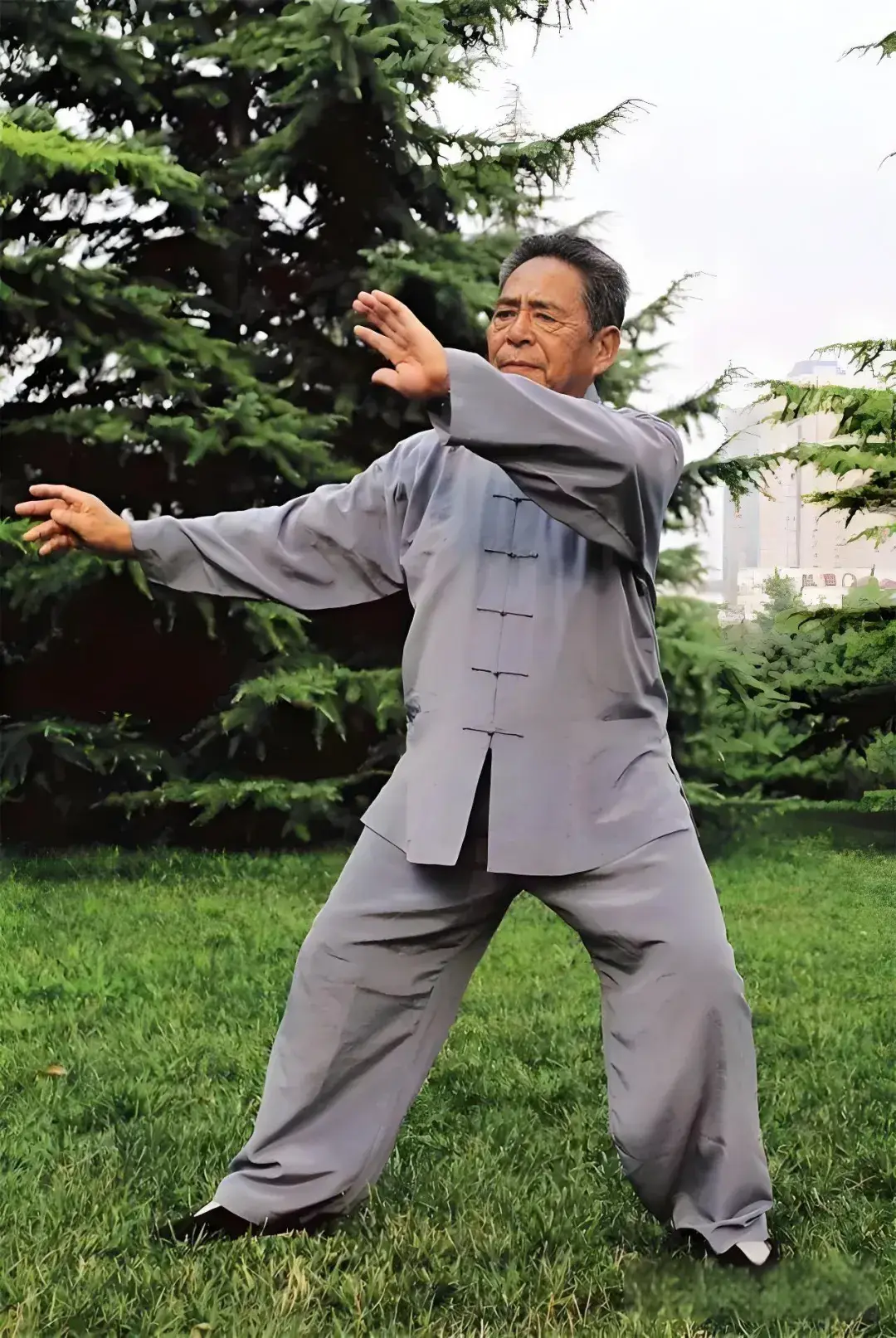
- The Spiral (Helical) Chains : Movements like “Single Whip” (单鞭 Dan Bian) exemplify the use of spiral fascial lines. The rotation from the feet through the waist to the arms creates a coiling and uncoiling effect along these diagonal chains, storing and releasing elastic energy efficiently.
- Efficiency in Practice : Biomechanical analyses suggest skilled practitioners demonstrate significantly less energy dissipation during force transmission. The force wave from the ground reaches the contact point with greater cohesion due to coordinated fascial recruitment, leading to more effective application of strength with less muscular effort [2].
What makes this efficiency possible is Neijin (内劲) — internal power cultivated through fascial whole-body connectivity rather than muscular isolation. Ting Jin (listening jin) is just one expression of this integrated power system.
Master Mingde Chen explains: “What we call ‘螺旋劲’ (spiral force) or ‘缠丝劲’ ( Silk Reeling ) means not letting force travel in a straight line. A spiral path, like using a screw instead of a nail, provides a stronger hold, deeper penetration, and requires less effort. In Push Hands, your force must ‘entwine’ with the opponent’s force. This is both control and a way to make your force act more deeply upon his center of gravity.” Dr. Jing Li elaborates: “This ‘spiral force’ brilliantly exploits the body’s helical fascial anatomy, such as the functional lines described in myofascial meridian theory. This winding pattern increases stability and force output while reducing shear stress on individual joints. Electromyography (EMG) studies often show more balanced and synergistic activation of muscle groups during these movements, indicative of whole-body fascial tensegrity at work [3].”
The Architecture of Stability – Closed-Chain Mechanics and Shear Force Protection
Push Hands is the quintessential closed-chain exercise. Your hands maintain constant contact with a partner, and your feet are grounded.
This creates a kinetic loop where forces generated anywhere in the system are distributed and managed throughout the entire structure.
- Dynamic Stability : Stances like “Bow Stance” (弓步 Gong Bu) are not static poses. As you yield (化) or issue (发) force, your weight shifts continuously. This trains your body to maintain optimal joint alignment (中正 – central equilibrium ) under changing, unpredictable loads. The muscles around each joint work cooperatively in co-contraction to create stable, mobile pillars.
- Shear Force Protection : Shear forces—those acting parallel to a joint surface—are major contributors to soft tissue strain and long-term wear. The slow, controlled weight transfers and rotational movements of Push Hands teach the body to convert destructive shear into manageable compressive forces. For instance, when force is applied to your chest, the coordinated action of sinking the hips (落胯 Luo Kua ) and rotating the torso allows the aligned spine and lower limbs to absorb the force axially, protecting the knees and lumbar spine from harmful sidelong stress. Clinical studies on long-term Tai Chi practitioners show a lower incidence of degenerative joint issues, which biomechanists attribute to this habitual, protective load-management strategy [4].
The Neurological “Precision Radar” – Proprioceptive Refinement and “Listening Jin” (听劲)
Biomechanical efficiency is useless without precise sensory input. Proprioception—your body’s sense of its own position, movement, and effort in space—is the gateway. Push Hands is, at its core, high-stakes proprioceptive training under pressure.
- From Touch to Insight : “Listening Jin” (Ting Jin) is the art of using light, sensitive tactile contact to discern a partner’s intent, weight distribution, balance, and force vector. This constant, subtle input forces your somatosensory cortex to become exquisitely sensitive to micro-changes.
- Integrated Neurological Feedback : This refined touch merges with enhanced input from your vestibular system (balance) and joint proprioceptors. The ultimate training goal is to minimize the reaction time between sensing a force and organizing an appropriate, efficient biomechanical response. Research has demonstrated that Tai Chi practice enhances somatosensory acuity and is associated with positive changes in brain regions related to sensory processing and body awareness [5]. This provides the neuroscientific basis for the advanced practitioner’s skill of pre-emptive adjustment.
Master Mingde Chen elucidates : “Ting Jin is the first step to ‘knowing yourself and knowing your opponent.’ The skin must be relaxed, the contact point light and sensitive, like a scale. Your attention is not on your own hand, but on the opponent’s heel. Through minute changes in his hand, you must ‘listen’ to the movement of his center of gravity. This is the essence of ‘人不知我,我独知人’ (others cannot perceive me, but I alone can perceive others).” Dr. Jing Li confirms : “This is profound training of the tactile-proprioceptive feedback loop, likely increasing the resolution of the brain’s sensory maps. Neuroimaging studies on long-term practitioners support this, showing enhanced structural and functional connectivity in networks involved in attention, interoception, and somatic awareness. This refined input enables the precise, anticipatory adjustments characteristic of high-level skill.”
From Principle to Practice: A Daily “Intelligent Movement” Drill
Understanding the theory is the first step. The next is to integrate these principles into deliberate, mindful practice.
A Research-Informed Micro-Practice Checklist
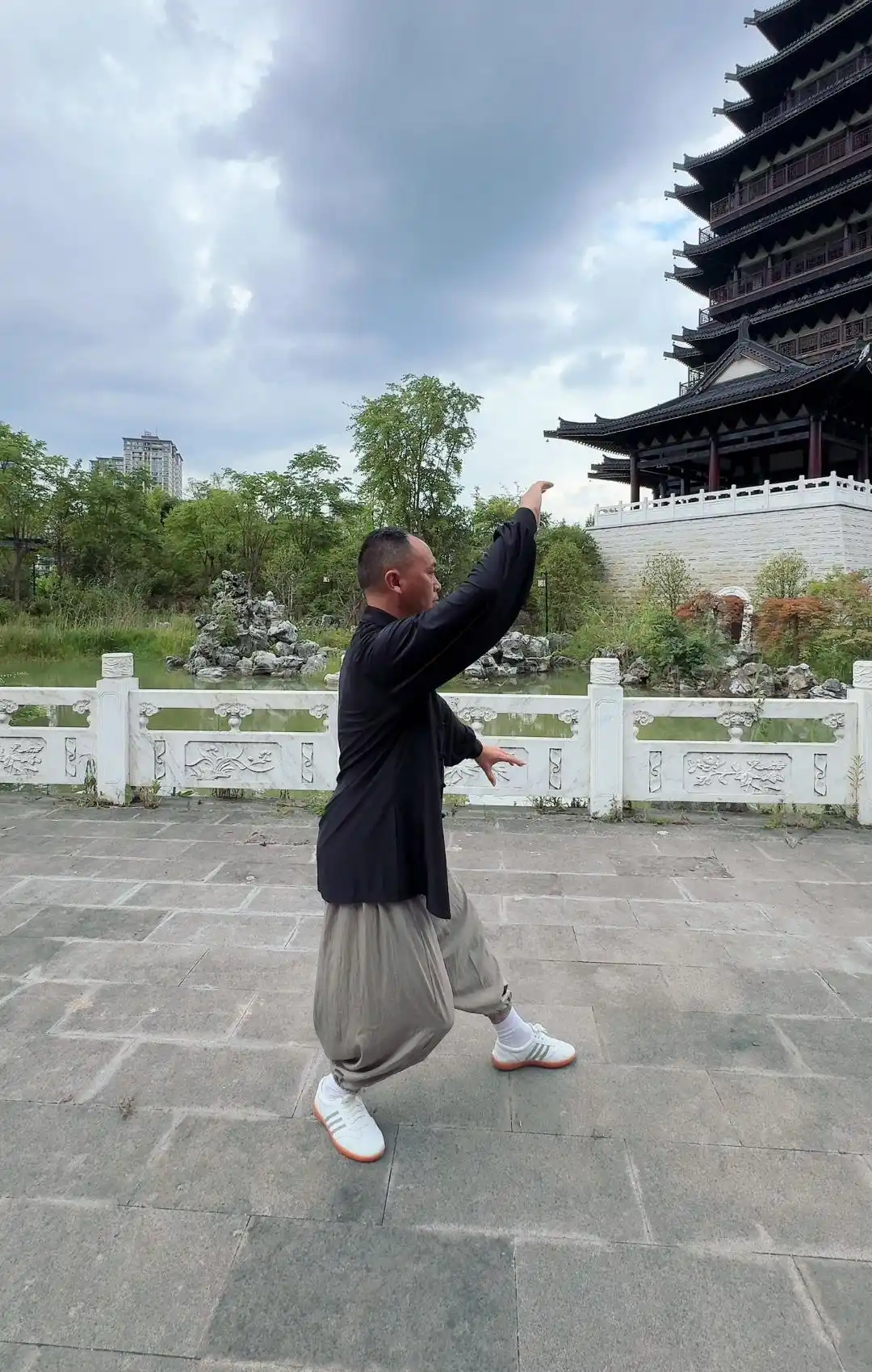
Before or after your regular form practice, dedicate 10-15 minutes to this solo drill, focusing on integration over repetition:
- Foundation & Fascial Awareness (起势 Qi Shi) : Stand in Wuji posture. As you slowly raise your arms, visualize tension engaging from the soles of your feet, ascending through the Achilles tendons, up the posterior chain (calves, hamstrings, spine). Feel the skin and connective tissue stretch as a unified web. Breathe: Inhale during the rise, exhale during the lowering. Seek the sensation of whole-body connection, not isolated limb movement.
- Spiral Force & Chain Activation (单鞭 Dan Bian) : Execute Single Whip with extreme slowness. Focus on initiating the turn from your Dantian/waist, allowing this rotation to sequentially drag your heel, knee, shoulder, and finally hand into position. Feel the diagonal line of tension from your rear foot to your leading hand (a Functional Line). Ask: Is the movement powered by my arm, or is my arm merely the endpoint of a kinetic wave originating in my foot?
- Core Integration & Compression Force (金刚捣碓 Jin Gang Dao Dui ) : Practice the sinking, coiling, and explosive release of this movement. Concentrate on the Dantian as the command center. During the coil, feel your lumbar fascia engage and store energy. The final “pounding” motion should feel like a focused release of downward compressive force through your leg structure, not an uncontrolled stomp.
Comparative Analysis: Biomechanical Objectives of Push Hands vs. Conventional Strength Training
| Training Objective | Tai Chi Push Hands Training | Conventional Isolated Strength Training |
|---|---|---|
| Force Transmission | Emphasizes integrated kinetic chain efficiency; trains force transmission through fascial networks across the whole body. | Primarily develops local muscle group strength or hypertrophy; less focus on inter-segmental force transfer. |
| Neuromuscular Control | Aims for peak proprioception, reactive coordination, and movement pattern optimization in dynamic, unstable environments. | Focuses on voluntary control and recruitment of target muscles, usually in stable, predictable conditions. |
| Joint Loading | Trains dynamic stability in closed-chain conditions, emphasizing conversion of shear forces into compression, offering inherent joint protection. | Can generate high shear forces if form is compromised; requires strict technique to avoid improper joint stress. |
| Movement Pattern | Multi-planar, spiral/helical movements that closely mimic the complex biomechanical demands of daily life and responding to external forces. | Primarily single-plane, linear movements (sagittal plane dominant); patterns are relatively simple and isolated. |
| Ultimate Goal | Movement Intelligence: Cultivates the body’s ability to move efficiently, safely, and adaptively in unpredictable environments. | Movement Capacity: Increases specific metrics like strength, endurance, or muscle size of targeted areas. |
Conclusion: A Scientifically-Verified Fusion of Wisdom
Tai Chi Push Hands, examined through the lens of contemporary biomechanics, reveals itself as a timeless and sophisticated technology for human movement optimization.
It does not seek to replace strength or flexibility training, but rather provides the crucial “operating system” that allows our physical “hardware” to function at its highest potential with grace and resilience.
Master Chen’s traditional wisdom provides the experiential roadmap—concepts like “rooting,” “spiraling,” and “listening.” Dr. Li’s scientific perspective provides the empirical verification and detailed lexicon, demonstrating how these ancient principles map directly onto modern understandings of fascial chains, closed-chain mechanics, and neuroplasticity.
Together, they validate Push Hands as a profound and transformative practice for anyone seeking to move with greater intelligence, efficiency, and embodied knowledge.
To delve deeper into how foundational movements like ‘Qi Shi,’ ‘Dan Bian,’ and ‘Jin Gang Dao Dui’ specifically build these biomechanical chains, and to experience a Push Hands入门课程 (introductory course) guided personally by Master Mingde Chen and informed by these scientific principles, visit our dedicated Tai Chi Push Hands page to explore dynamic tutorials and structured training programs.
Frequently Asked Questions (FAQ)
- I have a pre-existing knee or shoulder injury. Can I practice Push Hands?
This depends entirely on the nature and severity of your injury. The closed-chain, load-dissipating principles of Push Hands can be highly rehabilitative if practiced correctly under the guidance of a highly experienced instructor who understands your limitations. However, the dynamic and interactive nature of partner work does carry inherent risk. It is essential to first consult with your healthcare provider and a qualified Tai Chi teacher. Begin with foundational solo exercises focusing on alignment, weight shifting, and sensitivity drills before considering any partner contact.
- How is practicing Push Hands different from just doing the Tai Chi form?
Practicing the solo form is like mastering the vocabulary and grammar of a language in isolation. Push Hands is the conversation. It provides the essential live, tactile, and unpredictable feedback required to apply the form’s abstract principles (e.g., rooting, yielding, issuing) against a real, resisting force. It is the practical test that refines your structure, sensitivity, and timing.
- Do I need to be physically strong to start learning Push Hands?
Not in the conventional sense of muscular strength. In fact, over-reliance on local muscular force can actively hinder the development of the core skills of sensitivity (听劲), mechanical advantage, and whole-body coordination. Push Hands develops a different kind of strength—integrative strength and resilient stability derived from optimal structure, alignment, and coordinated movement. It is accessible and beneficial for individuals of various initial strength levels.
- How often should I practice to see tangible benefits in my daily posture and movement?
Consistency and mindful quality are far more important than duration. A focused 20-30 minute practice, 3 times per week, that emphasizes the principles discussed (e.g., moving from the center, maintaining alignment, seeking connectedness) can yield noticeable improvements in postural awareness, balance, and movement economy within 8-12 weeks. The key is attentive, principle-based practice, not mindless repetition.
References
[1] Wayne, P. M., et al. (2014). The Impact of Tai Chi on Cognitive Performance in Older Adults: A Systematic Review and Meta-Analysis. Journal of the American Geriatrics Society. (Discusses enhancements in sensorimotor integration and cognitive-motor control relevant to Push Hands training).
[2] Li, J. X., Hong, Y., & Chan, K. M. (2001). Tai Chi: Physiological Characteristics and Beneficial Effects on Health. British Journal of Sports Medicine, 35(3), 148-156. (Review article covering biomechanical characteristics, including balance and force transmission in Tai Chi).
[3] Myers, T. W. (2014). Anatomy Trains: Myofascial Meridians for Manual and Movement Therapists (3rd ed.). Elsevier. (Foundational text explaining the theory of integrated fascial chains and their role in movement, applicable to “spiral force” concepts).
[4] Wang, C., Schmid, C. H., Hibberd, P. L., Kalish, R., Roubenoff, R., Rones, R., & McAlindon, T. (2009). Tai Chi is Effective in Treating Knee Osteoarthritis: A Randomized Controlled Trial. Arthritis & Rheumatism, 61(11), 1545-1553. (Clinical trial demonstrating the therapeutic and protective effects of Tai Chi on joints).
[5] Kerr, C. E., Shaw, J. R., Wasserman, R. H., Chen, V. W., Kanojia, A., Bayer, T., & Kelley, J. M. (2008). Tactile Acuity in Experienced Tai Chi Practitioners: Evidence for Use-Dependent Plasticity as an Effect of Sensory-Attentional Training. Experimental Brain Research, 188(2), 317-322. (Empirical study showing enhanced somatosensory function in Tai Chi practitioners).
[6] Wei, G. X., Xu, T., Fan, F. M., Dong, H. M., Jiang, L. L., Li, H. J., … & Zuo, X. N. (2013). Can Taichi Reshape the Brain? A Brain Morphometry Study. PLOS ONE, 8(4), e61038. (Neuroimaging study providing evidence of structural brain changes related to sustained Tai Chi practice, including in areas for somatic awareness).
Master Mingde Chen
12th generation Chen-style inheritor with decades of teaching experience.
View all articles →