Tai Chi vs Qigong: Key Differences, Which Is Easier & Which to Start With
Key Takeaways
- Tai Chi is a martial art; Qigong is energy cultivation — they overlap but serve different purposes
- Tai Chi is harder to learn initially but builds martial structure; Qigong is gentler to start
- Both improve balance, reduce stress, and enhance vitality — choose based on your primary goal
- Practicing both together yields the greatest combined benefit
You’ve seen the slow, graceful movements. You’ve heard about the health benefits. But when it comes to choosing between Tai Chi and Qi Gong , the line seems blurry.
If you’ve ever typed “Tai Chi vs Qi Gong ” into a search bar and ended up more confused than before, you’re not alone. Even seasoned practitioners sometimes mix them up.
Here is the short answer: Tai Chi is a martial art that focuses on flowing movement sequences. Qi Gong is a health practice that focuses on repetitive exercises and breathwork.
This guide is your compass. By the end, you’ll know exactly which practice fits your body, your goals, and your lifestyle. Not sure what Qigong actually is? Start with the complete Qigong beginner’s guide before comparing the two practices.
💡 The “Lego vs. Dance” Metaphor
- Qi Gong is like building with LEGO blocks. Each exercise is a standalone piece designed for a specific function (e.g., “Lung boosting”). You can do just one, or stack five together. It’s modular and simple.
- Tai Chi is like performing a choreographed DANCE. It is a continuous sequence (a “Form”) where every move flows into the next. You are learning a complex system of weight shifting, balance, and martial intent.
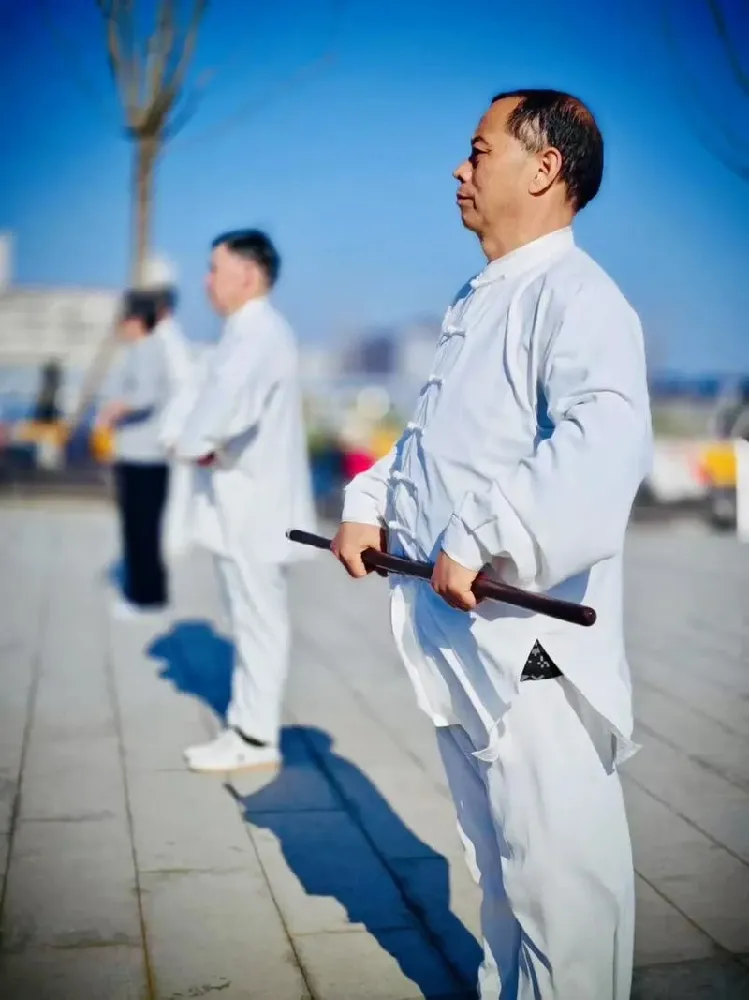 Both cultivate Qi, but their methods differ significantly.
Deep Dive: Comparison at a Glance
| Feature | Qi Gong (Energy Work) | Tai Chi (Grand Ultimate Fist) |
|---|---|---|
| Primary Goal | Health, Healing, Stillness | Martial Structure, Flow, Balance |
| Movement Type | Repetitive, often stationary | Continuous, complex footwork |
| Learning Curve | Low (Learn in minutes) | High (Weeks to memorize a form) |
| Physical Intensity | Low | Moderate (Leg strength required) |
| Best For… | Recovery, Stress Relief, Seniors | Balance, Focus, Active Aging |
The Roots: Where Do They Come From?
To truly understand the difference, we must look at their origins in Traditional Chinese Medicine (TCM) and philosophy.
Qi Gong: The Ancient Root (5,000+ Years)
Qi Gong (pronounced “Chee-Gong”) translates to “Energy Cultivation.” It predates Tai Chi by thousands of years. Ancient shamans and healers developed these repetitive movements to mimic animals (Five Animal Frolics) and align with the elements.
Its primary purpose has always been medical and spiritual . It focuses on purging stagnant energy and tonifying the organs through the meridian system.
Tai Chi: The Martial Evolution (~800 Years)
Tai Chi Chuan ( Taijiquan ) translates to “Grand Ultimate Fist.” It emerged much later (around the 12th-17th century), combining the breathwork of Qi Gong with martial combat techniques.
While Qi Gong works on the energy body directly, Tai Chi works on the physical body’s structure to express that energy. It was designed for self-defense first, health second—though today, the priorities are often reversed.
Types & Styles: It’s Not One Size Fits All
Both practices have evolved into various sub-styles. Knowing these can help you find the right class.
3 Types of Qi Gong
- Medical Qi Gong: Prescribed by TCM doctors for specific issues (e.g., “Six Healing Sounds” for organ health). Focuses on healing.
- Martial Qi Gong: Used to toughen the body (Iron Shirt) and increase striking power. Focuses on physical resilience.
- Spiritual Qi Gong: Uses mantras and mudras (hand positions) to reach higher states of consciousness (Shen). Focuses on meditation.
5 Major Styles of Tai Chi
- Yang Style: The most popular worldwide. Known for large, open, and gentle movements. Ideal for beginners and seniors.
- Chen Style: The original style. Alternates between slow flow and explosive power (Fajin). More physically demanding.
- Wu, Sun, & Hao Styles: Focus more on small circles, high stances, or internal footwork. Often practiced by advanced students.
The Science: How They Impact Your Health
While both practices lower stress (cortisol) and improve heart rate variability (HRV), research highlights specific strengths for each.
Where Tai Chi Wins: Balance & Brain Power
Because Tai Chi involves complex choreography and weight shifting (stepping), studies show it is superior for:
- Fall Prevention: Reducing fall risk in seniors by up to 50%.
- Cognitive Function: The need to memorize forms (“move left, then right”) keeps the brain plastic and sharp.
- Leg Strength: Continuous squatting holds build significant lower body muscle endurance.
Where Qi Gong Wins: Immunity & Rapid Recovery
Because Qi Gong is repetitive and focuses heavily on breath retention, it excels at:
- Immune Boosting: Activating the lymphatic system through rhythmic pumping motions.
- Emotional Regulation: Specific sounds and movements can target stored emotions (e.g., purging anger from the liver).
- Accessibility: It can be practiced lying down or sitting, making it accessible for hospital patients or those with severe fatigue.
The Decision Guide: Which One is Right for You?
Forget the theory for a moment. Let’s look at your actual needs. Choose your scenario:
Scenario A: “I need energy & healing.”
You are: Recovering from illness, feeling burned out, or have very limited mobility.
Choose Qi Gong. It’s gentle, adaptable, and requires zero memorization. You can feel the benefits (calmness) in your very first session.
🧘 Try Our Free Qi Gong Breath Trainer
Scenario B: “I want balance & strength.”
You are: Worried about falls, want to tone your legs, or enjoy learning skills.
Choose Tai Chi. It challenges your brain and body. The stepping mechanisms (Cat Step) build incredible leg strength and root.
🚶 Start with Tai Chi Walking Guide
The “Hidden” Connection
Here’s the secret: Tai Chi includes Qi Gong, but Qi Gong doesn’t require Tai Chi.
Every Tai Chi movement is built on Qi Gong principles (breath, posture, intent). But Tai Chi adds the martial dimension—learning to yield, redirect force, and move as a cohesive unit.
Think of Qi Gong as the foundation. Tai Chi builds the house on top of it.
Expert Tip: You don’t have to choose forever. Many masters practice Qi Gong in the morning to wake up their energy, and Tai Chi in the evening to integrate movement.
Common Myths Busted
- Myth: “It’s religious.” Fact: No. While rooted in Taoism, modern practice is secular and focuses on biomechanics and physiology.
- Myth: “It’s just for old people.” Fact: Elite athletes use Tai Chi for balance; stressed CEOs use Qi Gong for focus.
- Myth: “It’s just waving arms.” Fact: Try holding a Tai Chi stance for 5 minutes. Your shaking legs will tell you it’s a serious workout.
Conclusion: Start Where You Are
There is no “wrong” door. Both practices lead to the same destination: a healthier, more balanced you.
- If you want immediate stress relief without learning complex moves → Start with Qi Gong Breathing .
- If you want to fix your posture, knees, and balance → Start with Tai Chi Walking .
The most important step is the first one. Pick one, try it for a week, and listen to your body.
Frequently Asked Questions
- Can I practice both Tai Chi and Qi Gong?
Absolutely. They complement each other perfectly. Most traditional classes begin with Qi Gong warm-ups to open the energy channels before moving into Tai Chi forms.
- Which one is better for weight loss?
Tai Chi burns slightly more calories because it involves continuous stepping and squatting (weight bearing). However, both help lower cortisol (stress hormone), which is crucial for losing belly fat.
- Do I need special equipment?
No. Both require only comfortable clothing and flat shoes. You can practice them anywhere, even in a small living room.
Master Mingde Chen
12th generation Chen-style inheritor with decades of teaching experience.
View all articles →