The Last Gatekeeper: Chen Boxiang and the Hidden Lineage of Small Frame Taijiquan
┌────────────────────────────────────────────────────────────────┐
│ Chen Boxiang (陈伯祥) — 1944 – July 2, 2026                    │
├────────────────────────────────────────────────────────────────┤
│ Generation: 18th generation Chen family descendant             │
│              10th-generation inheritor of Chen Style Taijiquan │
│ Lineage:    Chen Xin → Chen Kezhong → Chen Boxiang             │
│             (Small Frame / Xiao Jia)                           │
│ System:     Chen Style Small Frame Taijiquan                   │
│             (陈氏小架太极拳)                                      │
│ Known for:  One of the last inheritors of the unmodified       │
│             Small Frame transmission; taught over 80% of       │
│             today's Small Frame practitioners across China     │
│ Overseas:   South Korea (1995) → Japan → Sweden                │
└────────────────────────────────────────────────────────────────┘
Who Was Chen Boxiang?
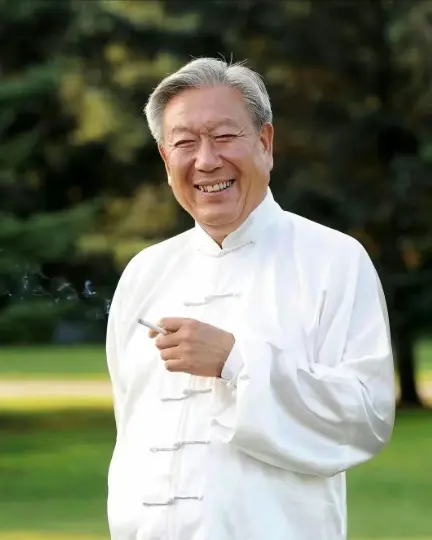
Five in the morning, Chenjiagou — for Taijiquan, a village that carries the same weight that Jerusalem or Kumbum carries for other traditions, though its streets are dust and its walls are plain brick.
If you walked into the old courtyard at the northwest corner of the village at that hour, you would see a man practicing his form. The movements were excruciatingly slow, impossibly small — his feet barely shifted, his arms traced arcs so tight they never extended more than a foot from his body. An old cotton shirt hung loose on his frame. In the half-light of early summer, his figure almost dissolved into the shadow of the courtyard wall.
A passing neighbor might glance through the gate and keep walking. Nothing to see here.
But someone who knew Taijiquan would stop cold.
This man carried something. Not something “impressive” — something dense. Every shift of weight moved like water pouring from one vessel to another, unhurried and complete. There was an invisible thread running through his shoulder, elbow, and hand. Break that thread at any joint and the whole frame would collapse. It never did. He stood in that courtyard like an old tree planted there — the branches moved, but the roots had not shifted an inch.
That was Small Frame. Chen Style Taijiquan — Xiao Jia in Chinese.
It does not look impressive. It does not look powerful. It is not “beautiful” in the way most people expect martial arts to be beautiful. A full routine unfolds within a radius of barely one meter. There are no leaps, no explosive stomps, no wide, sweeping postures. Large Frame (Da Jia) is like writing poster-sized calligraphy — bold strokes, sweeping lines, power obvious even to a layperson. Small Frame is like writing fine script — every millimeter carries weight, every structural detail is compressed to its most efficient form, and only a trained eye can see the brushwork beneath.
To an outsider it looks like nothing. To an insider it looks like everything.
On July 2, 2026, the man in that courtyard left us.
Chen Boxiang — 18th-generation descendant of the Chen clan, 10th-generation inheritor of Chen Style Taijiquan, the defining figure of contemporary Small Frame — died of illness at 5:12 AM. He was 83 years old.
His passing is not simply an obituary. He was the person who caught a nearly broken lineage and spliced it back together. Now that he is gone, no one knows how long that thread will hold.
The Small Frame Lineage (Xiao Jia)
To understand what Chen Boxiang did, you first need to understand what Small Frame is.
Most people think of Taijiquan as one thing. In reality, even within the Chen family alone, there are three distinct branches: Large Frame (Da Jia), Small Frame (Xiao Jia), and New Frame (Xin Jia). This is not an academic classification — it is living history, the result of a deliberate strategic decision made over a century ago.
The story begins in the 19th century, when Chen Style Taijiquan reached its sixth generation. Two men emerged: Chen Changxing (1771–1853) and Chen Youben (1780–1858). Chen Changxing lived at the southeast corner of Chenjiagou and taught a style with expansive, powerful movements — the villagers called it “Southern-End Frame.” Chen Youben lived at the northwest corner and taught a compact, tight style — “Northern-End Frame.” At that time, no one called them Large or Small Frame. It was one art with two interpretations, the same principles expressed through different physical emphases.
Fast-forward to 1958. That year, Chen Zhaopi returned to Chenjiagou. After consulting with the village elders, he made a decision that would shape the next sixty years of Chen Style Taijiquan: the younger generation would study separately. This was not about which style was “better.” It was a strategic division of labor — Large Frame would go out into the world and spread; Small Frame would stay close to the source and preserve the oldest打法 (fighting methodology).
Those chosen for Large Frame studied with Chen Zhaopi himself. For Small Frame, three young men were selected — Chen Boxiang, Chen Junling, and Chen Qiliang — and assigned to study with Chen Kezhong.
This is where the lineage becomes extraordinary.
Chen Kezhong was the beloved late-life disciple of Chen Xin (1849–1929). Chen Xin’s name carries special weight in the history of Taijiquan. He spent his final decades writing Illustrated Explanation of Chen Style Taijiquan (《陈氏太极拳图说》), a four-volume masterpiece recognized as the definitive classical text of the art. He had no children. In his old age, he lived in such poverty that he could barely feed himself — a man who held one of the great martial treasures of Chinese civilization, unable to secure three meals a day.
Chen Kezhong’s grandfather made a promise to Chen Xin: “You take care of the knowledge, and I will take care of you.” He guaranteed Chen Xin’s daily needs in exchange for teaching the younger generation. This was a covenant between gentlemen — not a commercial transaction, not a contract, but one man’s word to another.
Chen Xin and Chen Kezhong lived barely fifty meters apart. The old master spent his final years under the care of neighbors who understood what he carried. Chen Kezhong, the third of eight brothers, was the one who absorbed the teaching most deeply.
So the lineage chain is clean and precious: Chen Xin → Chen Kezhong → Chen Boxiang. Every link is a person entrusting their life’s work to another person, who in turn entrusted it to the next.
The terms “Large Frame” and “Small Frame” were only formally introduced in the 1950s by Gu Liuxin in his book Chen Style Taijiquan. Small Frame is older than its own name. And it is emphatically not a simplified or introductory version — quite the opposite. It is the most ancient, most hidden, and most demanding branch of Chen Style.
The same root, grown into two different trees.
Chen Boxiang’s life pivoted on two defining moments, separated by nearly thirty years.
The first moment has no precise date, but anyone who knows the history of Chinese martial arts understands what it meant.
The Cultural Revolution arrived in Chenjiagou.
Chen Kezhong was targeted. Chenjiagou was an old village with a famous surname and a martial tradition — a triple target in an era that feared any organized gathering. In 1966, Chen Kezhong was persecuted to death. Forced labor during the day, public struggle sessions with a dunce cap at night. At his age, he could not survive it. He died, broken by what was done to him.
Chen Boxiang was twenty-two years old.
His teacher was gone. The entire village stopped practicing. To practice martial arts was to invite persecution — to be labeled a “feudal remnant,” reported to the authorities, beaten. The figures who had moved through moonlit courtyards vanished overnight. Some of Chen Boxiang’s fellow students changed trades. Some left the village. Most simply stopped.
Chen Boxiang did not stop.
He did not practice openly. He practiced in his own courtyard with the gate closed, in the hours before dawn when no one was watching, after confirming that no one was near. He had no teacher to correct him, so he ran the forms through his body over and over until every subtle rotation was memorized not in his mind but in his tissues. Sometimes he would stop mid-movement and stand still, asking himself what his teacher would have said. When he could not find the answer, he held the posture and waited for his body to tell him.
He was in his early twenties. At that age, everyone wants to be seen. Everyone wants to prove that what they do matters. But he could not be seen. He had no audience, no peers, no grand concept of “preserving the lineage” to sustain him. Only a near-instinctive certainty: this line will not break on my watch.
This was not stubbornness. This was holding the fort.
Chen Boxiang’s teacher Chen Kezhong never let Chen Boxiang call him “Master” — they were of the same generation within the clan hierarchy. Chen Boxiang was, in fact, of the same generational rank as Chen Zhaopi and Chen Zhaokui, one generation above the “Four Great Diamond Kings” (Chen Xiaowang, Chen Zhenglei, Wang Xian, and Zhu Tiancai). The title mattered less than what was transmitted. When asked later why he kept practicing through those years, Chen Boxiang gave no grand answer. He simply said it felt like something he should do.
The second moment came in 1995.
That year, a middle-aged farmer from Chenjiagou who spoke no foreign languages and had barely left his home county took a set of movements that almost no outsider could recognize as martial arts, and went to South Korea.
Chen Boxiang never dramatized this chapter. He described it plainly, as though it had happened to someone else. He did not know how to teach foreigners. Language was a wall. Culture was another wall. Taijiquan itself is difficult enough to explain; the most interior, least visible branch of it — Small Frame — seemed almost untransmittable. So he taught the only way he knew: he did the movement, and the student copied. If it was wrong, he did it again. If it was still wrong, he walked over, took the student’s arm, and guided it through the correct angle, the correct force, the correct direction — transmitting by touch what could not be said in words.
No shortcuts. No watering down. No lowering the standard because the student was a foreigner.
From South Korea he went to Japan, then to Sweden.
He carried Chenjiagou’s secret out into the world. Not to perform it — to root it. Today, in Seoul, Osaka, and Stockholm, there are people practicing Chen Style Small Frame. They may never visit Chenjiagou. They may never taste the yellow earth of Henan, never know who Chen Xin was, never hear the name “Northern-End Frame.” But their bodies carry what Chen Boxiang transmitted.
The numbers do not lie: over eighty percent of Small Frame practitioners across China, learned from Chen Boxiang or from someone he taught.
One man held up eighty percent of a martial lineage across China. This is not a figure of speech — it is census.
What Made His Transmission Distinctive
What makes Small Frame so difficult? And what makes it beautiful?
Take one posture: Lan Zha Yi (Lazy Tying Coat).
In Large Frame, this movement opens wide. The arm extends like a crane spreading its wings — clear, expansive, visually impressive. The right foot steps out, the left hand draws an arc to chest height, the right hand opens to shoulder width. Every line is obvious. A beginner can feel the shape immediately, and a spectator can see the skill.
In Small Frame, the same posture uses barely half the space. The arm extends only partway, the feet barely leave their original position, the entire rotation is driven from the waist and hips. To an untrained eye, it looks like nothing at all is happening.
The difference lives in what cannot be seen.
Large Frame gives the body room. The dantian (the body’s energetic center below the navel) drives the torso, the torso drives the limbs — a relatively long pathway for force to travel, with generous tolerance for error. It is like driving on a wide boulevard: you can drift a little without leaving your lane. Small Frame compresses that space to its absolute minimum. Every micro-rotation of the dantian must transmit precisely to the fingertips. It is like driving through a narrow alley: the vehicle is the same, but the margin for error disappears.
This is where dantian neizhuan (internal rotation of the dantian) becomes the central requirement. In Chen Style Taijiquan, the dantian is the engine. All power originates here, travels through the waist, back, shoulder, elbow, wrist, and finally to the fingertips. In Large Frame, this process is relatively visible — you can see the waist turn, the weight shift. In Small Frame, because the external movement is so contained, dantian rotation is almost the only thing happening internally, and it must happen with absolute precision. Small Frame demands “inner movement” far more than it demands “outer form.”
Consider another posture: Jin Gang Dao Dui (Buddha’s Warrior Attendant Pounds Mortar), Taijiquan’s most iconic striking movement.
In Large Frame, the right foot stomps the ground with audible force, the left fist falls into the right palm — a clear, powerful display. In Small Frame, the stomp is hardly visible. The power is not generated by the foot hitting the ground but by the entire body sinking and releasing into a single point. An outsider would not know that force was expressed at all. But a trained eye sees the difference: Large Frame’s power sounds loud; Small Frame’s power goes through.
Then there is song huo dan dou — “relaxed, lively, bouncing release,” the most recognizable quality of Chen Style. In Large Frame, the spatial freedom allows for obvious trembling and shaking through the body. In Small Frame, the same release happens within a tightly compressed range — the body must release and recover in an instant, approaching a state where the vibration occurs at the level of internal connection rather than external display. When practiced at the deepest level, what shakes is not the frame but the force itself.
This is why Small Frame is difficult to transmit. Not because no one wants to teach it, but because teaching it does not guarantee learning it.
Chen Boxiang himself said it plainly: Small Frame works slowly. It is not for quick results. Large Frame gives visible feedback within thirty days — stronger legs, better posture, recognizable forms. Small Frame may deliver nothing but sore wrists for the first six months. In an era of “Learn Tai Chi in Three Days” and “Become a Master in One Month,” this kind of slow practice gets pushed to the margins.
But that slowness is itself a filter. It selects for the people who are willing to walk all the way in.
Small Frame’s journey overseas was the most remarkable chapter of Chen Boxiang’s later years.
In 1995, South Korea. In the 2000s, Japan, then Sweden. An art that had existed for centuries within a single village in Henan Province — transmitted in the local dialect, embedded in local relationships, inseparable from local soil — became a cross-cultural artifact.
But there is another side to this story that few people talk about.
The farther it travels, the more it changes.
Small Frame in Chenjiagou is not just “a set of movements.” It grew together with the village’s history, its ethics, its human relationships. A practitioner born and raised in Chenjiagou, who has done Small Frame their entire life, carries an entire village’s accumulated experience in every response of their body — when to issue force, when to hold back, when to advance, when to yield. This is not knowledge that can be written down. It is the sediment of generations.
When Small Frame arrives in Seoul, Osaka, or Stockholm — far from the yellow earth of Henan, far from the dialect of Chenjiagou — what survives? And what is lost?
This is not a criticism of overseas transmission. It is the fundamental contradiction faced by every traditional art that leaves its birthplace: stay home and no one knows you exist; leave home and you will inevitably change. No one understood this contradiction more clearly than Chen Boxiang. He never theorized it. But his actions gave the answer.
Before teaching anyone, Chen Boxiang established three rules. They applied to Chinese and foreign students alike. First: maintain a respectful heart — do not become a bad person, do not do bad things. Second: do not use the art to bully others, do not cheat or deceive. Third: do not sell the art like merchandise, do not seek unjust profit through it.
These three rules sound almost antique in 2026. In an age when “monetizing your practice” is a standard industry term — online courses, paid certifications, master-class subscriptions — the idea that a martial art should not be sold for money seems to belong to another century. But Chen Boxiang never charged tuition. In his early years, when he taught in Kaifeng and Huaiyin, he taught entirely for free. Not because he did not need money — he did — but because he did not believe the art was a commodity.
These three rules were the coordinate system he established before taking Small Frame beyond Chenjiagou’s borders. Once the coordinates were fixed, he could safely go anywhere.
Who Carries the Lineage Forward
July 2, 2026. 5:12 AM.
Chen Boxiang is gone.
When the news spread, the Taijiquan community fell silent. Not because there was nothing to say — because there was too much, and no one knew where to begin.
In the days that followed, social media filled with shared photographs — Chen Boxiang teaching, Chen Boxiang as a young man, Chen Boxiang in black-and-white group portraits from the 1980s. “A great master has departed,” people wrote. “The torch passes.” The words were all correct and all somehow inadequate. Because Chen Boxiang was not “a master.” He was not a title. He was the living embodiment of an entire martial lineage.
In the Chen clan hierarchy, he belonged to the 18th generation — one full generation above the “Four Great Diamond Kings” (Chen Xiaowang, Chen Zhenglei, Wang Xian, Zhu Tiancai). He was of the same generation as Chen Zhaopi and Chen Zhaokui. In the decades he walked among us, he needed no titles to prove who he was. He stood there, and Small Frame stood with him.
Now that he is gone, who will stand there?
This is not a rhetorical question. The transmission chain of Small Frame was always narrow. Chen Xin → Chen Kezhong → Chen Boxiang — three generations, each nearly a single thread. Chen Boxiang taught many disciples. Over eighty percent of today’s Small Frame practitioners across China learned from him. But “taught by” and “able to hold the line” are two different things.
Holding the line means more than knowing the movements and being able to teach them. It means carrying the weight.
That weight comes from somewhere specific. It comes from a lifetime of refusing shortcuts — continuing when everyone else stopped, with no audience, no reward, no recognition. It comes from a near-stubborn simplicity: “I practice this art. Nothing else concerns me.”
This era does not lack Taijiquan teachers. They are everywhere — on Douyin (Chinese TikTok), a new “master” appears every three days; a new “style” every week. What this era lacks is people willing to live their entire lives within a small circle — people who, in an age obsessed with scaling up, choose to go deep instead of wide. People who are in no hurry to be seen.
The circle Chen Boxiang walked for a lifetime was very small. He never stepped out of it in seventy years of practice. But he did not need to — because the depth he reached inside that circle exceeded the breadth that anyone outside it could ever cover.
The Lineage Continues
Who, then, stands in Chen Boxiang’s place? The transmission chain of Small Frame was always narrow — never a wide river but a deep well. But it was not a single thread. Chen Boxiang taught extensively across China for over forty years, and his students now carry the lineage in multiple countries and traditions.
Within the Chen family, Chen Qinglin (陈清林) — Chen Kezhong’s son — continues the Small Frame practice that he absorbed from his father alongside his father’s students. Chen Junling (陈俊凌) and Chen Qiliang (陈启亮), who studied together with Chen Boxiang under Chen Kezhong in 1958, kept the old frame alive within Chenjiagou itself.
Among Chen Boxiang’s own disciples, Xu Aiguo (徐爱国) stands out as a notable figure — a hard qigong practitioner who sought Chen Boxiang out as a challenger and became a devoted disciple, studying Small Frame for over a decade. Across China, from Kaifeng to Harbin, from Huaiyin to Shenyang, students he taught have established multiple research associations dedicated to preserving Chen Boxiang’s Small Frame exactly as he transmitted it.
Overseas, the seeds he planted in 1995 continue to grow. In South Korea, Japan, and Sweden, practitioners whom he personally taught now teach in their own right. They may not carry the Chen surname or the village’s accumulated cultural memory of Chenjiagou, but their bodies still carry what Chen Boxiang transmitted — the same compact rotations, the same efficient spirals, the same frame that he walked in that northwest courtyard before dawn.
Eighty percent of today’s Small Frame practitioners across China learned from Chen Boxiang or from someone he taught. That is not a historical footnote. It is the living thread.
Five in the morning. Chenjiagou.
If you walk into the old courtyard at the northwest corner of the village today, the man practicing his form is no longer there. But the courtyard is still there. The light still arrives at the same hour.
And if you stand there at the same time, you will feel that something is still present. Not the same person — other people. The disciples Chen Boxiang taught. His students’ students. Young people whose names you would not know. They practice elsewhere. Some rent apartments in the city and train at six in the morning before going to work. Some teach on empty school grounds. Some are thousands of kilometers from Chenjiagou, getting up at dawn to walk the form.
Chen Boxiang is gone. But the frame he walked for a lifetime is still here.
Small Frame was never just a sequence of movements. It is something passed from body to body across generations — not a technique but a state. When you complete the form within that tiny circle and find yourself standing quietly, having thought of nothing in particular, yet feeling as though your entire body has been rinsed clean — every person who has practiced Small Frame seriously knows that feeling. What Chen Boxiang transmitted was not a set of postures. It was the path to that state.
On July 2, 2026, at 5:12 AM, that path lost its most dependable guide.
But the path is still there.
The circle is very small — small enough to hold only one person, for one lifetime.
Perhaps that is enough.
Master Mingde Chen
12th generation Chen-style inheritor with decades of teaching experience.
View all articles →