Military Martial Arts Training: What Soldiers Learn, and Where Tai Chi Fits
Key Takeaways
- Modern military combatives are built for control and restraint — takedowns, weapon retention and decision-making under fatigue — not for duelling
- Tai Chi's contribution to military life is measured in stress regulation, balance and recovery, not in combat capability
- The evidence base for Tai Chi in military populations is small: a 17-person veterans feasibility study and a NIH review that calls the data limited
- Tai Chi is a martial art with real body-control mechanics — but it does not replace combatives training, and no serious instructor claims it does
On This Page
Loading...
A modern soldier already has a system for everything. Physical training programmed to the week. Tactics rehearsed until they are automatic. Combatives that assume a rifle, body armour and a partner who is trying to hurt them.
So the interesting question is not whether martial arts can make a soldier tougher. It is why an army with all of that would still make room for a slow, unarmoured, three-century-old Chinese practice on the training schedule.
That question has a real answer, and it is not the one most articles give. Tai Chi does not make soldiers better fighters. What it does — the thing that gets it onto a base in North Carolina or a deck in the South China Sea — is train the parts of performance that combat training tends to break down: the ability to stay regulated under sustained stress, to recover from injury without losing mobility, and to keep control of your own body when a situation removes your options.
This article looks at military martial arts as they actually are, then at where Tai Chi genuinely fits — and where it does not.
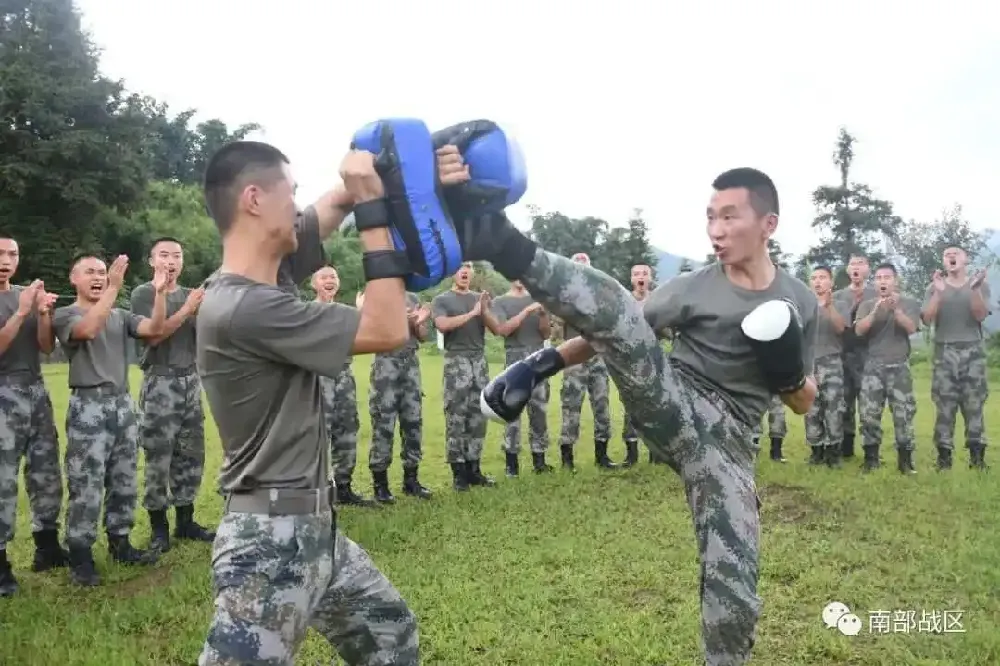
Where Tai Chi Fits in Modern Military Training
Tai Chi is not a combat system in the sense that MCMAP or Krav Maga are. It has no weapons integration, no multiple-opponent doctrine, no assumption of armour or gear. Trying to sell it as those things would be dishonest, and soldiers would see through it immediately.
What it offers is narrower and more specific. Three things, each of which maps onto a real problem in military life.
Managing stress and mental load
Military stress is not the acute kind. It is cumulative: sleep debt, sustained vigilance, long deployments, and the emotional labour of being responsible for other people’s lives. The training problem is that this load accumulates faster than most recovery routines can discharge it.
Tai Chi’s contribution here is mechanical rather than mystical. Slow, continuous movement with coordinated breathing gives a practitioner something to do with their attention — a place for it to go that is not the thing they are worried about. The breath slows, the movement stays continuous, and the body settles into a calmer state that is hard to reach while sitting still and trying to relax.
The evidence is thin but real. A feasibility study of a brief Tai Chi programme for 17 veterans with post-traumatic stress symptoms (Niles et al., BMJ Open, 2016) found that 76.4% attended at least three of four sessions and 93.8% reported being satisfied. Participants described the practice as helping with intrusive thoughts, difficulty concentrating, and physiological hyperarousal.
That is worth knowing. It is also a 17-person feasibility study. It shows the practice is acceptable to veterans and worth studying properly. It does not show that Tai Chi treats PTSD, and a review by the US National Center for Complementary and Integrative Health notes that research on mind–body approaches in military populations remains limited, with many studies using small samples. For stress and PTSD specifically, that review found the strongest evidence base among meditation and relaxation techniques — not Tai Chi.
Anyone claiming more than that, for this population, is selling something.
Recovery, mobility and balance
Injury is not an edge case in military life. It is the normal condition of a long career, and the thing that most often ends one.
Here Tai Chi’s advantages are unusually well suited. It is low-impact, needs no equipment, can be done in a small space, and can be scaled down to whatever a recovering body can manage. The movements take joints through their range without the impact that makes most conditioning impossible during recovery. Single-leg transitions and slow weight shifts train balance in a way that standing on one leg does not.
The clearest American example is at Fort Bragg, where the Army’s Intrepid Spirit Center — a traumatic brain injury programme at Womack Army Medical Center — lists Tai Chi among the options in its Mindful Movement class, alongside yoga. It sits in a menu of supportive courses that includes art and mindfulness, relaxation, cognitive retraining and CBT for pain, offered to service members referred for care after a brain injury.
Read that accurately: Tai Chi is one option within a broader rehabilitation menu. The centre’s existence is good evidence that the Army considers the practice worth offering in a care setting. It is not evidence that Tai Chi treats traumatic brain injury, and the article makes no such claim.
The honest framing: Tai Chi is a reasonable adjunct to a rehabilitation programme. It is not a substitute for one, and it should not be used to treat a diagnosed injury without professional guidance.
The martial side: rooting, sensitivity, body control
This is the part that gets lost when Tai Chi is filed under “gentle exercise”, and it is the part most relevant to a martial arts site.
Tai Chi is a martial art. Its mechanics were developed for close-range engagement: how to receive force without losing your base, how to redirect it, how to stay balanced while an opponent is trying to unbalance you. Push hands is the drill that develops this — a partner exercise in which two people maintain contact and test each other’s structure, sensitivity and balance without striking.
For military purposes, the transferable skill is not a fighting technique. It is body control under contact: the ability to stay rooted and stable when something is pushing against you, to feel where an opponent’s weight is committed, and to move from a stable base rather than an off-balance one. These are the same qualities that make takedowns and restraints work, and the same qualities that collapse first under fatigue.
Tai Chi also trains something combatives instructors spend a lot of time correcting: the tendency to brace. A braced body is a predictable body. Learning to yield and redirect rather than resist is a physical skill, and it takes years of partner work to acquire.
What Tai Chi does not do
It does not replace combatives training. It has no answer to a weapon, no doctrine for multiple attackers, no conditioning for armour and load. A soldier who trains only Tai Chi is not prepared for close-quarters combat, and no competent instructor would suggest otherwise.
It also does not produce rapid results. The qualities it develops — structural stability, sensitivity, the ability to stay relaxed under pressure — take months to become reliable and years to become instinctive. That is a poor fit for a deployment timeline and a good fit for a career.
The correct relationship is complementary. Combatives teach a soldier what to do. Tai Chi trains the body control that makes doing it possible when fatigued, injured, or under sustained stress.
Traditional Chinese Martial Arts in the Military
China’s armed forces have kept traditional practice closer to the training pipeline than most Western militaries have.
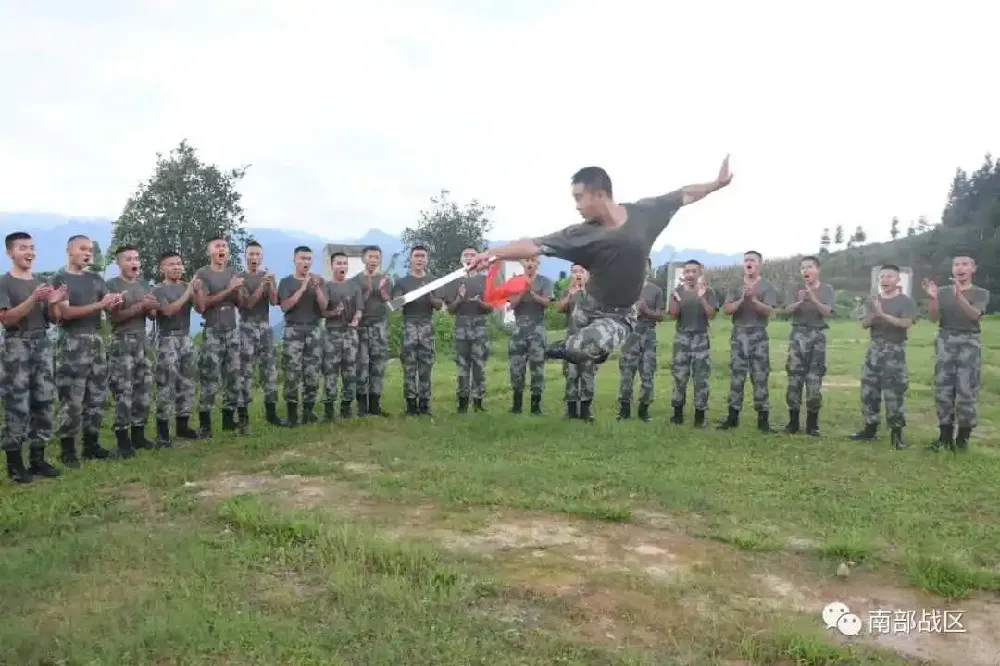
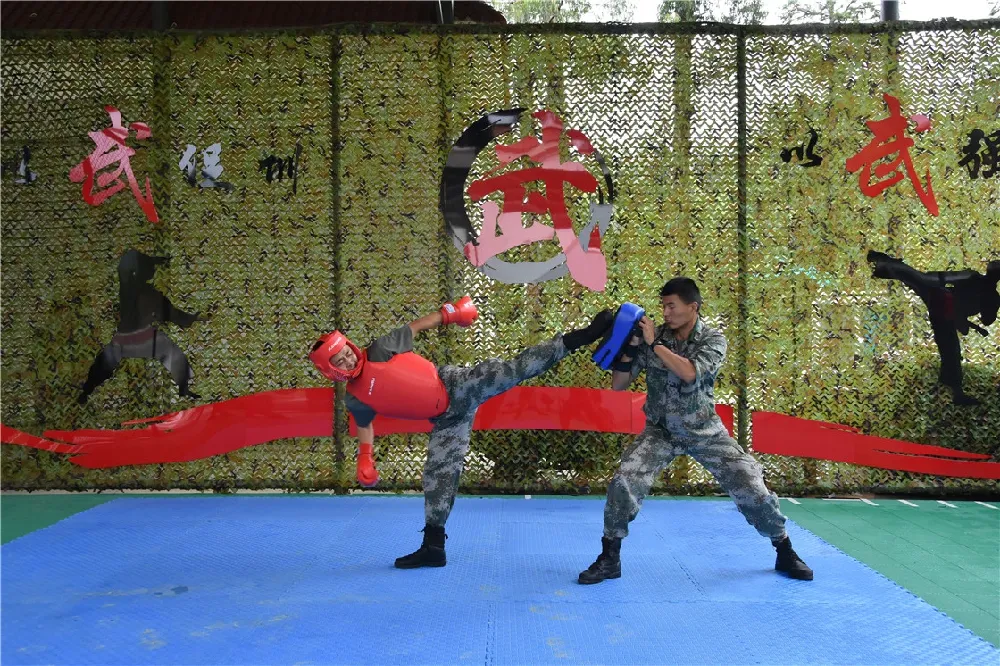
Military Jiao Shu (Chinese wrestling) is the clearest example. Derived from Shuaijiao, it is taught at institutions including the Armed Police Engineering University, and it is built for control rather than competition: throws, locks and ground control optimised for a subject who is resisting and a soldier who is wearing gear. It is the system most directly descended from a battlefield art, and the one least changed by sport.
Wushu squads at grassroots level are a different phenomenon — soldiers who arrived with personal martial arts backgrounds and turned them into unit training. Jiang Yusheng is one documented example: a soldier whose own kung fu practice became unit-wide conditioning that improved coordination and reaction time. These are individual initiatives rather than doctrine, which is precisely why they are interesting: they persist because units find them useful.
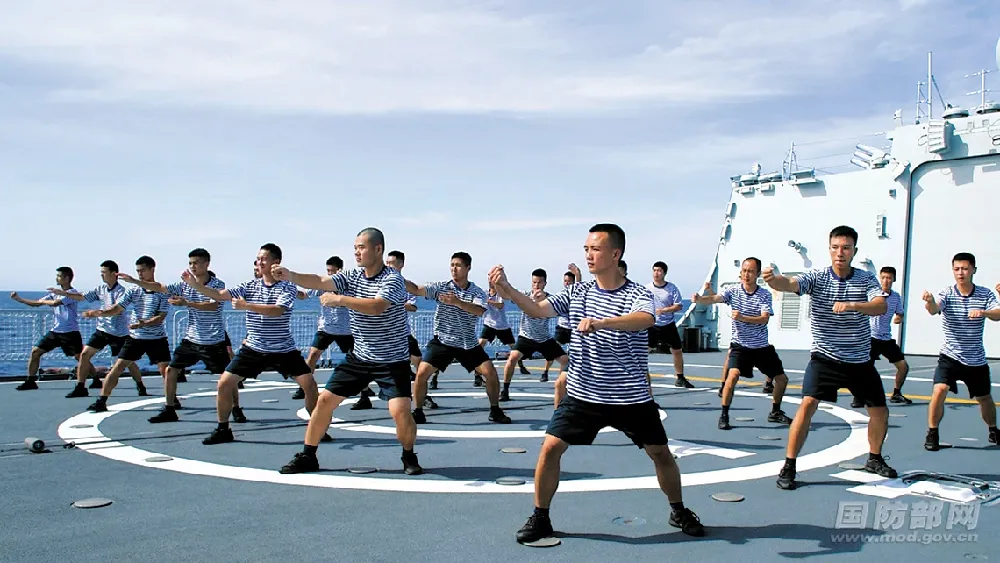
Tai Chi on ships belongs to the same category. Naval units practising what gets called “Waterfront Tai Chi” use it for balance on an unstable deck, for stress management during long deployments, and for the kind of maintenance work that keeps a body functional through months at sea. The appeal is obvious once you consider the environment: a flat steel deck that moves, a small space, no equipment, and a crew that needs to stay functional for months.
Modern Military Combatives: What Other Countries Do
Every major military has converged on the same design philosophy, even where the techniques differ: simple, repeatable, and effective under fatigue.
United States — MCMAP. The Marine Corps Martial Arts Program is a belt-graded system built around lethal simplicity. It integrates strikes from boxing and kickboxing, grappling from wrestling and judo, and weapons work with knife and rifle. Its distinguishing feature is not the technique set but the mental and character components built into every belt level — the programme explicitly treats decision-making and ethical judgement as trainable.
Russia — SAMBO. A Soviet system combining judo, wrestling and striking, adopted for its efficiency in close quarters. Like Jiao Shu, it is designed around a resisting opponent in gear.
Israel — Krav Maga. Built for instinctive response under extreme stress, with no sporting conventions. Its contribution to military combatives globally has been the emphasis on pre-attack indicators and the refusal to let technique elegance interfere with survival.
China — Jiao Shu and hybrid Wushu. Practical grappling and takedown work, supplemented at unit level by traditional styles that soldiers bring with them.
The differences matter less than the shared premise: in a military context, a martial art is judged by whether it produces a soldier who can act under pressure. Form, lineage and aesthetics are not part of the evaluation.
How Soldiers Actually Train
Strip away the imagery and the training looks unremarkable. That is the point.
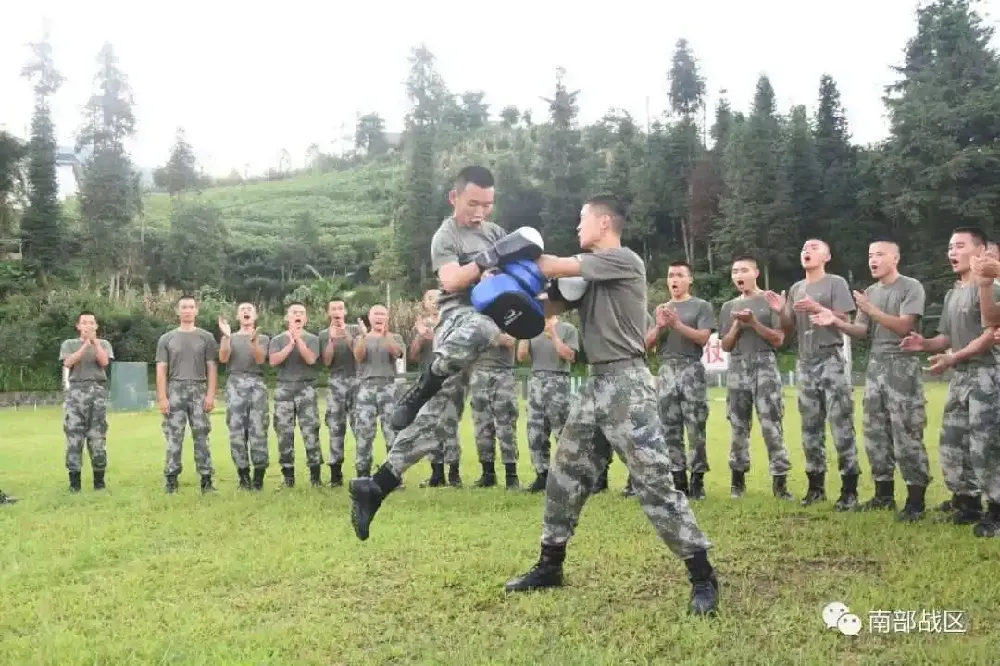
Improvised equipment is normal. Sandbags made from old uniforms, wooden sticks from storage, rope for resistance work. A unit with no budget still trains.
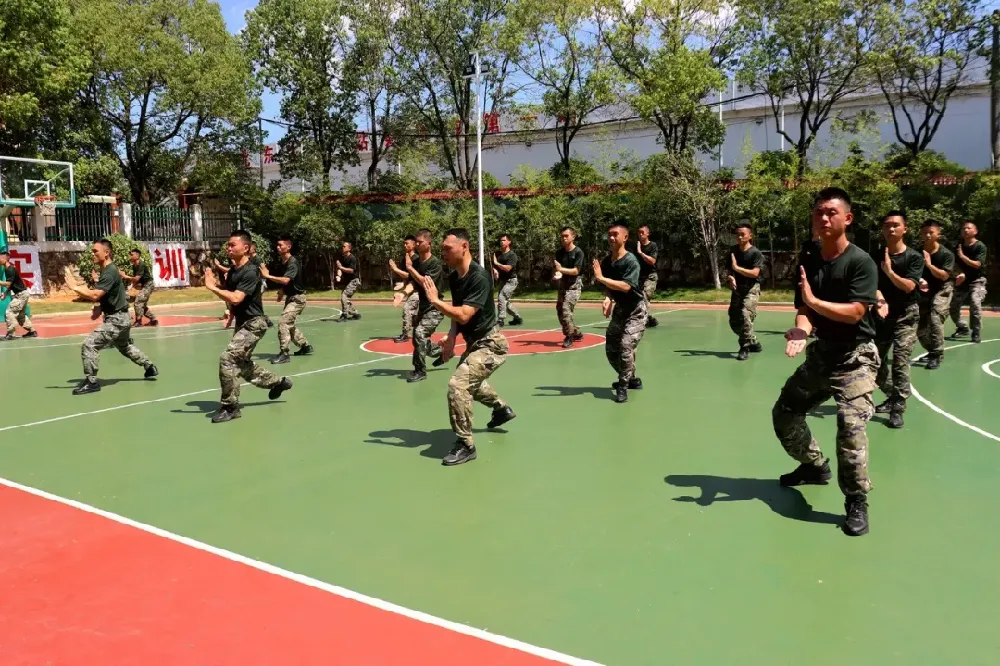
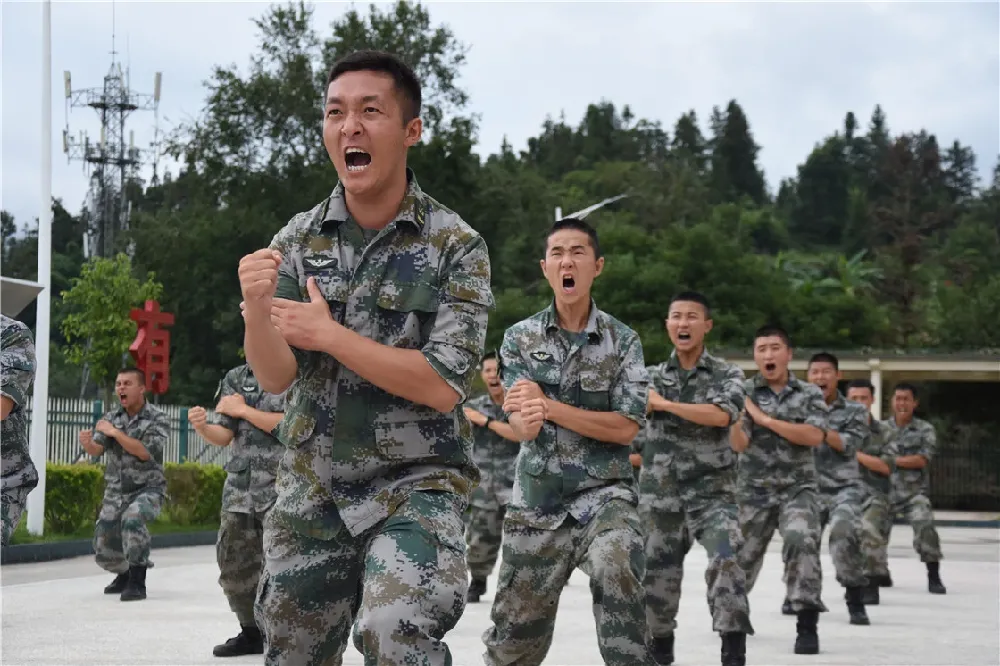
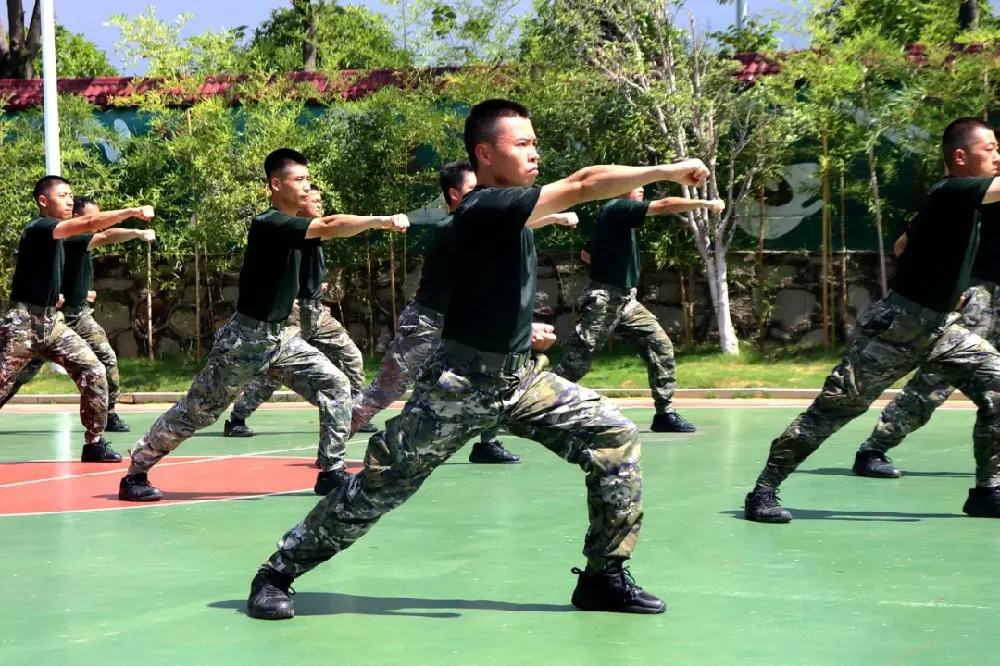
A typical session runs through warm-up and joint rotation, stance and footwork basics repeated far more times than a civilian class would tolerate, partner drills at light contact, and scenario work that applies the techniques under fatigue.
Progression is staged — foundation, then integration, then application — over roughly three months. The structure is not sophisticated, but it is consistent, and consistency is what produces the muscle memory that survives stress.
Maintenance training matters as much as the block training. Fifteen minutes a day of stance work, breath practice and technique review keeps a soldier functional between courses, which is where most programmes actually fail: soldiers learn a system, then stop using it.
Why the mental component matters
The claim that military martial arts are “mostly mental” is common and, stated as a percentage, unsupported. What can be said without inventing a number is that the mental component is trained deliberately rather than hoped for.
Stress inoculation works by controlled exposure: a soldier rehearses a skill under conditions that produce real physiological stress until the skill survives that stress. Decision drills make responses automatic so that a tired brain does not have to construct one. Breath work gives an accessible way to down-regulate when arousal is too high to think clearly.
Tai Chi contributes to the third of those. It does not contribute to the first two, which is why it sits alongside combatives training rather than replacing any part of it.
What the Evidence Supports
It is worth being precise about this, because the topic attracts a lot of confident claims.
What is well established: military combatives training improves close-quarters performance, and every major military invests in it. This is not controversial and does not need a citation.
What is reasonably supported: Tai Chi is safe, low-impact, and acceptable to older and injured populations. The American College of Physicians recommends it among first-line non-pharmacological options for chronic low-back pain, though the evidence quality is rated low.
What is suggestive but unproven: Tai Chi may help veterans manage PTSD symptoms. The 17-person feasibility study cited above supports further research, not a clinical claim.
What should not be claimed: that Tai Chi improves combat test scores, reduces training injuries by a specific percentage, or increases squad coordination by a measured amount. No study I am aware of supports figures of that kind for any traditional Chinese art in a military setting, and the numbers that circulate online tend to be untraceable.
That last point matters for this site specifically. A practitioner’s credibility rests on knowing which claims their tradition can and cannot support.
Starting a Practice
For serving personnel, veterans, or civilians who want to train along military lines, the entry points are different.
If you are in service, the practical route is to add Tai Chi to an existing recovery or maintenance routine rather than as a separate discipline. Fifteen minutes of stance work and slow form after physical training, or during a recovery block, is sustainable in a way that a new hour-long class is not. Push hands needs a partner and belongs with whatever combatives work the unit already does.
If you are a veteran working on recovery, the Fort Bragg model is worth understanding: a class inside a hospital programme, taught in a group alongside other supportive therapies, with no performance requirement. The practice is scaled to what the body can do, and the social component is part of the point.
If you are a civilian interested in the martial side, the sequence that matters is stance, then slow form for structure, then push hands for sensitivity. Skipping to applications without the first two produces the same result it would in any martial art.
A note on sourcing. This article deliberately does not cite percentage improvements or attribute quotes to unnamed soldiers. Where a claim rests on a small study, the sample size is stated. If you are evaluating a Tai Chi programme for a military or veteran population, ask for the underlying research rather than the summary — the summaries are usually more confident than the evidence.
For the traditional systems behind modern military training, see the wider traditions this draws on. For the mechanics behind what push hands trains, see internal martial arts.
Frequently Asked Questions
What is military martial arts training?
Combat systems designed for soldiers rather than for sport or self-cultivation. They prioritise control, restraint, weapon retention, and performance under fatigue, and they assume gear, a resisting opponent, and mission constraints. There are no belts in most military systems, and no forms.
How is Tai Chi used in military training?
For stress regulation, physical recovery, balance and body control — not as combat training. Naval units in China use it for balance on unstable decks and stress management on long deployments, and the US Army has run Tai Chi classes for wounded soldiers during recovery. It complements combatives; it does not replace them.
Does Tai Chi help soldiers with stress?
There is preliminary evidence that it is acceptable and helpful to veterans with post-traumatic stress symptoms, based on a 17-person feasibility study. The NIH review of mind–body approaches in military populations describes the research base as limited, with many small studies. It is a reasonable practice to include in a stress management routine; it is not a treatment for PTSD.
Can Tai Chi replace military combatives?
No. It has no weapons integration, no multiple-opponent doctrine, and no conditioning for armour and load. Its value is in body control, structural stability and the ability to stay regulated under stress.
What martial arts do US Marines learn?
The Marine Corps Martial Arts Program (MCMAP), a belt-graded system combining strikes, grappling and weapons work, with mental and ethical components built into each level.
What is Chinese military Jiao Shu?
A wrestling system derived from Shuaijiao, optimised for takedowns, control and restraint in gear. It is taught at Chinese military and armed police institutions and is the closest descendant of a battlefield art in current use.
What martial arts do other militaries use?
Russia uses SAMBO, a blend of judo, wrestling and striking. Israel uses Krav Maga, built for instinctive response under extreme stress. Most modern forces mix systems rather than committing to one.
How long does it take to see results from Tai Chi?
The structural and sensitivity qualities take months to become reliable and years to become instinctive. This is a poor fit for a deployment timeline and a good fit for a career — which is precisely why it works as maintenance training rather than as preparation for a specific mission.
Is Tai Chi a martial art?
Yes. Push hands, rooting and the redirection of force are martial mechanics, developed for close-range engagement. They are trained through partner work rather than through solo forms, and they are the part most often missing from Tai Chi taught purely as exercise.
Are traditional martial arts still relevant for modern soldiers?
Where they train something combatives training neglects — stress regulation, recovery, balance, body control — yes. Where they are presented as a substitute for tactical training, no. The distinction is usually visible in whether the instructor makes claims about combat effectiveness.
Related Terms
Explore Full MapMaster Mingde Chen
12th generation Chen-style inheritor with decades of teaching experience.
View all articles →