Tai Chi Indoor Walking: Space, Floor & 20-Minute Home Routine Guide
Key Takeaways
- A complete 20-minute indoor routine requiring only a hallway or small space
- Adapts outdoor Tai Chi walking mechanics to confined spaces without losing benefits
- Ideal for bad weather, urban apartments, or anyone avoiding outdoor exercise
- Includes floor and surface considerations for safe home practice
Written by Master Mingde Chen, 12th Generation Chen Style Tai Chi Inheritor
Reviewed by Dr. Jing Li, PhD in Biomechanics, Chief Technical Consultant at Wuji Taichi
What Is Tai Chi Indoor Walking and How Is It Different?
Tai Chi Indoor Walking is the adaptation of traditional Tai Chi Walking (太极步) practice to limited interior environments such as apartments, hallways, offices, or small rooms. The core mechanics remain identical to classical practice — weight fully shifts before each step, maintaining continuous muscular engagement and structural alignment — but spatial constraints introduce unique requirements for turning, focus, and floor interaction.
If you already know what Tai Chi Walking is and how it works , this guide focuses on a practical question:
How do you practice Tai Chi Walking effectively when you do not have outdoor space?
Indoor practice changes three fundamental variables:
- available step length
- surface feedback from the floor
- visual reference environment
These changes do not reduce effectiveness. In many cases, indoor practice increases precision because movement occurs in a controlled, repeatable environment. Research in motor learning consistently shows that constrained environments enhance proprioceptive accuracy and balance training adaptation — which is exactly what Tai Chi Walking develops.
For modern practitioners, indoor Tai Chi Walking is not a compromise. It is often the most consistent and sustainable form of daily practice. Weather, time of day, privacy concerns, and space limitations are removed as barriers. A 6-foot corridor can support a complete stepping cycle. A 2×2 meter area can sustain continuous practice through turning patterns or in-place stepping.
This means the real requirement for Tai Chi Walking is not landscape — it is attention, alignment, and controlled weight transfer.
The rest of this guide explains precisely how to adapt the classical method to indoor space: minimum space requirements, floor considerations, small-room modifications, and a structured 20-minute routine suitable for home practice.
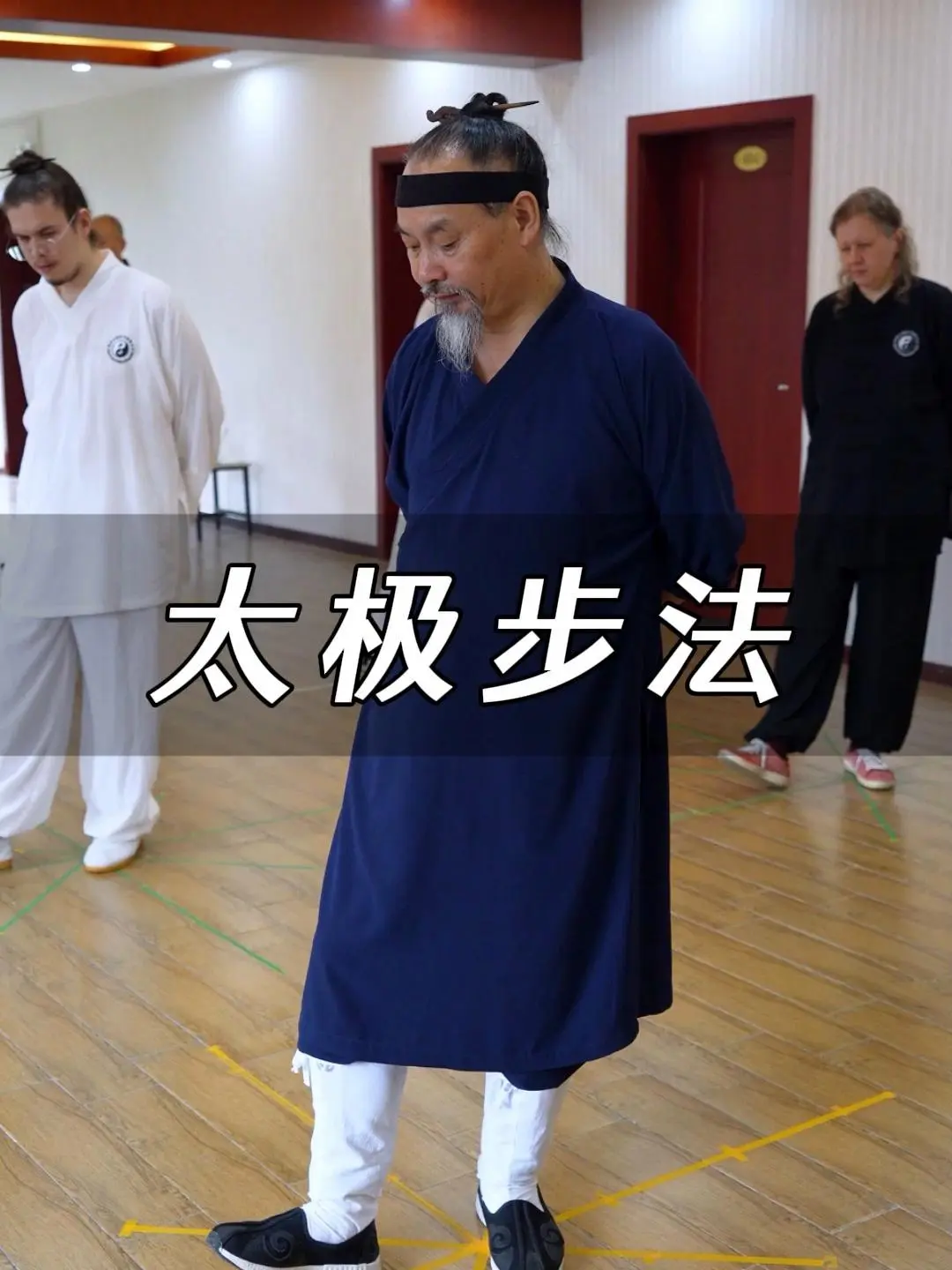
Why Practice Tai Chi Walking Indoors?
Indoor practice solves the most common barriers that prevent consistent Tai Chi training:
- lack of outdoor space
- cold or extreme weather
- urban living constraints
- time limitations
- privacy concerns
For many practitioners, especially beginners and older adults, indoor environments feel safer and more controllable. Balance training is more effective when the practitioner is relaxed and not distracted by terrain uncertainty or social observation.
Another overlooked advantage is repeatability. Indoor spaces provide fixed distances and consistent surfaces, which allow measurable progression. Practicing daily along the same hallway or room length builds precise spatial awareness and step consistency.
Indoor practice also supports habit formation. The easier it is to begin practice, the more likely it becomes routine. A hallway that requires no preparation removes friction from daily training — which is why indoor Tai Chi Walking is often recommended for long-term adherence.
How Much Space Do You Actually Need for Indoor Tai Chi Walking?
The minimum space requirement is smaller than most people expect.
A complete Tai Chi Walking cycle requires only 4–6 steps in one direction before turning. This corresponds to approximately 2–3 meters (6–10 feet) of clear floor.
| Available Space | What You Can Practice | Adaptation Needed |
|---|---|---|
| 1.5–2 m (5–6 ft) | In-place stepping | No travel |
| 2–3 m (6–10 ft) | Short walking cycles | Frequent turns |
| 3–4 m (10–13 ft) | Full stepping practice | Natural |
| 4 m+ room | Continuous indoor walking | Ideal |
The turning phase is not a break in practice. When executed with controlled weight transfer and pivot mechanics, the turn itself becomes a training component. Indoor Tai Chi Walking therefore becomes a sequence of:
step → settle → transfer → turn → reset → step
This cyclic structure can be repeated indefinitely in limited space without loss of biomechanical benefit.
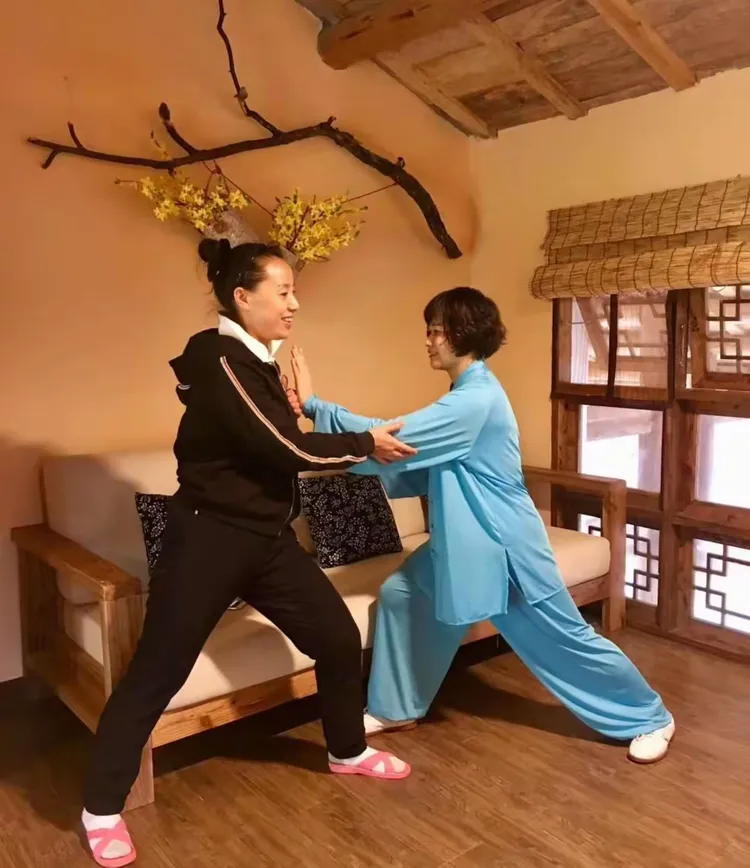
Does Floor Type Affect Indoor Tai Chi Walking?
Yes — but mainly through sensory feedback and traction, not cushioning.
Indoor Tai Chi Walking relies on subtle heel-to-toe rolling and ground-reaction awareness. Floor surfaces influence how clearly this feedback is perceived.
Hardwood or Laminate Floors
Best surface for indoor Tai Chi Walking. Firm contact allows accurate perception of weight transfer and alignment. Practitioners can feel pressure distribution across the foot.
Recommended footwear: thin-soled shoes or barefoot (if warm and safe)
Carpeted Floors
Acceptable but slightly reduces proprioceptive feedback. Thick carpet can mask heel placement errors and reduce ankle articulation awareness.
Adjustment: slow stepping speed by ~20% and exaggerate heel contact awareness.
Tile or Stone Floors
Stable but potentially slippery, especially with socks. Hard surfaces transmit misalignment forces more directly to the knee and hip.
Recommendation: non-slip thin-sole footwear.
What Shoes Are Best Indoors?
Optimal indoor Tai Chi footwear:
- flat sole
- thin and flexible
- minimal cushioning
- non-slip
Avoid running shoes or thick athletic soles. Excess cushioning disrupts ground-reaction sensing and reduces stepping precision — the key difference between Tai Chi Walking and ordinary walking described in the Tai Chi Walking (太极步) definition.
How Do You Stay Focused Without Outdoor Scenery?
Outdoor walking naturally provides distant visual anchors such as horizon lines and terrain. Indoor practice removes these references, which changes attentional demands.
However, indoor environments can improve concentration when used deliberately.
Use a Fixed Visual Point
Choose a point on the wall at eye level. Maintain soft visual attention toward it while stepping. This replaces the horizon reference and prevents forward head posture.
Synchronize Breath With Weight Transfer
Indoor distance is short, so breath becomes the pacing mechanism:
- inhale while settling weight
- exhale while stepping
One breath cycle equals one step cycle. This maintains rhythm without relying on distance.
Treat Turns as Reset Moments
Each time you reach the wall, pause briefly:
- check posture
- confirm balance
- re-center alignment
Then begin again. Indoor Tai Chi Walking becomes a sequence of micro-practice intervals rather than continuous travel. This segmented structure often improves technical precision faster than uninterrupted outdoor walking.
How Can You Practice Tai Chi Walking in Very Small Rooms?
If space is under 2 meters, two classical adaptations allow full neuromuscular training without forward travel.
In-Place Tai Chi Stepping (Stationary Weight Shift)
Shift weight fully onto one leg. Lift the opposite heel slightly. Lower it. Transfer weight. Repeat. No forward motion required.
This preserves most of the biomechanical benefits because the essence of Tai Chi Walking is weight transfer, not distance covered.
Many advanced practitioners use stationary stepping to diagnose imbalance: if stability decreases without forward momentum, weight shift mechanics need refinement.
Box Pattern Walking
Step forward two steps. Turn 90°. Step two steps. Turn again. Continue around a square path.
A 2×2 meter area becomes a continuous loop. Four turns per cycle create repeated reset opportunities and alignment checks.
Both methods maintain full Tai Chi Walking principles indoors.
What Is a 20-Minute Indoor Tai Chi Walking Routine?
The following routine fits in approximately 3×3 meters and requires no equipment.
Minutes 0–3: Wuji Standing
Stand naturally with feet shoulder-width apart. Weight evenly distributed. Spine upright and relaxed. Allow breathing to settle.
See how to practice the Wuji stance for detailed alignment.
Minutes 3–7: Weight Shifting in Place
Without stepping, transfer weight fully left to right. Pause at each side. Maintain upright posture and relaxed knees.
20–30 cycles.
Purpose: activate balance and proprioception before stepping.
Minutes 7–17: Indoor Tai Chi Walking
Walk across available space using classical Tai Chi stepping:
- heel contact first
- full weight transfer
- rear leg releases
- step length natural
Turn deliberately at each end. Maintain breath coordination.
Minutes 17–20: Return to Wuji
Stop. Stand quietly. Observe body sensation and balance integration.
Consistency matters more than duration. Daily 20-minute indoor practice produces more improvement than occasional long outdoor sessions. Practitioners seeking metabolic benefits can combine indoor stepping with guidance from Tai Chi Walking for weight loss .
Is Indoor Tai Chi Walking as Effective as Outdoor Practice?
For core mechanics — weight transfer, alignment, balance — indoor and outdoor practice are equivalent. The movement itself does not require large space; it requires controlled attention and structural accuracy.
Advantages of Outdoor Practice
- terrain variation trains ankle adaptation
- longer continuous stepping sequences
- environmental exposure and fresh air
Advantages of Indoor Practice
- consistent daily access
- controlled surface
- privacy for slow training
- fixed distance for measurement
- safer for beginners and seniors
For older practitioners, indoor environments often improve adherence and reduce fall anxiety. Clinical balance programs frequently recommend controlled indoor stepping, similar to Tai Chi Walking for seniors and balance .
Both environments are complementary. The fastest progress occurs when practitioners maintain consistent indoor practice and supplement with outdoor sessions when available.
If you’re deciding between mindful Tai Chi Walking and higher-intensity interval walking, explore our full walking styles comparison .
Is Indoor Tai Chi Walking Safe for Knees and Older Adults?
Yes — when performed with correct weight transfer and step length. Indoor environments may actually reduce joint stress because surfaces are predictable and distances shorter.
Key safety principles:
- step shorter indoors
- avoid forced knee flexion
- keep knee aligned with toes
- transfer weight fully before stepping
These principles align with evidence summarized in is Tai Chi Walking safe for knees .
For seniors, indoor Tai Chi Walking offers controlled balance training without environmental hazards. Practicing near a wall or hallway provides psychological and physical support, which improves confidence and adherence — the main drivers of balance improvement.
What Do Practitioners Say About Indoor Tai Chi Walking?
Community discussions consistently report three themes: indoor practice improves consistency, small spaces are sufficient, and turning becomes part of training rather than an interruption. Read how our community describes their indoor practice experience →
You can explore real practitioner experiences in the Tai Chi Walking community forum discussions, where many describe hallway and apartment practice setups.
Indoor Tai Chi Walking: Key Takeaways
- Only 2–3 meters of space is required
- Floor firmness matters more than cushioning
- Turns are part of the practice
- Stationary stepping preserves benefits
- Indoor and outdoor effectiveness are equivalent
- Daily indoor practice improves consistency
Indoor Tai Chi Walking is not a reduced version of traditional practice. It is a precise, accessible, and sustainable method for modern living environments — allowing authentic Tai Chi stepping training anywhere space permits a single step.
Indoor Tai Chi Walking — Frequently Asked Questions
- What does Tai Chi Indoor Walking actually look like?
Indoor Tai Chi Walking typically takes place in a short, quiet path such as a hallway or small room. A practitioner takes 4–6 slow steps, fully transferring weight before each movement, reaches the end of the space, turns deliberately, and walks back. The cycle repeats continuously: step → settle → transfer → turn → reset. See Tai Chi Walking (太极步) for the full movement definition.
- Can Tai Chi Indoor Walking be a real workout?
Yes. Although slow and low-impact, Tai Chi Indoor Walking maintains continuous muscular engagement because weight fully shifts before each step. A 20-minute indoor session functions as light aerobic training and supports energy expenditure and metabolic activity. Over time, consistent practice contributes to weight management and endurance. For physiological details, see Tai Chi Walking for weight loss .
- Is there a free Tai Chi Indoor Walking routine I can follow?
Yes. This guide includes a complete 20-minute indoor Tai Chi Walking routine that requires no equipment, subscription, or outdoor space. It combines Wuji standing, in-place weight shifting, and short-path walking adapted for small environments. Many practitioners use this structure as a daily home practice. See the routine section above or learn how Tai Chi Walking works .
- How is Tai Chi Indoor Walking different from treadmill or regular indoor walking?
Regular indoor or treadmill walking relies on momentum and continuous forward travel. Tai Chi Indoor Walking emphasizes deliberate weight transfer before each step, controlled placement, and structural alignment. The goal is neuromuscular control rather than distance or speed. Even in small spaces, this produces different balance and stability training effects than conventional walking exercise.
- How Much Space Do You Actually Need for Indoor Tai Chi Walking?
Most people need less space than they expect. A complete indoor Tai Chi Walking cycle requires only 4–6 steps in one direction, which equals about 2–3 meters (6–10 feet) of clear floor. Even smaller areas can work using in-place stepping or short turning patterns. The effectiveness of Tai Chi Walking comes from controlled weight transfer, not travel distance.
- Does Floor Type Affect Indoor Tai Chi Walking?
Yes, primarily through traction and sensory feedback. Firm surfaces like hardwood or laminate provide the clearest ground contact and weight-shift awareness. Carpet slightly reduces foot sensation but remains usable with slower stepping. Tile or stone floors require non-slip footwear. Thick cushioned shoes should be avoided because they reduce the heel-to-toe rolling sensation essential to Tai Chi Walking mechanics.
- Is Indoor Tai Chi Walking as Effective as Outdoor Practice?
For balance, alignment, and weight transfer mechanics, indoor Tai Chi Walking is equally effective as outdoor practice. The core movement does not depend on large space or terrain. Indoor environments often improve consistency and precision because surfaces and distances are controlled. Outdoor practice adds terrain variation and longer sequences, but daily indoor practice produces comparable functional benefits.
- Can You Practice Tai Chi Walking in a Very Small Room?
Yes. When space is under 2 meters, stationary Tai Chi stepping or box-pattern walking allows full practice without forward travel. These methods preserve the neuromuscular training of weight shifting and balance. Many advanced practitioners intentionally train in small spaces to refine stability and alignment because limited room removes momentum and exposes structural errors.
- What Shoes Are Best for Indoor Tai Chi Walking?
Thin, flat, flexible shoes with non-slip soles are ideal. They allow accurate perception of floor contact and weight transfer. Traditional Tai Chi shoes, canvas shoes, or barefoot practice on safe surfaces work well. Thick running shoes or cushioned trainers should be avoided because they dampen ground feedback and interfere with stepping precision.
- Is Indoor Tai Chi Walking Suitable for Seniors?
Yes. Indoor Tai Chi Walking is often safer and more accessible for older adults because surfaces are predictable and support structures like walls or hallways are nearby. Shorter step lengths and controlled weight transfer reduce joint stress while improving balance. Consistent indoor practice is commonly recommended for senior stability training and fall prevention.
Master Mingde Chen
12th generation Chen-style inheritor with decades of teaching experience.
View all articles →