Tai Chi Books for Women: Healing, Nervous System & Lifelong Practice Guide
Key Takeaways
- Tai Chi books written by and for women address unique concerns: pregnancy modifications, bone health, and body image in practice
- "The Woman's Guide to Tai Chi" (2021) and "Tai Chi for Osteoporosis Prevention" are among the most recommended titles
- Women-specific books tend to emphasize the meditative and community aspects over the martial — reflecting demographic practice preferences
- Read 3-5 reviews before purchasing a Tai Chi book — many contain errors from authors with minimal personal practice experience
Women & Tai Chi Series
Start here if you’re new to practice.
- Tai Chi Books for Women: A Guide to Healing & Inner Practice
Deepen your understanding with books that blend Tai Chi, Qigong, and feminine perspective.
Key Insight: A New Direction in Tai Chi Literature
Modern Tai Chi books written by women are shifting the focus of practice from martial achievement toward regulation, sustainability, and lifelong embodiment.
- Tai Chi is increasingly understood as nervous system regulation through Tai Chi , not only martial training.
- Practice is framed as a lifelong cultivation process rather than performance mastery.
- Books emphasize adapting practice across different life stages .
- Tai Chi and Qigong are presented as complementary expressions of internal cultivation.
This emerging perspective does not replace traditional Tai Chi—it reveals dimensions that were historically present but less frequently articulated in modern literature.
Introduction
Over the past decade, something quiet but significant has been happening in the world of Tai Chi literature. A new voice is emerging—one that speaks not of combat lineage or martial mastery, but of healing, regulation, and the lived experience of practice over a lifetime.
These books are written by women, for women, yet they address something far larger than a single demographic. They are redefining what internal practice means in the modern world.
This guide is for readers who have already discovered Tai Chi’s benefits—perhaps through our beginner guide, Tai Chi for Women: The Ultimate Guide to Benefits and Getting Started —and now want to go deeper. Here, we explore books that treat Tai Chi as moving Qigong, as nervous system medicine, and as a sustainable path of inner cultivation.
Quick Summary: Why Women’s Voices Matter in Tai Chi Writing
Women authors are reframing Tai Chi as a sustainable movement practice aligned with long‑term wellbeing. Instead of emphasizing combat skill or technical power, these books explore how practice supports hormonal balance, emotional regulation, and aging with resilience. The result is a perspective where Tai Chi becomes less about mastery and more about continuity across life.
Why Women Are Reframing Tai Chi
For decades, Tai Chi literature followed a familiar pattern: male authors, martial lineage, a focus on power and technique. Women were not absent from practice—far from it—but they were rarely positioned as the subject of their own experience. They were “general readers,” not a specific audience with distinct needs and insights.
That began to change when a generation of female teachers, with 30 to 40 years of practice behind them, started to write. Their books reflect a different question. Instead of “How do I generate power?” they ask, “How does this practice support my body across decades?”
This shift is not about rejecting tradition. It is about returning to something older: the Daoist understanding of practice as regulation , not force. And in these pages, Tai Chi and Qigong are not separate disciplines—they are two expressions of the same embodied wisdom.
What Makes a Tai Chi Book Especially Valuable for Women?
The most impactful Tai Chi books for women share three qualities: they connect movement with internal awareness, adapt practice to changing life stages, and present cultivation as sustainable rather than intensive. These texts often blend Tai Chi and Qigong, emphasizing regulation of breath, posture, and nervous system balance.
The Reading List: Four Books to Begin With
Each book below was chosen because it bridges Tai Chi and Qigong, speaks from authentic experience, and offers something a woman can use in her daily practice.
📖
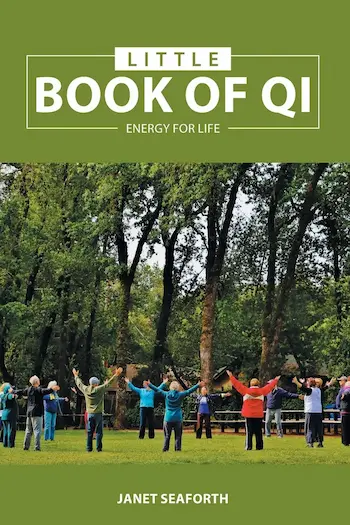
Little Book of Qi: Energy for Life
Janet Seaforth (2022)
In One Sentence: A deeply personal guide from a pioneering female teacher who has spent forty years weaving together Qigong, Tai Chi, and the lived experience of women’s practice.
Why It Matters: Janet Seaforth holds the title Simu (teacher mother) and founded the White Cloud Women’s Temple School in 1980. Her book is as much memoir as manual—she traces the rise of women’s martial arts movements in the 1970s and 80s, then offers eleven practice forms (from Wuji standing to Wave Hands Like Clouds) that combine Tai Chi and Qigong as complementary practice s. The language is gentle, the philosophy is grounded, and the exercises are immediately useful.
5-Minute Practice: The Bow Stand with feet shoulder‑width apart. Inhale as you lift your arms in front of you, palms facing your body. Exhale as you lower them, feeling a gentle stretch between your hands as if holding a bow. Repeat eight times. This simple Qigong movement cultivates the sensation of qi moving through the arms without strain.
Get it on Amazon (Paperback $21.99)
🌙
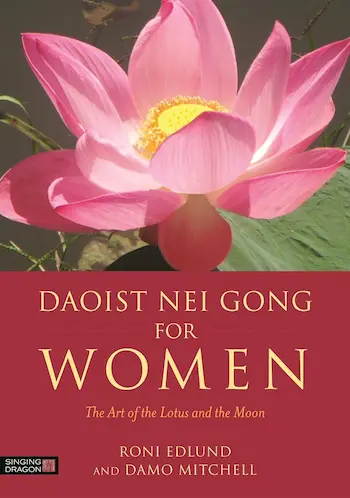
Daoist Nei Gong for Women: The Art of the Lotus and the Moon
Roni Edlund & Damo Mitchell (2016)
In One Sentence: A rare, detailed exploration of Nu Dan (female alchemy)—the branch of Daoist internal practice specifically developed for women’s bodies and energy systems.
Why It Matters: Most internal arts books assume a male physiology. Edlund corrects that. She explains how women’s energy flows differently, how the menstrual cycle can be worked with rather than against, and how female practitioners can cultivate jing , qi , and shen in ways aligned with their nature. The book includes the Lotus Moon Qi Gong —a set designed to nourish the womb and regulate female energy. This is not beginner material, but for anyone ready for depth, it is indispensable.
5-Minute Practice: Hands on the Womb Sit quietly, place one hand over your lower abdomen and the other on your lower back. Breathe gently into the space between your hands for two minutes. Then, without moving your hands, visualize a soft, pale light gathering there. This simple practice begins the process of listening to female energy rather than forcing it.
Get it on Amazon (Paperback)
🌸
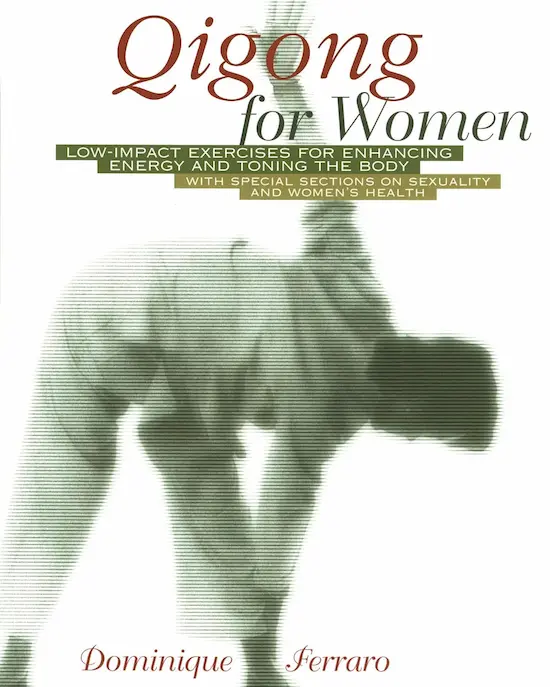
Qigong for Women: Low-Impact Exercises for Enhancing Energy and Toning the Body
Dominique Ferraro (2000)
In One Sentence: The most practical, condition‑focused Qigong guide for women, with over 300 photographs and clear instructions for addressing everything from menopause to stress to bone health.
Why It Matters: Ferraro organizes her book by health concern: fatigue, hormonal balance, sexuality, pregnancy, osteoporosis, and emotional regulation. Each section includes specific exercises drawn from classical Qigong forms. What makes this book valuable is its precision—you can turn directly to what you need. While it focuses more on Qigong than Tai Chi, it treats Tai Chi as the “moving” expression of the same principles, making it a natural companion.
5-Minute Practice: The Womb Breath Lie on your back with knees bent. Place your hands on your lower abdomen. Inhale deeply, feeling your belly rise. Exhale with a gentle “ssss” sound, feeling your navel draw toward your spine. Repeat for 10 breaths. Ferraro recommends this simple breath for women experiencing hormonal shifts or pelvic tension.
Get it on Amazon
📘
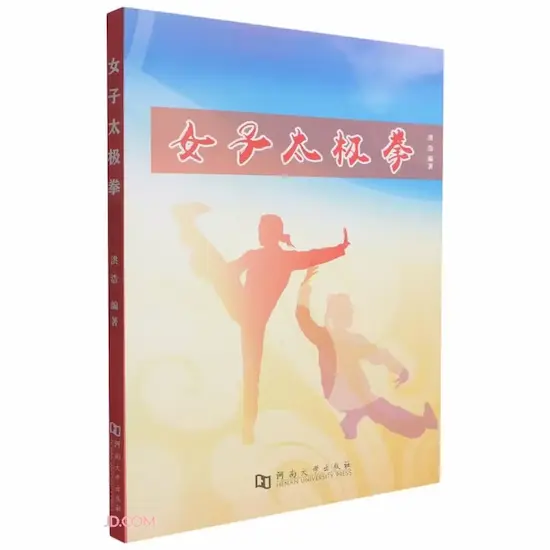
女子太极拳 (Women’s Tai Chi)
洪浩 编著 | 河南大学出版社 (2025) ISBN:9787564963293
In One Sentence: A Chinese‑language original designed specifically for women’s physiology, featuring a 26‑posture form with video support.
Why It Matters: While most books in English translate practices developed for male bodies, this Chinese volume starts from the premise that women’s physical structure—lower center of gravity, greater flexibility, different muscle distribution—invites a different expression of Tai Chi. It includes solo and partner exercises, push hands applications, and QR codes linking to instructional video. For Chinese‑reading practitioners, it offers a rare opportunity to learn from a perspective rooted in female anatomy.
5-Minute Practice: Weighted Step From a standing position, shift your weight completely onto your left leg. Slowly lift your right foot, as if stepping over a low obstacle, and place it down without letting your hips rise. Repeat on the other side. The book emphasizes that women’s practice often benefits from focusing on this kind of clear, grounded weight transfer, which protects the knees and develops rooting.
A Path for Your Practice
If you are new to Tai Chi, I recommend starting with our structured learning path for Tai Chi , which covers the basics of form, safety, and getting started.
From there, these books offer different entry points:
- If you want daily, gentle practice: Start with Janet Seaforth’s Little Book of Qi . Its exercises are simple, and the tone is encouraging.
- If you are experiencing hormonal or life‑stage changes: Ferraro’s Qigong for Women gives you targeted tools.
- If you have been practicing for years and sense there is more: Edlund’s Daoist Nei Gong for Women will open a new layer of depth.
- If you read Chinese: 女子太极拳 offers a rare anatomical perspective.
In One Sentence
For many modern practitioners, Tai Chi is evolving from a martial discipline into a lifelong cultivation practice that supports physical stability, emotional regulation, and inner continuity.
Conclusion: A Quiet Shift in the Art
What these books share is not a rejection of Tai Chi’s martial roots, but a broadening of its purpose. Power becomes regulation. Mastery becomes sustainability. Technique becomes embodiment.
For much of its history, Tai Chi was taught as a path to martial skill. For many women today, it has become something else: a way to regulate the nervous system, to move in harmony with life’s changes, to cultivate presence without force. This is not a dilution of the art—it is a return to something older, something the classical texts have always hinted at: practice as a lifelong conversation with the body.
If you have been practicing for years, or if you are just beginning to sense there is more to this art than movement, these books are companions for the next stage of your journey.
Ready to deepen your practice? → Key concepts like qi, jing, and shen .
Have you read any of these books? Join the conversation in our forum: → Are Women Changing the Direction of Tai Chi Practice ?
📚 Interested in the classical Tai Chi literature? Explore our Lost Library of Tai Chi series for 17 foundational books.
Master Mingde Chen
12th generation Chen-style inheritor with decades of teaching experience.
View all articles →