Tai Chi in 2026: From Cultural Identity to Nervous System Regulation (Adam Frank)
Key Takeaways
- China's regulation of Tai Chi as a national sport (1990s) created standardized curricula but also political constraints on teaching
- The International Wushu Federation now governs Tai Chi competition with detailed scoring rubrics for form execution
- Regulation has made Tai Chi safer and more accessible but has been criticized for stripping martial applicability from the art
- Understanding this tension helps practitioners navigate between "Tai Chi as sport" and "Tai Chi as martial art" — both have value
This article explains how Tai Chi has evolved over the past 20 years—from a cultural identity practice studied by anthropologist Adam Frank to a modern mind-body practice increasingly understood as a method for nervous system regulation and mental well-being.
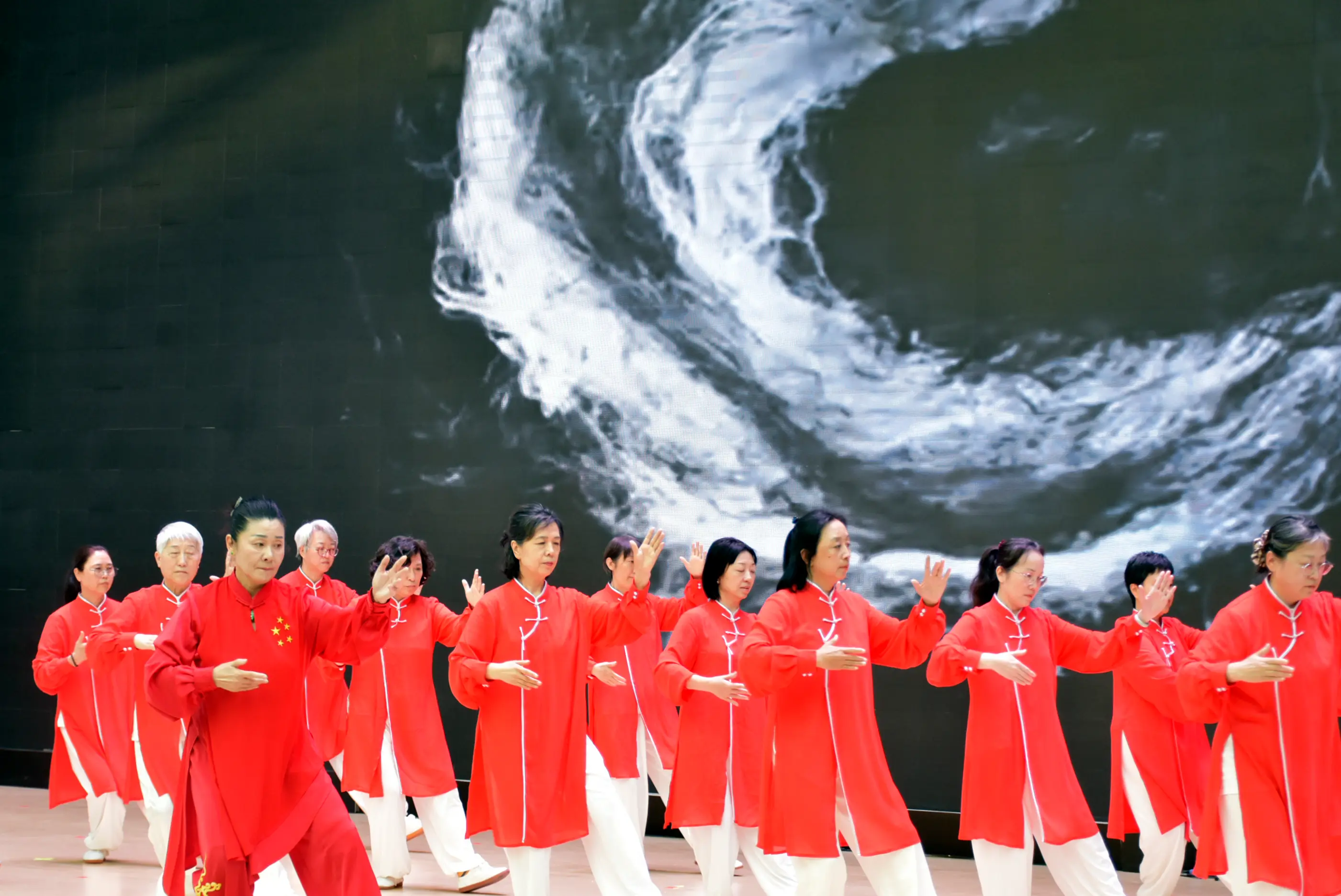
In 2026, Tai Chi is experiencing a massive resurgence, driven largely by the viral Tai Chi Walking trend on TikTok and Instagram. These slow, intentional walking challenges—often 28-day programs or 10-minute daily routines—promise mood boosts, better metabolism, improved sleep, reduced stress, and enhanced balance without high-impact effort.
With monthly searches exceeding 450,000 and countless videos showing mindful heel-to-toe steps coordinated with breath, Tai Chi Walking has become a go-to low-impact exercise for burnout recovery and everyday wellness. But beneath the social media hype lies a deeper story of adaptation—one that anthropologist Adam Frank anticipated over two decades ago.
Many people today aren’t seeking ancient martial secrets; they’re seeking relief from chronic stress, anxiety, dopamine-driven routines, and the pressure of constant optimization. Tai Chi offers a pause—a slower, more intentional way to move through life. Frank’s insights help explain why this practice feels so timely now.
What Is Tai Chi?
Tai Chi ( Taijiquan ) is a traditional Chinese martial art characterized by slow, continuous movements, coordinated breathing, and mindful attention. Originally developed as a martial system, it is now widely practiced worldwide for balance improvement, stress reduction, mobility training, and mental well-being.
Why Tai Chi Is Trending Again in 2026
Tai Chi Walking —a modern adaptation emphasizing slow stepping, balance control, breath coordination, and weight shifts—has exploded online.
What Is Tai Chi Walking ? Tai Chi Walking is a simplified practice derived from traditional Taijiquan stepping methods. It emphasizes slow weight transfer, posture alignment, relaxed movement, and breath coordination, making it a beginner-friendly form of Tai Chi focused on balance, mobility, and nervous system regulation. Learn mechanics in Tai Chi Walking: How It Works, Why It Burns Fat & Who It’s Best For .
Experts describe it as the foundation of Tai Chi practice: deliberate, connected movement that engages the whole body rather than isolated parts. Unlike ordinary walking, every step is intentional, aligning posture, relaxing the spine, and syncing breath with motion.
Realistic benefits include improved balance, reduced stress, better mood, and support for longevity—without bulking up or requiring intense effort. Social media amplifies this with viral tutorials and challenges, making Tai Chi accessible to beginners and younger audiences.
Adam Frank and the Myth of the “Little Old Chinese Man”
Adam D. Frank is an anthropologist and martial arts researcher known for studying Wu-style Taijiquan in Shanghai and analyzing how martial arts shape cultural identity and social experience.
In his 2003 dissertation Taijiquan and the Search for the Little Old Chinese Man: Ritualizing Race through Martial Arts (later adapted into a 2006 book), Frank documented fieldwork from 1997–2001 at Shanghai’s Jianquan Taijiquan Association. He observed that practitioners weren’t just exercising—they were engaging in embodied rituals that constructed cultural identity, particularly an idealized “Chineseness.”
Frank critiqued the romanticized “little old Chinese man”—the frail, wise elder with effortless power and inner harmony. This stereotype, rooted in folklore, kung fu films, and park demonstrations, was a cultural projection rather than reality. It ignored diverse practitioners: young teachers, women, foreigners, and varied social classes.
Tai Chi remains relevant not because it resists change, but because it continuously translates ancient principles into modern human needs.
Tai Chi as Identity Practice (2003 Perspective)
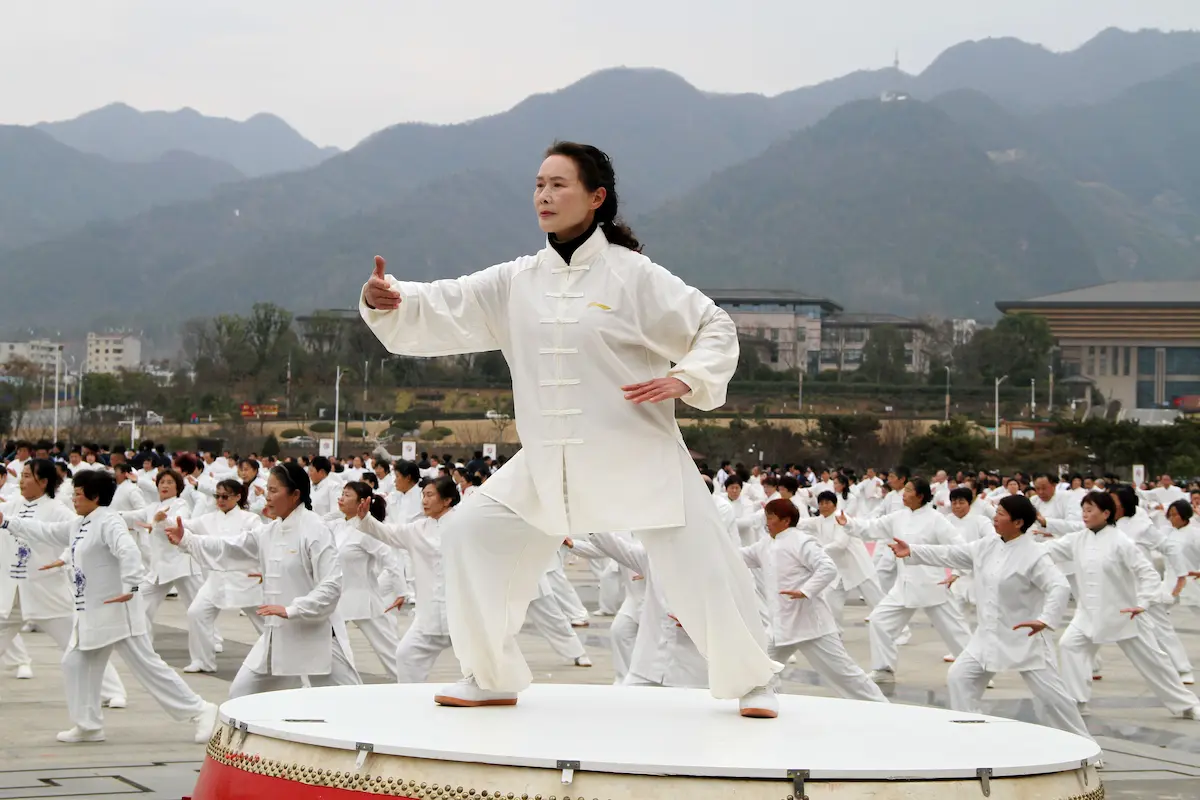
In Frank’s analysis, Tai Chi functioned as an embodied cultural practice rather than simply a health exercise. Through repeated forms, push hands, and concepts like qi (vital energy) and yi (mind-intent), practitioners ritualized identity—learning to embody belonging, harmony, and cultural values in communal spaces like Shanghai parks.
These parks served as social ceremonies: collective synchronization created shared experiences of identity, power negotiation, and liberation from everyday constraints. Qi was not mystical but a socially learned bodily sensation—perceived through practice and interaction.
From Cultural Identity to Nervous System Regulation
Today, Tai Chi is increasingly discussed not only as a cultural tradition but also as a mind-body practice supported by research in neuroscience, psychology, and preventive health.
The biggest shift since Frank’s research is that Tai Chi has moved from cultural identity to biological regulation. Practitioners approach it primarily as a nervous system regulation practice supported by modern research—reducing anxiety, improving mood, and enhancing resilience against stress.
A growing body of clinical and observational research suggests that regular Tai Chi practice produces measurable physiological effects related to stress regulation and autonomic balance.
What traditional practitioners described as qi is increasingly interpreted by researchers as coordinated breathing, body awareness, and nervous system regulation. Recent studies link Tai Chi to vagus nerve activation, improved heart rate variability (HRV) parameters like RMSSD and SDNN, and parasympathetic dominance—effects comparable to breathwork or therapy for stress resilience.
In simple terms : Tai Chi helps regulate the nervous system through slow movement, breath coordination, and sustained attention.
In the 21st century, Tai Chi is less a martial art to master and more a skill for regulating how we experience stress, attention, and movement.
How Tai Chi Adapted Across Historical Eras
Tai Chi survives every era not by preserving itself, but by answering the deepest problem of each generation.
| Era | Deepest Problem | Tai Chi’s Answer |
|---|---|---|
| Imperial Times | Martial prowess and self-cultivation | Balancing body and spirit for survival |
| 20th Century | National body and state control | Standardized forms for public health |
| Early 2000s (Frank) | Cultural identity in globalization | Ritualizing “Chineseness” through practice |
| 2020s | Nervous system survival amid algorithmic chaos | Regulation: vagus nerve activation, HRV improvement, anxiety reduction |
Across history, Tai Chi repeatedly adapts its meaning while preserving its core method: slow, attentive movement that integrates body and mind.
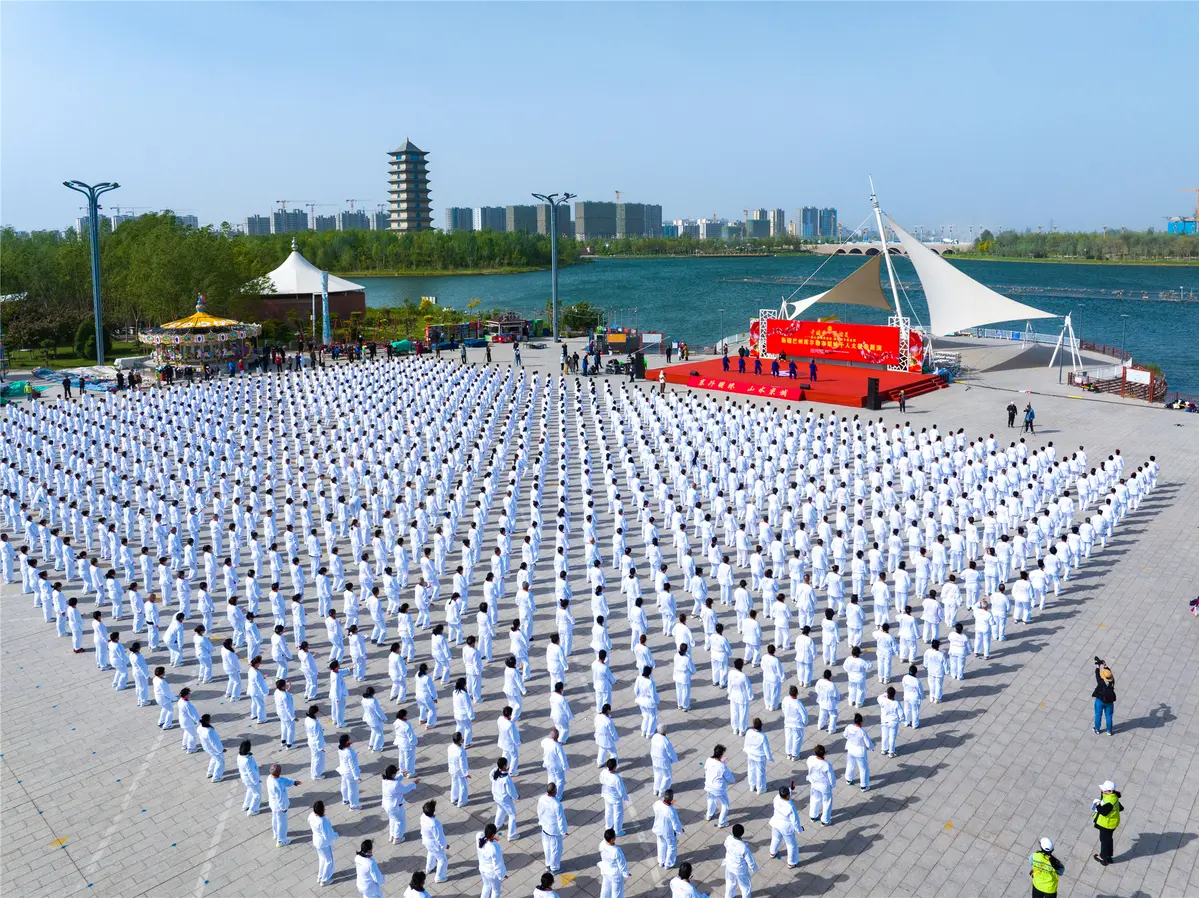
This historical adaptability explains why Tai Chi continues to remain relevant across centuries—with over 78.58 million practitioners in China today, .
Tai Chi Walking and the Digital Commons
What Frank observed as communal park rituals has evolved into digital commons—online spaces where practitioners learn Tai Chi through videos, apps, and virtual communities. Tai Chi Walking thrives here: asynchronous global challenges allow solo practice while feeling connected.
This shift from physical parks to platforms makes Tai Chi beginner-friendly and inclusive, emphasizing online Tai Chi practice and virtual Tai Chi communities.
The global revival of Tai Chi reflects a broader cultural shift away from optimization toward regulation and sustainability.
What This Means for Modern Practitioners
For today’s practitioners, Tai Chi offers practical benefits:
- How Tai Chi helps anxiety : Slow movements and breathwork reduce sympathetic overdrive.
- How Tai Chi improves sleep : Enhanced parasympathetic activity supports rest.
- Beginner Tai Chi benefits : Low-impact, adaptable for any age or fitness level.
Communities worldwide, including platforms like Tai Chi Wuji, reflect this hybrid phase: rooted in lineages like Wu-style Tai Chi (compact, joint-friendly, subtle), yet adapted for diverse needs. For the science behind regulation, explore Tai Chi and Mental Health: What the Research Actually Shows .
Where to Start: Practical Guides
If you want to understand how different Tai Chi styles affect learning experience and body mechanics, see
Which Tai Chi Style Should You Learn? A Complete Guide to the Five Major Tai Chi Styles .
Curious about the walking trend? Compare it in Tai Chi vs Nordic vs Japanese Walking: Which One Is Better? (2026) New to practice? Start with Tai Chi for Beginners: Everything You Need to Start Today .
Frequently Asked Questions About Tai Chi Today
Is Tai Chi good for mental health?
Research suggests Tai Chi may reduce anxiety, improve mood, and support emotional regulation by combining slow movement, breathing, and focused attention.
Why is Tai Chi popular again in 2026?
Social media trends such as Tai Chi Walking, combined with growing interest in low-impact exercise and nervous system regulation, have introduced Tai Chi to younger global audiences.
Is Tai Chi scientifically supported?
Recent studies link Tai Chi practice to improved balance, reduced fall risk, and changes in heart rate variability associated with stress resilience.
Can beginners start Tai Chi at any age?
Yes. Tai Chi is widely recommended as a beginner-friendly practice because movements can be adapted to different fitness levels and mobility needs.
Key Takeaways: How Tai Chi Has Changed Since 2003
- Tai Chi has evolved from a cultural identity practice into a modern method for nervous system regulation.
- Adam Frank’s research showed how Tai Chi shaped identity through embodied ritual.
- In 2026, practices like Tai Chi Walking are popular because they reduce stress, improve balance, and support mental health.
- Modern research links Tai Chi to vagus nerve activation and improved heart rate variability (HRV).
- The continued reinvention of Tai Chi explains its global growth and relevance today.
This article combines anthropological research, contemporary health studies, and modern practitioner perspectives to reinterpret Tai Chi’s role in today’s world.
The search for the “little old Chinese man” was never about finding a master—it’s about becoming someone more at ease in your own body.
Try a 10-minute Tai Chi Walking session today; notice what shifts.
- For the original : Adam Frank’s 2003 dissertation metadata (Full PDF: download here ).
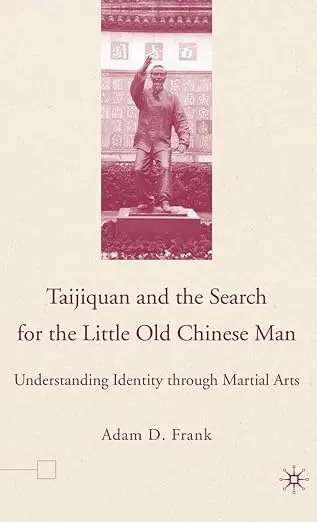
- Book : Taijiquan and the Search for the Little Old Chinese Man: Understanding Identity through Martial Arts (Palgrave Macmillan, 2006, ISBN 1403968284). Links checked March 2026, Buy this book on Amazon .
This is an interpretive overview, not a substitute for the original work.
Master Mingde Chen
12th generation Chen-style inheritor with decades of teaching experience.
View all articles →